
Exploring the Daily Life and Traditions of Palace Communities
Gusti Ayu Tita P
4 September 2026
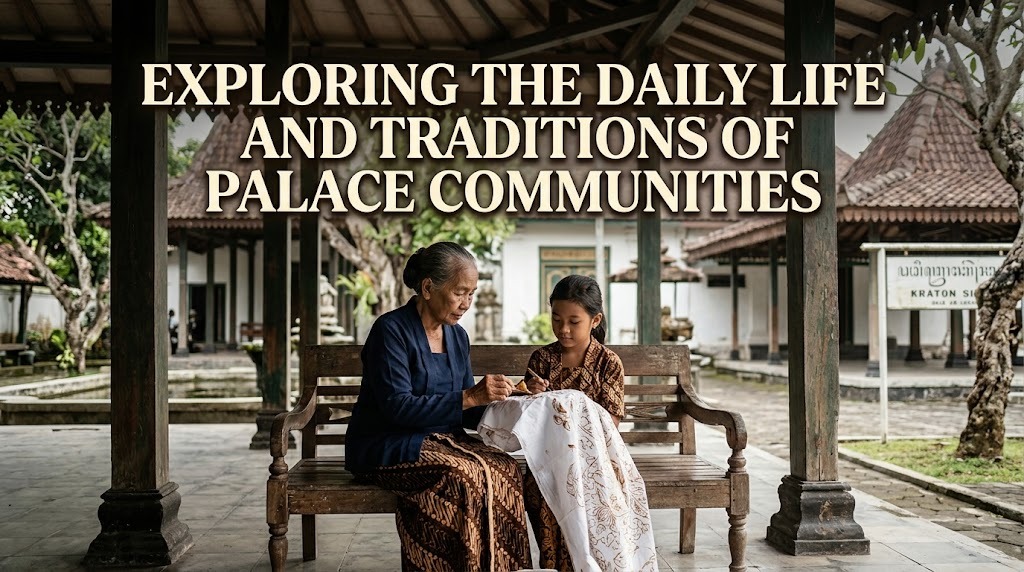
Royal palaces in Indonesia are more than impressive historical buildings. They are living cultural spaces where traditions, customs, arts, and community values continue to develop from one generation to another. Behind the walls of a palace, there are communities whose daily lives are closely connected with long-standing cultural practices.
Exploring the daily life and traditions of palace communities provides a different perspective on Indonesian heritage. Visitors can learn not only about royal history but also about the people who continue to maintain traditional practices in the modern era. Palace communities play an important role in keeping cultural knowledge alive while adapting to social changes around them.
DAILY LIFE IN PALACE COMMUNITIES
The daily life of palace communities is influenced by traditions that have been passed down for generations. Members of these communities may be involved in activities related to palace maintenance, cultural events, traditional arts, ceremonies, and other responsibilities. Their routines can reflect a strong connection between community life and cultural heritage. Although modern technology has changed many aspects of everyday life, traditional values remain important in many palace environments.
Palace communities are not always isolated from the wider society. They interact with local residents, visitors, cultural organizations, and younger generations. Some community members also have modern professions while continuing to participate in palace traditions. This combination of traditional responsibilities and modern lifestyles shows how cultural heritage can survive without remaining completely unchanged.
TRADITIONS PASSED THROUGH GENERATIONS
One of the most important characteristics of palace communities is the preservation of traditions. Cultural knowledge can be passed from older generations to younger members through participation, observation, teaching, and community activities. These traditions may include traditional etiquette, ceremonies, artistic performances, clothing, language, and cultural practices. Such knowledge is often learned through direct experience rather than formal education alone.
The continuation of these traditions depends heavily on the willingness of younger generations to participate. Families and cultural communities can introduce traditional practices to children from an early age. Palace events also provide opportunities for young people to understand the meaning behind customs that might otherwise become unfamiliar. Intergenerational learning helps protect cultural continuity while allowing traditions to remain relevant in contemporary society.
CULTURAL ARTS AND COMMUNITY ACTIVITIES
Traditional arts are an important part of life around Indonesian royal palaces. Communities may maintain forms of Javanese music, dance, crafts, and traditional performances that have historical connections with palace culture. Gamelan performances, for example, are strongly associated with Javanese cultural traditions and may appear in various cultural settings. Artistic activities can also become a way for younger people to learn discipline, cooperation, and respect for cultural heritage.
Community activities are not limited to performances. People may participate in preparations for ceremonies, cultural gatherings, traditional celebrations, and educational activities. These events bring different generations together and strengthen relationships within the community. Cultural activities create opportunities for heritage to be experienced rather than simply displayed as something from the past.
CEREMONIES AND CULTURAL VALUES
Traditional ceremonies are another important element of palace community life. Different palaces have their own customs, schedules, and cultural practices, and these traditions can be connected to historical beliefs and local values. Ceremonies may involve specific clothing, music, offerings, processions, or forms of respectful behavior. Understanding these elements can help visitors appreciate the symbolic meaning behind palace traditions.
For palace communities, ceremonies can also strengthen a sense of belonging. Participation provides an opportunity for community members to work together and maintain practices that have historical significance. At the same time, ceremonies can introduce younger generations to values such as respect, responsibility, discipline, cooperation, and cultural awareness. These values help ensure that traditions remain meaningful rather than becoming merely formal rituals.
PALACE COMMUNITIES IN THE MODERN ERA
Modernization has brought significant changes to communities surrounding Indonesian royal palaces. Social media, tourism, education, and digital communication have created new ways to introduce palace culture to wider audiences. Palace communities can use these developments to share information about history, traditional arts, ceremonies, and cultural heritage. This can make traditional culture more accessible to people who may never have visited a palace.
However, modernization also creates challenges. Cultural traditions can lose their meaning if they are presented only as entertainment without proper understanding of their historical and social context. For this reason, preservation requires a balance between protecting cultural authenticity and responding to contemporary needs. Collaboration between palace communities, cultural institutions, educators, and younger generations can help traditions continue in a responsible way.
CONCLUSION
Exploring the daily life and traditions of palace communities reveals that Indonesian royal palaces are living centers of culture rather than simply historical attractions. The people connected to these palaces contribute to the preservation of traditional arts, ceremonies, values, and cultural knowledge. Their everyday participation helps ensure that heritage remains connected to real community life.
The future of palace traditions depends on continued involvement from younger generations and the wider community. With responsible cultural tourism, education, and modern communication, palace communities can introduce their heritage to new audiences while maintaining its cultural meaning. Preserving palace traditions is ultimately about keeping cultural identity alive while allowing it to grow with society.
About the Author
Gusti Ayu Tita P
Author — STEKOM University
An active author focused on academic issues, educational technology, and human resource development in the campus environment.