
Exploring the Supernatural World Through Beliefs, Myths, and Culture
Gusti Ayu Tita P
9 September 2026
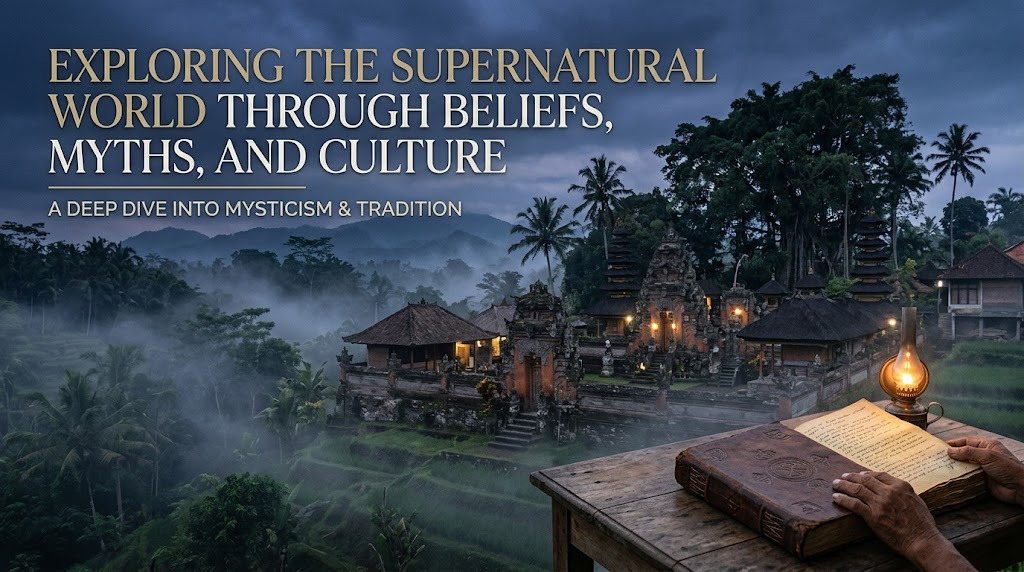
The supernatural world has been part of human storytelling for centuries. Across different societies, people have created beliefs and myths about spirits, mysterious creatures, sacred places, and unexplained events. These stories are often connected to cultural traditions, religious perspectives, local environments, and collective experiences. In Indonesia, supernatural narratives have become an important part of folklore and cultural expression. Exploring them can help people understand how communities interpret mystery, fear, nature, and the unknown.
UNDERSTANDING SUPERNATURAL BELIEFS IN HUMAN SOCIETY
Supernatural beliefs refer to ideas about beings, forces, or events that are generally considered beyond ordinary natural explanations. These beliefs can include stories about spirits, ancestors, supernatural creatures, magical objects, and mysterious occurrences. Different societies have developed their own interpretations based on their histories and traditions. Some people accept these beliefs as part of their worldview, while others consider them folklore or cultural stories. The meaning of a supernatural belief can therefore differ greatly from one community to another.
Supernatural beliefs can also serve social and cultural purposes. Traditional stories may provide explanations for unfamiliar events or encourage people to follow certain community rules. Moral lessons, warnings, and cultural values are often included in supernatural narratives. A story about a mysterious place, for example, may encourage people to respect nature or avoid dangerous environments. Even when its supernatural elements are not scientifically verified, the story may still have cultural significance.
THE ROLE OF MYTHS IN PRESERVING CULTURAL HERITAGE
Myths and legends are important ways of preserving cultural memory. Before modern communication became widespread, oral storytelling allowed communities to pass knowledge and traditions from one generation to another. Stories about supernatural beings could contain information about social values, customs, places, and historical experiences. Each generation might change certain details while maintaining the central message. This process allowed traditional narratives to remain relevant over long periods.
Myths can also reflect the concerns of the communities that created them. Fear, death, nature, family relationships, social rules, and uncertainty may appear through supernatural characters and events. This makes folklore more than simple entertainment. It can provide insight into how people in a particular society understood their world. Studying myths carefully can therefore reveal important aspects of cultural identity.
SUPERNATURAL CREATURES IN INDONESIAN FOLKLORE
Indonesia has a wide range of stories involving supernatural creatures. Popular figures such as kuntilanak, pocong, genderuwo, and wewe gombel have become familiar through folklore and modern entertainment. However, their characteristics and stories can vary between regions and communities. Some versions focus mainly on fear, while others contain warnings or moral lessons. This variation demonstrates the richness of Indonesian folklore.
Modern media has also transformed many traditional characters. Movies, television programs, novels, and social media content can give supernatural creatures new appearances, personalities, and storylines. These adaptations may make traditional figures more popular among younger audiences. However, a fictional representation should not automatically be considered an accurate description of the original tradition. Understanding the difference between folklore and entertainment helps maintain cultural context.
SACRED PLACES, NATURE, AND SUPERNATURAL STORIES
The relationship between nature and supernatural beliefs can be seen in many traditional stories. Mountains, forests, rivers, caves, beaches, large trees, and other unusual landscapes often appear in local legends. Communities may associate certain locations with sacred traditions, ancestral stories, or supernatural narratives. These associations can influence how people behave when visiting particular places. In some cases, traditional warnings may also encourage people to protect the environment or respect local customs.
The atmosphere of a place can strongly influence human perception. Darkness, isolation, unfamiliar sounds, weather conditions, and limited visibility may make an ordinary location seem mysterious. Personal expectations can further shape how people interpret what they experience. This does not automatically confirm a supernatural explanation. People can appreciate the cultural stories surrounding a location while considering natural and historical explanations as well.
HOW CULTURE AND BELIEF CHANGE OVER TIME
Cultural beliefs are not always fixed. They can change as communities experience new technologies, education, religious influences, migration, and social developments. A supernatural story that once had a specific traditional meaning may later become primarily associated with horror entertainment. Younger generations may preserve the story but interpret it differently from their parents or grandparents. This process is a normal part of cultural change.
Digital technology has accelerated this transformation. Social media, online videos, podcasts, blogs, and streaming platforms allow traditional stories to reach much larger audiences. At the same time, these platforms can mix folklore with fictional additions or unsupported claims. Users should therefore consider the source and context of supernatural content. Responsible storytelling can help preserve cultural heritage without confusing folklore with verified historical or scientific information.
PSYCHOLOGY, CRITICAL THINKING, AND SUPERNATURAL EXPERIENCES
People sometimes report experiences that they interpret as supernatural phenomena. Seeing shadows, hearing unexplained sounds, feeling an unseen presence, or experiencing unusual sensations can feel convincing to the person involved. However, perception can be influenced by stress, fatigue, fear, expectations, environmental conditions, and sleep-related experiences. These factors can sometimes provide alternative explanations for events that initially seem mysterious. Examining different possibilities encourages a more balanced understanding.
Critical thinking does not require people to disrespect traditional beliefs. Respecting a person's experience is different from confirming the explanation attached to that experience. People can discuss supernatural stories while asking whether there is reliable evidence supporting a particular claim. This approach is especially useful when supernatural content spreads rapidly through social media. A thoughtful perspective allows cultural curiosity and skepticism to exist together.
CONCLUSION
Exploring the supernatural world through beliefs, myths, and culture reveals how people have used stories to understand mystery and express important social values. Supernatural beliefs can be connected to local traditions, ancestral stories, natural environments, and community identity. Indonesian folklore demonstrates this diversity through its many legends, supernatural creatures, and mysterious locations. Modern media continues to transform these traditions while introducing them to new generations.
About the Author
Gusti Ayu Tita P
Author — STEKOM University
An active author focused on academic issues, educational technology, and human resource development in the campus environment.















