Exploring the Workplace Beyond the Classroom During a Gap Year
Gusti Ayu Tita P
14 Agustus 2026
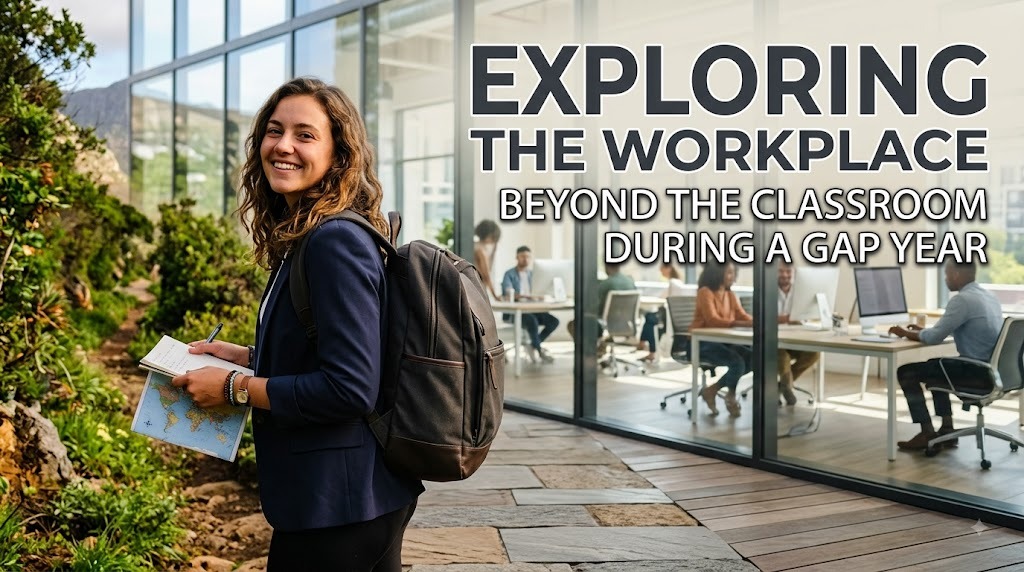
A gap year can provide students with an opportunity to experience the workplace before continuing their formal education. Instead of spending the entire period away from learning, students can use this time to understand how professional environments operate. Working, joining an internship, volunteering, or taking part in short-term projects can provide valuable lessons that are rarely found in classrooms. These experiences can help students develop professional skills, confidence, and career awareness. As a result, a gap year can become an important bridge between school and the world of work.
UNDERSTANDING THE WORKPLACE DURING A GAP YEAR
The workplace offers a different learning environment from school because students are expected to handle real responsibilities. They may need to follow schedules, complete tasks on time, communicate with colleagues, and respond to problems. These responsibilities teach students how professional organizations operate in practical situations. Even simple tasks can provide lessons about discipline, cooperation, and accountability. Experiencing these expectations can help students understand what employers look for in their workers.
A gap year also allows students to observe workplace culture directly. They can learn how employees communicate, how managers distribute responsibilities, and how teams work toward shared goals. Students may discover that professional success requires more than academic knowledge. Attitude, reliability, adaptability, and communication can be equally important. This understanding can help students prepare themselves more effectively for future education and employment.
GAINING PRACTICAL WORK EXPERIENCE
One of the biggest benefits of a gap year is gaining practical work experience before entering higher education or a long-term career. Students can explore part-time jobs, internships, apprenticeships, freelance projects, or community-based activities. Each experience can teach them how to apply their knowledge in real situations. They may also learn how to deal with customers, organize information, manage deadlines, or complete projects. These practical lessons can strengthen their understanding of professional life.
Work experience can also help students identify which activities they enjoy and which ones they find difficult. For example, a student interested in business may discover that they enjoy marketing but prefer creative tasks over financial responsibilities. Another student may realize that they enjoy working with people rather than working independently. Real-world experience can provide information that students may not get from reading about a profession. This can make future career decisions more realistic.
DEVELOPING PROFESSIONAL SKILLS
A workplace can help students develop important professional skills such as communication, teamwork, problem-solving, and time management. Employees often need to communicate clearly with colleagues, supervisors, customers, or clients. Students can gradually become more confident when they practice these skills in real situations. They can also learn how to listen carefully and respond appropriately to feedback. These abilities are useful in almost every career field.
Students can also develop organizational and technical skills depending on their workplace. They may learn to use office software, manage schedules, prepare presentations, handle basic data, or operate specific tools. The exact skills depend on the type of job or internship they choose. What matters is that students actively learn from their responsibilities rather than simply completing tasks. Continuous learning can make their gap year more meaningful and productive.
LEARNING WORKPLACE ETIQUETTE AND RESPONSIBILITY
Workplace etiquette is another important lesson that students can gain during a gap year. Professional environments often have expectations about punctuality, communication, appearance, respect, and responsibility. Students learn that arriving late or failing to complete a task can affect other members of a team. They also learn how to communicate professionally when they face difficulties. These lessons can help students become more responsible and mature.
Taking responsibility is particularly valuable because students must often manage tasks without constant supervision. They may need to prioritize assignments and ask for help when necessary. Learning how to accept constructive criticism can also improve their performance. Mistakes can become useful learning experiences when students understand what went wrong and how to improve. Professional responsibility can therefore become an important foundation for future academic and career success.
EXPLORING CAREER INTERESTS
A gap year can be an effective period for career exploration because students can experience different industries before choosing a long-term direction. They can try short-term positions, internships, training programs, or volunteer opportunities in areas that interest them. This can help them understand the daily activities, challenges, and expectations associated with different professions. Students may also discover career options they had never considered before. Such experiences can reduce uncertainty when choosing a college major or vocational program.
Career exploration should involve reflection as well as experience. After completing an activity, students can ask themselves what they enjoyed, what challenged them, and what skills they would like to improve. They can compare their experiences with their personal interests and long-term goals. Self-reflection can help turn workplace experiences into useful career information. This process can lead to more informed decisions about future education and employment.
BUILDING CONFIDENCE AND INDEPENDENCE
Entering a workplace for the first time can be challenging, but it can also strengthen confidence and independence. Students may initially feel nervous about meeting new people or handling unfamiliar responsibilities. As they complete tasks and overcome difficulties, they can become more comfortable in professional environments. Successfully handling responsibilities can give them greater confidence in their abilities. This confidence can be useful when they later attend college, apply for jobs, or participate in professional activities.
A gap year can also encourage students to become more independent in making decisions. They may have to organize their schedules, manage income, communicate with supervisors, and solve everyday problems. These experiences can teach them to think carefully before making decisions. Independence does not mean doing everything alone, but understanding when to act independently and when to ask for assistance. This balance is an important part of becoming a responsible young adult.
BUILDING A PROFESSIONAL NETWORK
Workplace experiences can help students create a professional network that may be useful in the future. They can meet supervisors, coworkers, mentors, business owners, or professionals from different fields. These connections can provide advice about careers, education, and professional development. Students may also learn about future internship, training, or employment opportunities through people they meet. However, networking should be based on respectful and genuine relationships rather than simply asking others for opportunities.
Students can maintain professional relationships by communicating politely and showing reliability. They should appreciate feedback and demonstrate a willingness to learn. A good reputation can become valuable when students begin applying for future opportunities. Professional relationships can also expose students to perspectives that they may not encounter in their usual school environment. Over time, these connections can support their career development.
MAKING A GAP YEAR MORE PRODUCTIVE
To make a gap year useful, students should create a clear plan before starting their activities. They can identify skills they want to develop, industries they want to explore, and experiences they hope to gain. Setting realistic goals can help them avoid spending too much time without direction. Students can also review their progress every few weeks or months. This allows them to adjust their plans when an activity does not provide the expected benefits.
Students should also maintain a balance between work, learning, rest, and personal development. A productive gap year does not require students to work continuously without breaks. Reading, taking online courses, attending workshops, and developing personal projects can complement workplace experience. Balance and consistency can help students avoid burnout while still making meaningful progress. By the end of the gap year, students should ideally have a clearer understanding of themselves, their skills, and their future direction.
PREPARING FOR LIFE AFTER THE GAP YEAR
The experiences gained during a gap year can become useful preparation for the next stage of life. Students can use their workplace experiences when preparing resumes, portfolios, college applications, or job applications. They can describe specific responsibilities and skills rather than simply stating that they worked somewhere. This makes their experiences easier for colleges or employers to understand. Students can also use what they learned to identify areas that need further development.
Most importantly, students should use the end of the gap year as a moment for reflection. They can review what they learned, which activities were meaningful, and what career directions became clearer. The goal is not to have a perfect career plan immediately, but to make a more informed next step. Workplace exposure can transform uncertainty into practical understanding. With thoughtful planning, a gap year can become a valuable foundation for future academic and professional growth.
CONCLUSION
Exploring the workplace during a gap year gives students an opportunity to learn beyond traditional classroom environments. Through internships, part-time jobs, volunteering, and professional projects, they can gain real-world experience and valuable skills. They can learn about workplace culture, responsibility, communication, teamwork, and career expectations. These experiences can also help them discover their strengths and identify fields that match their interests. As a result, students may become better prepared for both higher education and future employment.
A gap year becomes most valuable when students approach it with purpose, curiosity, and responsibility. They should actively learn from every experience and reflect on how it connects to their future goals. The workplace can provide lessons that complement academic knowledge and help students understand the realities of professional life. By using their gap year wisely, students can return to education or enter employment with greater confidence and clearer direction. Ultimately, exploring the workplace can turn a period away from formal education into a meaningful investment in the future.
About the Author
Gusti Ayu Tita P
Author — STEKOM University
An active author focused on academic issues, educational technology, and human resource development in the campus environment.