
Exploring the World of Realistic and Professional 3D AI Animation
Gusti Ayu Tita P
31 Agustus 2026
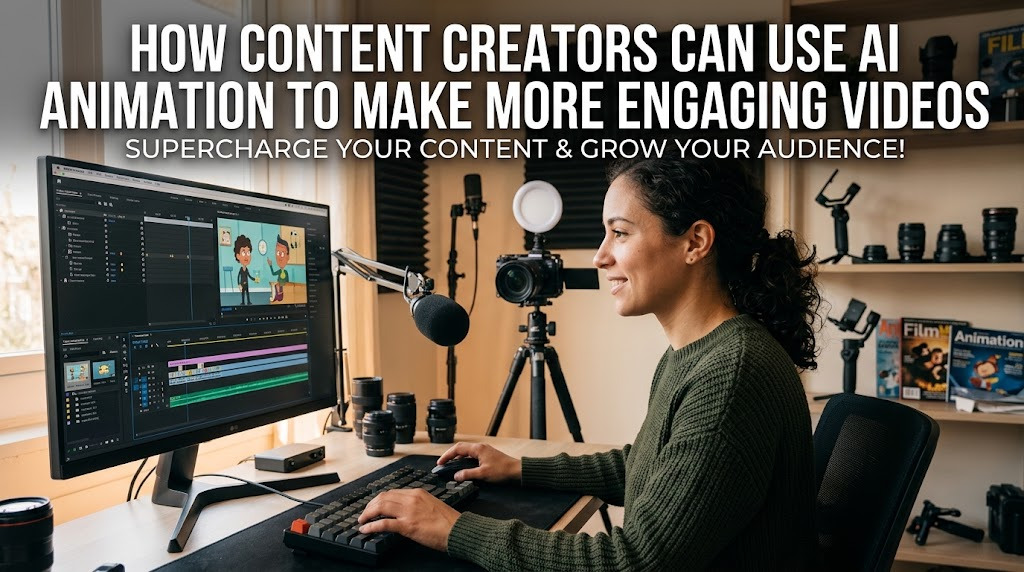
3D AI animation combines three-dimensional visual production with artificial intelligence to help creators develop animated characters, environments, objects, and scenes. Traditional 3D animation often requires modeling, rigging, texturing, lighting, animation, and rendering skills. AI can assist with some of these processes, making certain stages faster and more accessible.
Professional AI animation technology can be used to create realistic movements, detailed environments, cinematic scenes, and digital characters. However, AI does not eliminate the need for creative planning and technical supervision. Human creators still play an important role in deciding how a scene should look, move, and communicate its story.
HOW DOES 3D AI ANIMATION WORK?
The workflow can begin with a text prompt, image reference, 3D asset, or existing video. Depending on the tool, AI can help generate visual concepts, motion, textures, environments, or other elements. The creator then reviews the output and adjusts the result to match the intended project.
Some systems can generate motion from descriptions, while others can assist with existing 3D models or images. This makes AI-powered animation useful for different production workflows rather than being limited to one specific method. The exact capabilities vary between platforms and continue to develop rapidly.
WHAT MAKES 3D AI ANIMATION LOOK REALISTIC?
Realism depends on several visual factors working together. Natural movement, realistic lighting, detailed textures, accurate proportions, believable materials, and consistent camera motion all contribute to the final appearance. Even a highly detailed character can look artificial if its movements or lighting are unrealistic.
AI can help generate or enhance some of these elements, but creators still need to evaluate the result. Small problems such as unnatural hands, changing facial features, unrealistic shadows, or inconsistent textures can reduce the sense of realism. Careful editing and quality control remain important for professional projects.
REALISTIC AI CHARACTERS AND DIGITAL HUMANS
One of the most interesting areas of 3D AI animation is the development of realistic digital characters. AI can assist creators in generating facial expressions, body movements, clothing details, and other character elements. These digital humans can potentially be used in entertainment, education, marketing, virtual experiences, and other applications.
However, realistic characters require careful attention to consistency. Facial features should remain stable between scenes, while movements need to appear natural. Creators should also consider privacy, consent, identity, and ethical issues when creating realistic digital representations of real people.
AI ANIMATION FOR CINEMATIC PROJECTS
AI-assisted 3D animation can support filmmakers and independent creators who want to experiment with cinematic visuals. A creator can develop futuristic cities, fantasy landscapes, complex environments, digital characters, and dramatic camera shots without constructing every element entirely by hand.
This can be especially valuable during pre-production. Creators can visualize scenes and test different concepts before investing significant resources in traditional production. AI-generated material can also serve as inspiration or a starting point rather than being used as the final footage.
AI ANIMATION FOR GAMES AND VIRTUAL WORLDS
The gaming industry can also benefit from AI-assisted 3D workflows. Developers may use AI to explore character concepts, environmental designs, animation ideas, and digital assets. This can help teams experiment with different possibilities during development.
However, professional game production requires more than attractive visual assets. Characters and objects need to work correctly within a game engine, maintain consistent technical specifications, and respond appropriately to player interaction. AI-generated assets therefore still require human testing, optimization, and technical integration.
BENEFITS OF PROFESSIONAL 3D AI ANIMATION
One major advantage is production efficiency. AI can reduce the time needed to explore visual concepts and generate certain elements. This can be valuable for independent creators and small teams that may not have the resources of large animation studios.
Another benefit is creative experimentation. Creators can test different characters, environments, lighting styles, and camera movements relatively quickly. This can encourage experimentation and make it easier to discover new visual approaches.
LIMITATIONS OF 3D AI ANIMATION
Despite its rapid development, AI animation technology still has limitations. Generated characters may have inconsistent appearances, while complex physical interactions can be difficult to reproduce accurately. Long sequences can also create continuity problems when visual elements change between scenes.
There are also questions surrounding copyright, licensing, originality, and responsible AI use. The terms governing generated content can differ between platforms, so creators should review the relevant conditions before using AI-generated assets commercially. Professional projects should include human review at every important stage.
HOW TO CREATE BETTER 3D AI ANIMATION
A strong workflow begins with a clear creative plan. Define the character, environment, story, camera perspective, lighting, and intended animation style before generating content. This helps reduce unnecessary experimentation and creates a more consistent visual direction.
Creators should also use reference images and structured prompts when available. Instead of asking the AI to create everything at once, break a complex scene into smaller components. Generate, review, edit, and refine each element before combining them into the final animation.
THE ROLE OF HUMAN CREATIVITY
AI can automate certain production tasks, but human creativity remains central to professional animation. A successful animation needs storytelling, artistic direction, character development, pacing, emotional expression, and purposeful visual decisions. These elements determine whether viewers connect with the final work.
Professional creators can therefore treat AI as a production assistant rather than a complete replacement for their skills. Combining AI animation technology with traditional 3D techniques can provide greater control and flexibility. This hybrid approach can be especially useful for projects that require high visual quality and strong creative direction.
FUTURE OF REALISTIC 3D AI ANIMATION
The future of realistic AI animation is likely to involve increasingly sophisticated character movement, environmental interaction, visual consistency, and production workflows. AI systems may become better at understanding complex instructions and maintaining visual relationships across longer sequences.
As the technology develops, the distinction between traditional and AI-assisted workflows may become less important. Instead, creators may use whichever method is most effective for each stage of production. The most valuable skill will likely be knowing how to combine AI capabilities with artistic and technical expertise.
CONCLUSION
Realistic and professional 3D AI animation is changing how creators approach visual production. AI can assist with character development, environments, motion, visual concepts, and other parts of the animation workflow. These capabilities can make experimentation faster while giving independent creators access to techniques that were once more difficult to achieve.
However, professional-quality results still require human creativity, technical knowledge, editing, consistency, and quality control. AI is powerful, but it works best when guided by a clear creative vision. By combining 3D AI animation, structured prompts, reference materials, traditional production skills, and careful post-production, creators can explore new possibilities while maintaining greater control over their final work.
About the Author
Gusti Ayu Tita P
Author — STEKOM University
An active author focused on academic issues, educational technology, and human resource development in the campus environment.















