
Factors Affecting Sea Transportation Efficiency
Gusti Ayu Tita P
11 Agustus 2026
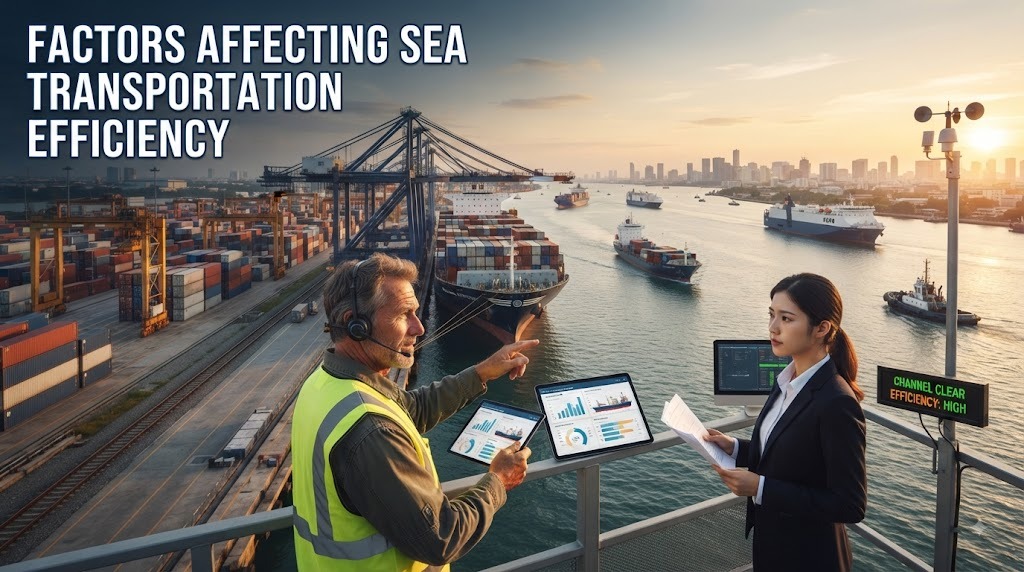
Sea transportation plays an important role in moving goods and passengers between countries and regions. Its efficiency affects delivery time, transportation costs, supply chains, and the reliability of maritime trade. Sea transportation efficiency means the ability to move cargo or passengers safely, reliably, and economically while using available resources effectively. Many factors can influence how well a maritime transportation system performs. Understanding these factors is important for improving shipping services and strengthening global and regional connectivity.
Efficient sea transportation requires cooperation between ships, ports, logistics companies, authorities, and other transportation providers. A problem in one part of the system can create delays in other parts. For example, port congestion can affect vessel schedules and increase cargo storage costs. Weather, fuel prices, technology, infrastructure, and workforce skills can also influence performance. Therefore, improving maritime efficiency requires an integrated approach rather than focusing on only one factor.
VESSEL CONDITION AND DESIGN
The condition and design of a vessel have a direct effect on transportation efficiency. Modern ships with efficient engines and optimized hull designs can use less fuel while carrying large amounts of cargo. Vessel efficiency can also be improved through regular maintenance of engines, propellers, navigation equipment, and other systems. Poorly maintained vessels may consume more fuel and experience unexpected technical problems.
Vessel size and type should also match the transportation route and cargo requirements. Large container ships may be efficient for high-volume international routes, while smaller vessels can be more suitable for regional or island connections. Proper vessel selection can reduce unnecessary operating costs. Regular inspections can also prevent mechanical problems from causing delays. Good vessel management contributes to reliable and efficient maritime transportation.
PORT INFRASTRUCTURE
Port infrastructure is one of the most important factors affecting maritime efficiency. Ports need adequate berths, navigation channels, cargo terminals, cranes, storage facilities, and access roads. Port infrastructure that is outdated or insufficient can cause congestion and increase vessel waiting times. Efficient infrastructure allows cargo to move more quickly between ships and land transportation.
Port capacity should also be developed according to current and future demand. If cargo volumes increase faster than port capacity, congestion can become a serious problem. Regular maintenance is necessary to keep facilities operational and safe. Modern equipment can accelerate loading and unloading activities. Well-planned infrastructure can significantly improve overall sea transportation performance.
PORT CONGESTION
Port congestion occurs when the demand for port services exceeds available capacity. Ships may have to wait before entering a terminal, while containers may remain in storage for longer periods. Port congestion can increase transportation costs and disrupt shipping schedules. It can also affect factories, warehouses, retailers, and consumers.
Several factors can cause congestion, including high cargo volumes, limited terminal capacity, equipment shortages, labor constraints, and inefficient scheduling. Digital scheduling systems can help ports manage vessel arrivals and cargo operations more effectively. Expanding infrastructure may also be necessary when congestion becomes persistent. Better coordination between shipping companies and terminal operators can reduce unnecessary waiting. Managing congestion is essential for improving maritime efficiency.
FUEL COSTS AND CONSUMPTION
Fuel is one of the major operating expenses in sea transportation. Changes in fuel prices can significantly affect shipping costs and business decisions. Fuel efficiency is therefore an important factor in maritime transportation performance. Ships that consume less fuel can reduce operating expenses and environmental emissions.
Fuel consumption depends on vessel design, speed, weather, cargo weight, route, and engine condition. Slow steaming can reduce fuel consumption when longer travel times are acceptable. Regular hull and propeller maintenance can also reduce resistance and improve efficiency. Digital monitoring systems can help identify inefficient operating patterns. Effective fuel management can improve both economic and environmental performance.
WEATHER AND SEA CONDITIONS
Weather and sea conditions can strongly influence maritime transportation. Strong winds, high waves, storms, fog, and heavy rainfall can make navigation more difficult. Weather conditions may force vessels to change routes, reduce speed, or delay departure. These changes can affect delivery schedules and transportation costs.
Modern ships use weather forecasting and navigation systems to monitor changing conditions. Route optimization can help vessels avoid severe weather when appropriate. However, safety must always take priority over speed or schedule targets. Accurate weather information can help crews and operators make better decisions. Effective weather management can reduce unnecessary delays while maintaining maritime safety.
NAVIGATION AND ROUTE PLANNING
Route selection has an important effect on transportation efficiency. A suitable route can reduce sailing distance, fuel consumption, and travel time. Route optimization can consider weather, vessel traffic, sea conditions, port schedules, and fuel consumption. Digital navigation systems can help operators identify efficient routes.
Poor route planning may result in unnecessary fuel use or delays. However, the shortest route is not always the most efficient because weather and traffic conditions can change. Modern systems can analyze multiple factors when recommending routes. Experienced crews also play an important role in evaluating navigation information. Combining technology with professional judgment can improve route efficiency.
CARGO HANDLING EFFICIENCY
The way cargo is loaded, unloaded, stored, and transferred affects the overall performance of sea transportation. Efficient cargo handling reduces the amount of time vessels spend in port. Cargo handling efficiency can improve when terminals use suitable equipment, trained workers, and well-organized procedures. Delays during cargo operations can disrupt entire shipping schedules.
Container terminals increasingly use cranes, automated systems, and digital tracking tools to improve cargo movement. Proper cargo planning can also reduce unnecessary handling. Goods should be loaded according to vessel stability requirements and destination sequences. Careful handling reduces the risk of damage and delays. Efficient cargo operations contribute to faster and more reliable maritime logistics.
LOGISTICS AND LAND CONNECTIONS
Sea transportation does not operate independently from other transportation modes. Cargo usually needs to continue its journey by truck, rail, or another land-based system after reaching a port. Logistics connectivity affects how quickly goods can move from ports to their final destinations. Poor road or rail connections can reduce the benefits of efficient shipping.
Integrated transportation planning can improve the movement of cargo between sea and land. Warehouses and distribution centers should also be connected to major ports where possible. Digital logistics platforms can provide better visibility across the entire supply chain. Coordination between shipping companies, ports, trucking companies, and cargo owners can reduce delays. Strong multimodal connections can improve overall transportation efficiency.
DIGITAL TECHNOLOGY
Digital technology has become increasingly important in maritime transportation. Vessel tracking, electronic documentation, automated scheduling, sensors, and data analysis can improve operational decisions. Digital maritime systems can reduce paperwork and provide real-time information about vessels and cargo. This information can help companies respond quickly to changing conditions.
Artificial intelligence and predictive analytics can also support route planning and equipment maintenance. Smart systems can identify unusual fuel consumption or potential technical problems. However, digital transformation requires reliable infrastructure and skilled workers. Cybersecurity is also essential because maritime operations depend increasingly on connected systems. Proper use of technology can improve efficiency while supporting safety and transparency.
WORKFORCE SKILLS
Human resources remain an important factor in maritime transportation. Ship crews, port workers, engineers, logistics staff, and managers need appropriate technical and operational skills. Maritime workforce skills influence safety, productivity, and the ability to use modern technologies. Poor training can increase the risk of errors and operational delays.
Continuous training is especially important as maritime technology develops. Workers may need new skills in digital systems, automation, cybersecurity, environmental management, and modern navigation. Experienced professionals can also help organizations respond to unexpected situations. A combination of practical experience and modern technical knowledge can improve performance. Investing in workers is therefore an important part of improving sea transportation efficiency.
REGULATIONS AND ADMINISTRATIVE PROCEDURES
Maritime transportation is influenced by national and international regulations. Rules related to safety, customs, environmental protection, vessel operations, and cargo handling are necessary for orderly transportation. Maritime regulations can improve safety and standardization, but complex administrative procedures may also create delays if they are not managed efficiently.
Digital documentation and electronic clearance systems can simplify many administrative processes. Better coordination between authorities can reduce duplicate inspections and paperwork. Regulations should remain strong while procedures are made as efficient as possible. Clear standards also help shipping companies understand their responsibilities. Effective regulation can support both safety and transportation efficiency.
THE ROLE OF AUTOMATION
Automation can improve efficiency by reducing repetitive tasks and increasing operational consistency. Automated cranes, cargo systems, monitoring tools, and scheduling platforms can accelerate port activities. Maritime automation can also reduce the workload associated with certain routine operations. However, automation requires appropriate maintenance and human supervision.
Workers must understand how automated systems operate and what to do when technical problems occur. Automation should be introduced according to operational needs rather than simply for technological advancement. Properly designed systems can reduce errors and improve productivity. Human oversight remains important for safety and complex decision-making. A balanced combination of automation and human expertise can improve maritime performance.
ECONOMIC AND GEOGRAPHICAL FACTORS
Economic conditions and geographical characteristics can also affect sea transportation efficiency. Fuel prices, labor costs, cargo demand, port charges, and investment levels influence transportation decisions. Economic factors can determine whether companies invest in new vessels, technology, or infrastructure. Regions with limited investment may face greater transportation challenges.
Geography is particularly important for countries with many islands and remote coastal areas. Long distances, shallow waters, and limited port facilities can increase transportation complexity. Smaller vessels may be needed to serve certain routes. Infrastructure development can help overcome geographical barriers. Understanding local economic and geographical conditions is essential when designing efficient maritime transportation systems.
STRATEGIES FOR IMPROVING SEA TRANSPORTATION EFFICIENCY
Improving sea transportation efficiency requires an integrated strategy. Governments and private companies can invest in modern vessels, port infrastructure, digital systems, and workforce development. Transportation efficiency can also improve through better route planning, cargo handling, maintenance, and logistics coordination. These improvements should be planned according to actual transportation needs.
Digital transformation can provide better information for decision-making, while sustainable technologies can reduce fuel consumption and environmental impacts. Ports and shipping companies should work together to reduce congestion and improve schedules. Training programs can ensure that workers are prepared for new technologies. Regular performance evaluation can identify areas that still require improvement. A coordinated approach can create a more reliable, efficient, and sustainable maritime transportation system.
CONCLUSION
Sea transportation efficiency is influenced by many interconnected factors, including vessel condition, port infrastructure, fuel consumption, weather, route planning, cargo handling, digital technology, workforce skills, regulations, and logistics connectivity. A weakness in one part of the system can affect the performance of other parts. Improving efficiency therefore requires cooperation across the entire maritime supply chain.
Modern technology, sustainable practices, skilled workers, and reliable infrastructure can significantly improve maritime performance. Effective planning, regular maintenance, smart port management, efficient logistics, and strong safety standards are also essential. By addressing these factors together, sea transportation can become faster, safer, more cost-effective, and environmentally responsible.
About the Author
Gusti Ayu Tita P
Author — STEKOM University
An active author focused on academic issues, educational technology, and human resource development in the campus environment.















