
Factors That Cause Vehicles To Consume More Fuel
Gusti Ayu Tita P
10 Agustus 2026
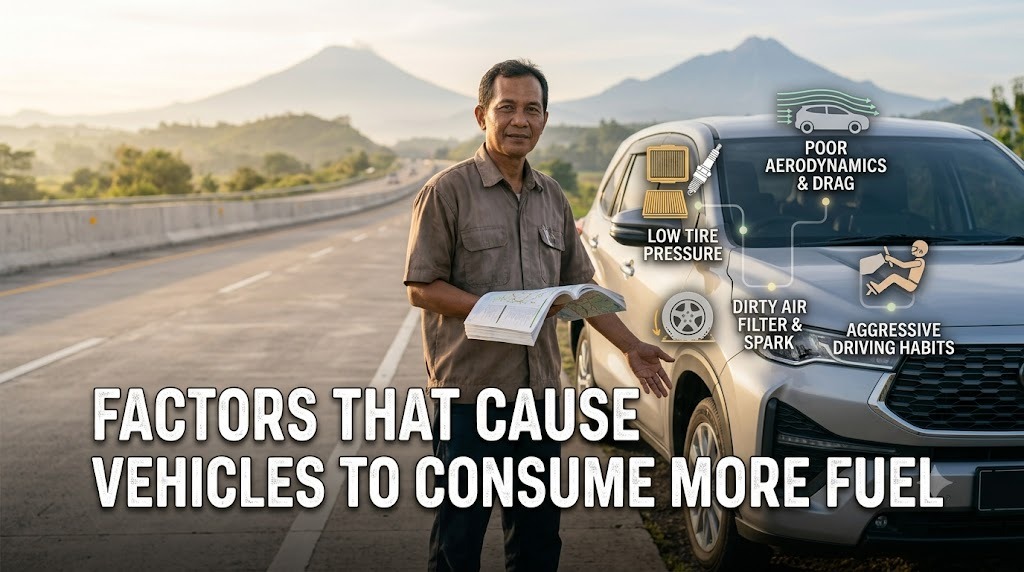
Fuel consumption is one of the main concerns for vehicle owners because it affects daily expenses and environmental impacts. Many people assume that high fuel usage is only caused by the type of vehicle, but several other factors can increase fuel consumption. Understanding these factors helps drivers use fuel more efficiently and maintain better vehicle performance.
A vehicle that consumes more fuel may experience problems related to driving habits, vehicle condition, road situations, or even fuel quality. By identifying the causes of excessive fuel consumption, drivers can take appropriate steps to reduce fuel waste and improve efficiency.
DRIVING HABITS THAT INCREASE FUEL CONSUMPTION
One of the biggest factors that causes vehicles to consume more fuel is poor driving habits. Aggressive driving, such as sudden acceleration, frequent hard braking, and driving at high speeds, can make the engine work harder and require more fuel. A vehicle uses more energy when the driver repeatedly changes speed instead of maintaining a stable pace.
Driving at high speed continuously can also reduce fuel efficiency because the engine needs more power to overcome air resistance. In addition, leaving the engine running while the vehicle is parked for a long time wastes fuel without producing useful movement.
Another habit that affects fuel consumption is carrying out unnecessary trips or using the vehicle for short distances too often. The engine usually needs more fuel when it has not reached its ideal operating temperature. Therefore, adopting efficient driving techniques can significantly help reduce fuel usage.
VEHICLE MAINTENANCE PROBLEMS
The condition of a vehicle has a major influence on fuel consumption. Vehicles that are not maintained properly often experience reduced performance, causing the engine to use more fuel to operate. Regular maintenance is important to keep every component working efficiently.
One common problem is a dirty air filter. A clogged air filter limits the amount of air entering the engine, making the combustion process less effective. As a result, the engine requires more fuel to produce the same amount of power.
Other issues such as worn spark plugs, dirty fuel injectors, and old engine oil can also increase fuel consumption. Proper maintenance, including regular oil changes and inspections, helps maintain engine performance and prevents unnecessary fuel waste.
TIRE CONDITION AND VEHICLE LOAD
Tire condition is another important factor that affects fuel consumption. Tires with incorrect pressure create higher rolling resistance, meaning the engine must work harder to move the vehicle. Maintaining the recommended tire pressure can improve driving efficiency and reduce fuel usage.
Using damaged or unsuitable tires may also decrease vehicle performance. Tires that are too large or have an inappropriate design can require more energy from the engine. Therefore, selecting the right tires is important for maintaining optimal fuel efficiency.
Vehicle load also influences how much fuel is consumed. Carrying excessive weight makes the engine work harder, especially during acceleration and uphill driving. Removing unnecessary items from the vehicle can help reduce fuel consumption and improve overall performance.
FUEL QUALITY AND ENGINE PERFORMANCE
The quality of fuel used in a vehicle can affect how efficiently the engine operates. Low-quality fuel may contain impurities that interfere with combustion and reduce engine performance. When combustion is not efficient, the vehicle may need more fuel to generate the required power.
Using fuel with the correct octane level according to the manufacturer's recommendation helps the engine perform properly. Fuel that does not match engine requirements may cause knocking and reduce efficiency over time.
In addition, problems inside the fuel system can also increase fuel consumption. Regular inspections and using suitable fuel products help maintain a clean fuel system and support better fuel economy.
ROAD CONDITIONS AND ENVIRONMENTAL FACTORS
External conditions also play an important role in vehicle fuel consumption. Driving in heavy traffic, frequent stops, and crowded urban areas can increase fuel usage because the engine constantly changes speed and operates inefficiently.
Road conditions such as steep hills, rough surfaces, and poor infrastructure can also force vehicles to use more energy. The engine needs additional power to overcome difficult terrain, resulting in higher fuel consumption.
Weather conditions may also influence fuel usage. Extreme temperatures can affect engine performance and increase the use of systems such as air conditioning. Therefore, drivers should consider environmental factors when trying to achieve better fuel efficiency.
HOW TO REDUCE EXCESSIVE FUEL CONSUMPTION
Reducing fuel consumption requires a combination of good driving habits and proper vehicle care. Drivers should maintain a steady speed, avoid unnecessary acceleration, and plan routes efficiently to reduce wasted fuel.
Regular vehicle maintenance is also essential to prevent problems that can increase fuel usage. Checking tire pressure, replacing damaged components, and using recommended fuel are simple steps that can improve vehicle efficiency.
By understanding the causes of high fuel consumption, drivers can make smarter decisions in daily transportation. Efficient vehicle use not only saves money but also helps reduce environmental impacts caused by excessive fuel consumption.
About the Author
Gusti Ayu Tita P
Author — STEKOM University
An active author focused on academic issues, educational technology, and human resource development in the campus environment.















