Factors That Influence Employee Career Growth and Development
Gusti Ayu Tita P
26 Juni 2026
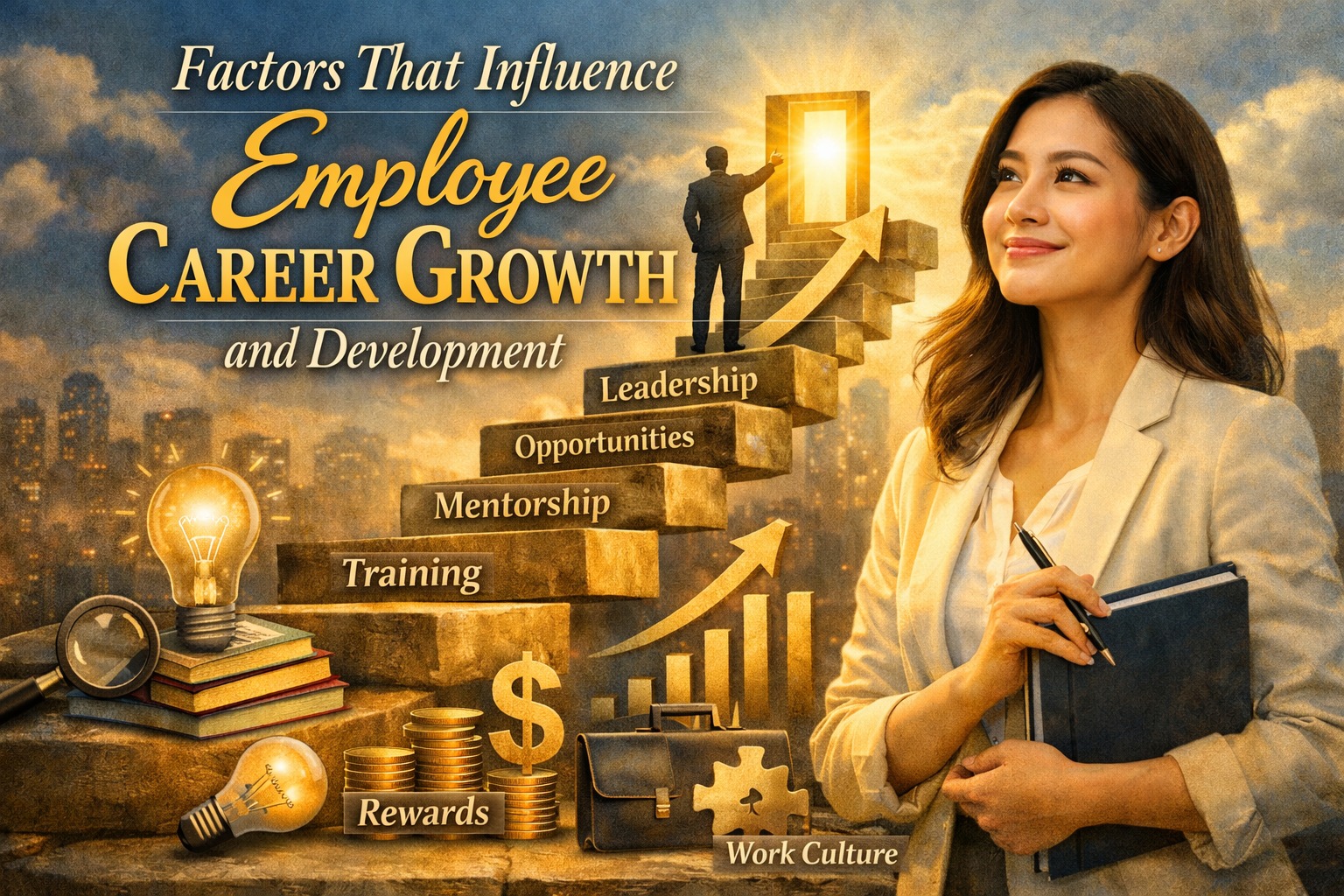
Employee career growth and development are important aspects of professional success. Every employee wants to advance in their career, gain new skills, and achieve higher positions within an organization. Career growth not only benefits individuals but also contributes to the overall success of a company. Understanding the factors that influence career development can help employees create better strategies for long-term professional advancement.
SKILLS AND CONTINUOUS LEARNING
One of the most important factors influencing career growth is continuous learning. Employees who regularly improve their knowledge and skills are more likely to adapt to changing workplace demands. Learning new technologies, industry trends, and professional techniques helps individuals remain competitive in their field.
In addition, organizations often prefer employees who demonstrate a willingness to learn. Participating in training programs, workshops, certifications, and professional development courses can significantly increase opportunities for promotion and career advancement. Skill development is a key foundation for long-term success.
WORK PERFORMANCE AND PRODUCTIVITY
Strong work performance plays a major role in career development. Employees who consistently achieve their goals and produce high-quality results are often recognized by management. Good performance demonstrates reliability, commitment, and professionalism.
Productivity also influences how employers evaluate an employee's potential for greater responsibilities. Individuals who contribute effectively to organizational objectives are more likely to receive promotions, salary increases, and leadership opportunities. Maintaining excellent performance creates a positive professional reputation.
COMMUNICATION AND INTERPERSONAL SKILLS
Effective communication skills are essential for career growth. Employees must be able to express ideas clearly, collaborate with colleagues, and communicate professionally with managers and clients. Strong communication improves teamwork and workplace relationships.
Equally important are interpersonal skills, such as empathy, active listening, and conflict resolution. Employees who build positive relationships often gain greater trust from coworkers and supervisors. These qualities can open doors to leadership positions and career advancement opportunities.
LEADERSHIP ABILITIES
Developing leadership skills is another important factor in career progression. Leadership is not limited to management positions; employees at all levels can demonstrate leadership through initiative, responsibility, and problem-solving abilities. Employers often look for individuals who can guide projects and inspire others.
Employees who show leadership potential are frequently considered for promotions and higher-level roles. Leadership qualities such as decision-making, accountability, and strategic thinking help individuals stand out in competitive work environments. These abilities contribute significantly to professional growth.
PROFESSIONAL NETWORKING
Building a strong professional network can positively influence career development. Networking allows employees to connect with industry professionals, mentors, and potential career opportunities. Professional relationships often provide valuable knowledge and support.
Networking can also increase visibility within an organization and industry. Employees who actively participate in professional communities, conferences, and business events often gain access to new opportunities. A strong network can become a valuable resource throughout a person's career journey.
ORGANIZATIONAL SUPPORT AND WORK ENVIRONMENT
The workplace environment has a significant impact on employee development. Companies that provide career development programs, mentoring opportunities, and training resources help employees grow professionally. Supportive organizations encourage continuous improvement and learning.
A positive work culture also motivates employees to perform at their best. When employees feel valued and supported, they are more likely to stay engaged and pursue career advancement. Organizational support creates an environment where talent can thrive and develop effectively.
ADAPTABILITY AND POSITIVE ATTITUDE
Modern workplaces are constantly evolving, making adaptability an essential career growth factor. Employees who can adjust to changes, learn new processes, and embrace innovation are often viewed as valuable assets. Flexibility allows individuals to remain relevant in dynamic industries.
A positive attitude also contributes to professional success. Employees who maintain optimism, resilience, and a solution-oriented mindset are better equipped to handle challenges. These qualities help build trust and increase opportunities for advancement.
CONCLUSION
Several factors influence employee career growth and development, including continuous learning, work performance, communication skills, leadership abilities, professional networking, organizational support, and adaptability. Employees who focus on developing these areas can improve their career prospects and achieve long-term success.
Career growth requires commitment, effort, and a willingness to learn. By continuously improving skills and maintaining a professional attitude, employees can create more opportunities and build a successful future in their chosen profession.
About the Author
Gusti Ayu Tita P
Author — STEKOM University
An active author focused on academic issues, educational technology, and human resource development in the campus environment.