
Factors That Make Someone More Vulnerable to Workaholism
Gusti Ayu Tita P
26 Agustus 2026
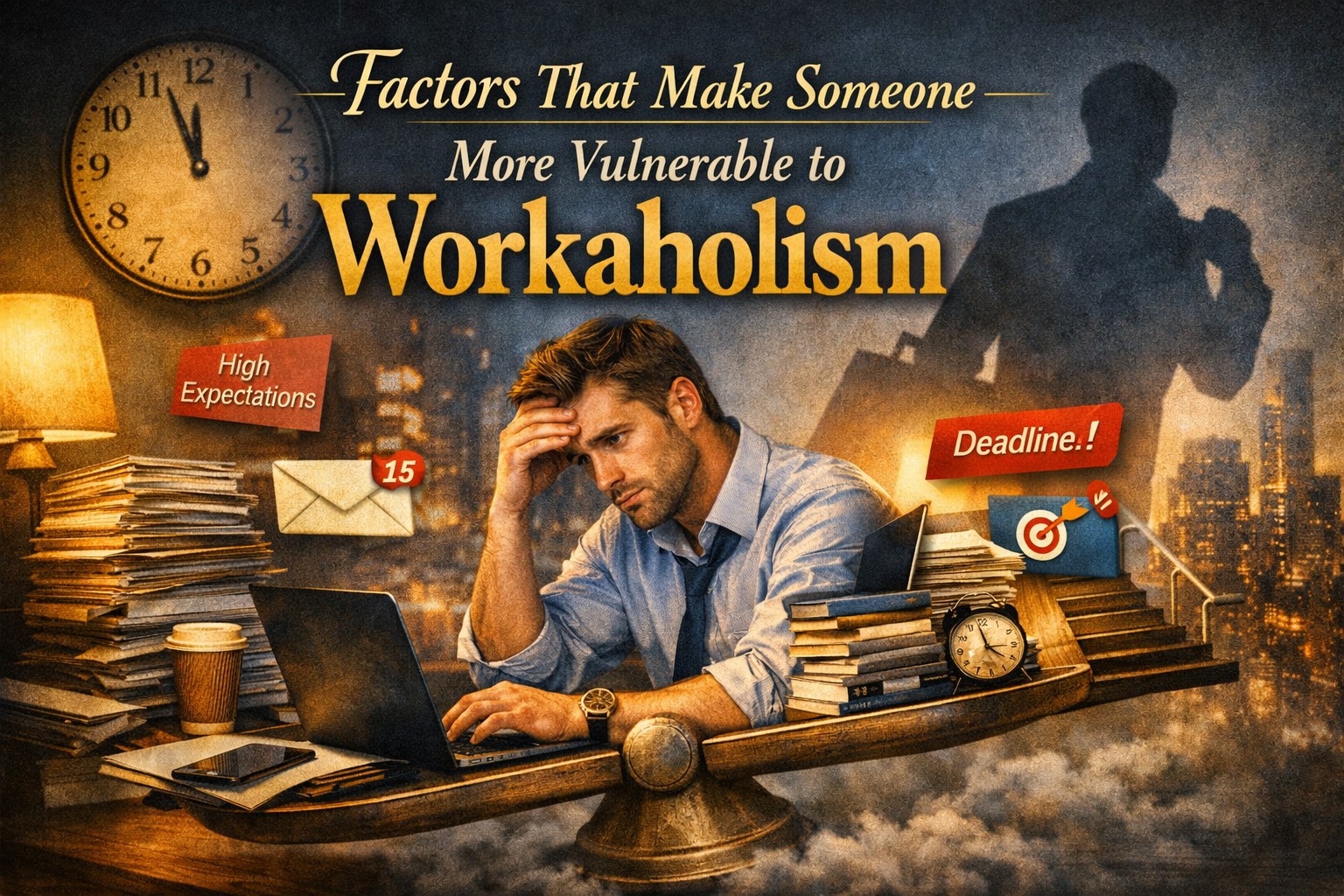
Factors That Make Someone More Vulnerable to Workaholism
In today's competitive world, many people feel pressured to work harder and longer to achieve their goals. While dedication is important, excessive work can develop into workaholism, a condition where a person becomes obsessed with work and struggles to maintain a healthy balance between professional and personal life. Understanding the factors that contribute to this behavior is essential for preventing its negative consequences.
Workaholism does not happen overnight. It is often influenced by a combination of personal traits, workplace culture, and social expectations. By recognizing these factors, individuals can take proactive steps to maintain a healthier work-life balance and protect their overall well-being.
PERSONALITY TRAITS THAT INCREASE THE RISK OF WORKAHOLISM
Certain personality characteristics make some individuals more susceptible to workaholic behavior. People who are highly ambitious often set extremely high standards for themselves and constantly strive for achievement. While ambition can lead to success, it may also create a mindset where work becomes the primary focus of life. Individuals with perfectionist tendencies frequently spend excessive time refining tasks because they fear making mistakes.
Another common factor is a strong need for validation and recognition. Some people associate their self-worth with their professional accomplishments and seek constant approval from colleagues, managers, or clients. As a result, they may work longer hours than necessary to prove their value. Over time, this pattern can develop into an unhealthy dependence on work for emotional satisfaction.
WORKPLACE CULTURE AND ORGANIZATIONAL EXPECTATIONS
The environment in which a person works plays a significant role in the development of workaholism. Organizations that reward long working hours instead of productivity may unintentionally encourage employees to overwork. In such workplaces, employees often feel pressured to remain available outside normal working hours to demonstrate commitment.
Additionally, competitive work environments can increase the likelihood of excessive working habits. Employees may fear falling behind their peers or missing promotion opportunities. This pressure can lead them to sacrifice personal time, family relationships, and rest. Over time, the constant demand for performance may create a cycle of chronic overworking.
TECHNOLOGY AND CONSTANT CONNECTIVITY
Modern technology has made it easier than ever to stay connected to work. Smartphones, laptops, and communication platforms allow employees to respond to messages and complete tasks from virtually anywhere. While these tools improve efficiency, they can also blur the boundaries between work and personal life.
Many workers feel obligated to check emails after business hours or respond immediately to work-related notifications. This continuous accessibility creates a sense that work never truly ends. As a result, people may struggle to disconnect mentally, increasing their vulnerability to work-related stress and workaholic tendencies.
FINANCIAL PRESSURE AND CAREER AMBITION
Financial concerns are another major factor that can contribute to excessive work habits. Individuals facing significant financial responsibilities may feel compelled to work longer hours to increase their income. Rising living costs, debt obligations, and family expenses can create pressure to prioritize work above all else.
Career ambition can also drive people toward workaholism. Many professionals are determined to achieve promotions, salary increases, or leadership positions. While pursuing career growth is not inherently harmful, an excessive focus on professional success can lead individuals to neglect their health, relationships, and personal interests.
SOCIAL EXPECTATIONS AND CULTURAL INFLUENCES
In many societies, working hard is often viewed as a sign of responsibility and success. People who dedicate most of their time to work are frequently praised for their commitment and determination. This social approval can reinforce behaviors associated with employee burnout and workaholism.
Cultural expectations may also influence how individuals perceive productivity. Some people believe that taking breaks or prioritizing leisure activities reflects laziness. Consequently, they may feel guilty when not working, even when rest is necessary. Over time, this mindset can contribute to an unhealthy relationship with work.
LACK OF HEALTHY WORK-LIFE BALANCE SKILLS
Many individuals become vulnerable to workaholism because they have not developed effective strategies for maintaining a healthy work-life balance. They may struggle to set boundaries, manage time efficiently, or prioritize self-care. Without these skills, work can gradually consume more and more of their daily lives.
Learning to establish clear limits between professional and personal responsibilities is essential for preventing workaholic behavior. Regular exercise, hobbies, family activities, and adequate rest can help create a more balanced lifestyle. Developing these habits allows individuals to remain productive while protecting their physical and mental health.
CONCLUSION
Several factors can make a person more vulnerable to workaholism, including personality traits, workplace culture, technological connectivity, financial pressure, social expectations, and poor work-life balance skills. While dedication and ambition are valuable qualities, excessive work can negatively affect health, relationships, and overall happiness.
Recognizing the warning signs and underlying causes of workaholism is the first step toward prevention. By establishing healthy boundaries, prioritizing self-care, and maintaining a balanced lifestyle, individuals can achieve professional success without sacrificing their well-being.
About the Author
Gusti Ayu Tita P
Author — STEKOM University
An active author focused on academic issues, educational technology, and human resource development in the campus environment.















