Facts About Annual Minimum Wage Increases
Gusti Ayu Tita P
18 Juli 2026
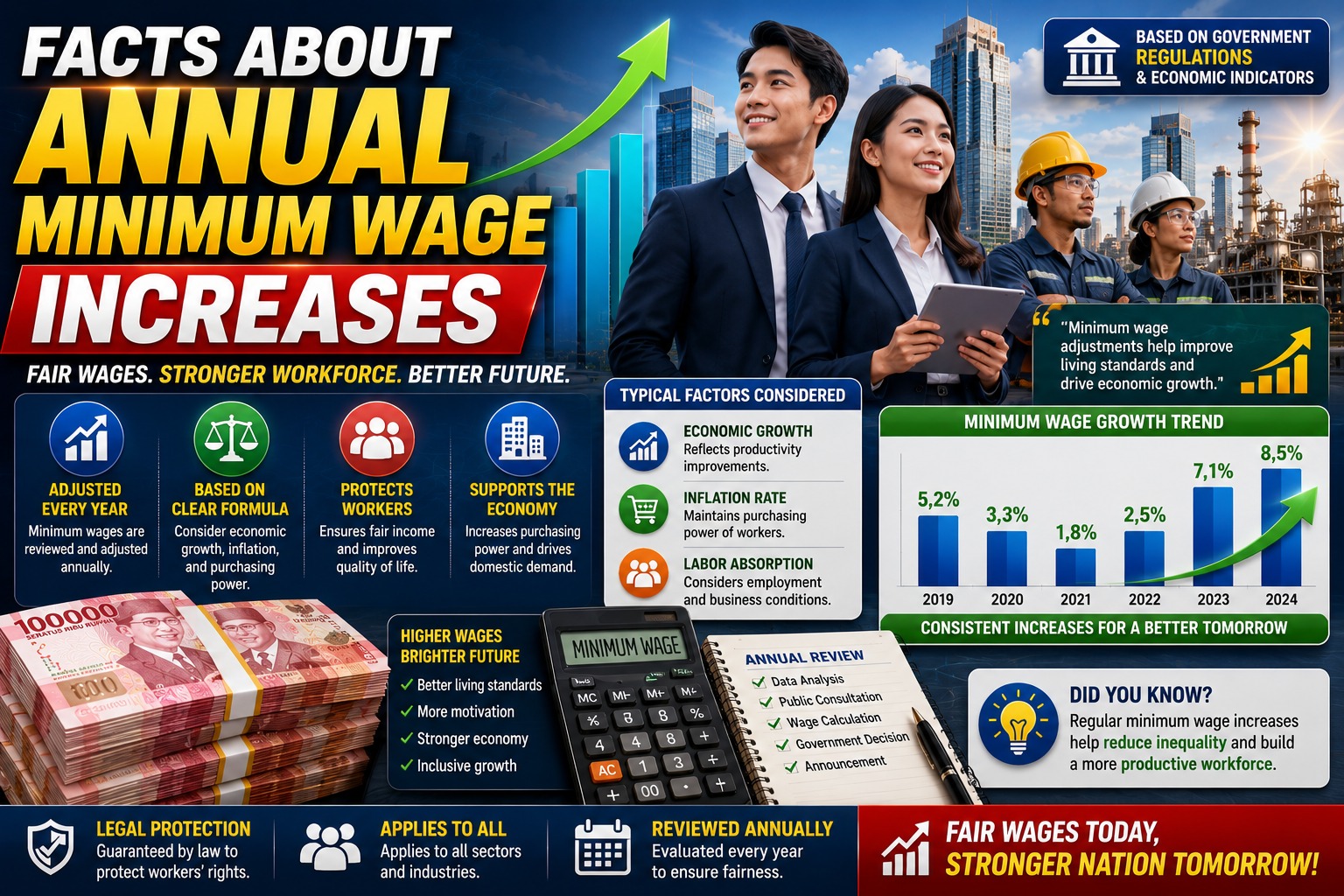
Annual minimum wage increases are an important part of labor and economic policies in many countries. Governments regularly review wage standards to help workers keep up with inflation, rising living costs, and economic changes. While some countries adjust wages every year automatically, others only change minimum wages after government discussions or new legislation.
Understanding how annual minimum wage increases work can help employees, employers, and job seekers better prepare for economic changes.
MINIMUM WAGE INCREASES DO NOT HAPPEN THE SAME WAY IN EVERY COUNTRY
Each country has its own system for determining wage increases. Some governments adjust wages annually based on inflation rates, while others negotiate wage changes through labor councils, unions, and employer organizations.
For example, several states in the United States automatically raise minimum wages according to inflation indexes.
In Indonesia, annual minimum wage increases are usually influenced by inflation, economic growth, and government regulations. Recent regulations also adjusted the formula used to determine annual wage increases.
INFLATION IS ONE OF THE BIGGEST REASONS FOR WAGE INCREASES
One major reason governments raise minimum wages is inflation. When prices for food, transportation, housing, and utilities increase, workers need higher incomes to maintain purchasing power.
Some regions directly connect minimum wage adjustments to inflation data so wages can rise automatically each year.
Without periodic increases, workers may struggle to afford basic living expenses even if they remain employed full-time.
HIGHER MINIMUM WAGES CAN BOOST CONSUMER SPENDING
When workers receive higher salaries, they usually spend more money on goods and services. Economists often consider this beneficial for local businesses and economic activity.
Research and economic studies suggest that higher wages can increase consumer spending and stimulate economic growth.
Employees with higher incomes may spend more on:
- Food and groceries
- Transportation
- Housing
- Education
- Healthcare
- Entertainment
This increased spending can support local businesses and improve economic circulation.
SOME BUSINESSES WORRY ABOUT RISING LABOR COSTS
Although workers benefit from wage increases, some companies worry about higher operational expenses. Businesses with small profit margins may face financial pressure when labor costs rise significantly.
Critics of minimum wage increases argue that higher wages can sometimes lead to:
- Reduced hiring
- Higher product prices
- Automation growth
- Reduced working hours
- Increased operational costs
These concerns are part of ongoing economic debates worldwide.
MANY WORKERS RECEIVE PAY RAISES EVEN WITHOUT MINIMUM WAGE CHANGES
An interesting fact is that many employees receive salary increases through promotions, experience, or career growth even when minimum wages remain unchanged.
Research from the National Bureau of Economic Research found that many minimum wage workers experience wage increases within one year due to career progression and labor market demand.
This means minimum wage increases are not the only factor influencing employee earnings.
SOME COUNTRIES HAVE NOT RAISED FEDERAL MINIMUM WAGES FOR YEARS
In some countries, national minimum wages remain unchanged for long periods. For example, the United States federal minimum wage has stayed at $7.25 per hour since 2009, although many states set higher wage standards independently.
Because of this, regional governments often play a major role in determining realistic wage levels for workers.
ANNUAL INCREASES CAN REDUCE INCOME INEQUALITY
Supporters of minimum wage increases believe higher salaries help reduce income inequality and poverty. Several economic studies suggest that raising wages can improve living standards for lower-income workers.
Higher wages may also contribute to:
- Better education access
- Improved healthcare
- Reduced financial stress
- Better quality of life
For many families, annual wage increases help maintain economic stability during periods of rising prices.
MINIMUM WAGE INCREASES OFTEN SPARK PUBLIC DEBATE
Minimum wage discussions frequently become political and economic debates. Workers generally support higher wages, while some businesses worry about profitability and competitiveness.
Online discussions and public opinions often focus on topics such as:
- Whether wage increases cause inflation
- The impact on unemployment
- Small business survival
- Fair compensation
- Living wage standards
Public opinion on these issues varies depending on economic conditions and individual perspectives.
MANY COUNTRIES CONTINUE TO RAISE WAGES IN 2026
Several countries announced minimum wage increases for 2026 due to inflation and rising living costs.
For example:
- Australia approved a 3.5% wage increase for millions of workers.
- The United Kingdom approved a 4.1% increase in the national minimum wage.
- Multiple U.S. states also raised their minimum wages in 2026.
These adjustments reflect global efforts to balance worker welfare with economic conditions.
CONCLUSION
Annual minimum wage increases play a major role in protecting workers’ purchasing power and supporting economic stability. While higher wages can improve living standards and consumer spending, they can also create challenges for businesses facing rising labor costs.
The debate surrounding minimum wage policies will likely continue as governments attempt to balance economic growth, worker welfare, inflation, and employment opportunities. Understanding the facts behind annual wage increases helps both workers and employers make better financial and career decisions.
About the Author
Gusti Ayu Tita P
Author — STEKOM University
An active author focused on academic issues, educational technology, and human resource development in the campus environment.