
Facts and Myths About Reincarnation You Should Know
Gusti Ayu Tita P
9 September 2026
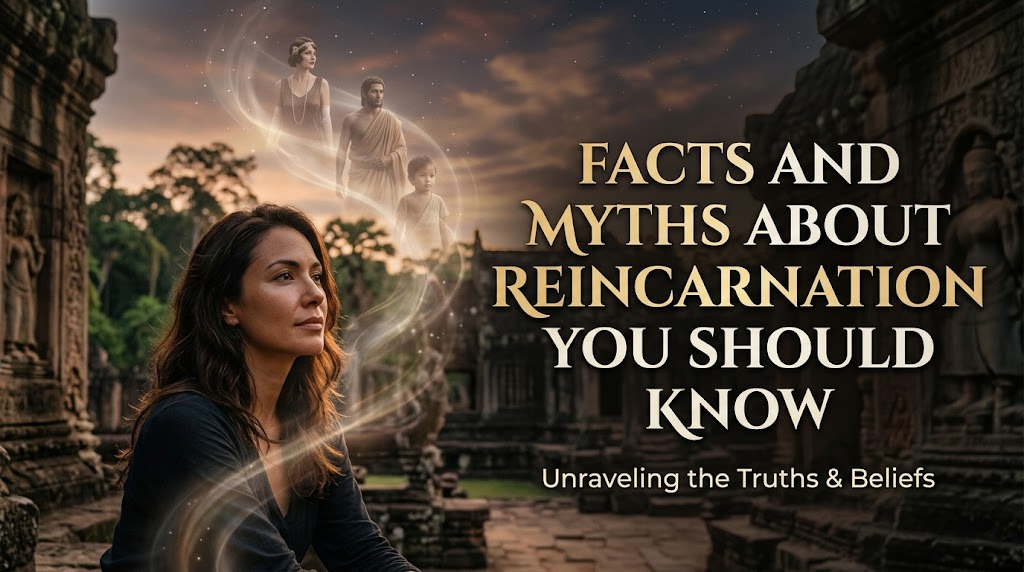
Reincarnation is a fascinating concept that has been discussed in religions, cultures, and spiritual traditions for centuries. It generally refers to the belief that a person may experience another existence after death through rebirth. Stories about previous lives have also attracted public attention and sometimes become difficult to separate from facts. Understanding the difference between religious beliefs, cultural stories, personal experiences, and scientific evidence is important when discussing reincarnation. A balanced approach can help readers explore the subject without accepting every claim as proven.
REINCARNATION AS A RELIGIOUS AND SPIRITUAL BELIEF
One important fact about reincarnation is that it exists as a genuine belief within several religious and spiritual traditions. Hinduism, Buddhism, and some traditional belief systems have concepts related to rebirth, although their explanations are not identical. In Hinduism, rebirth is connected with karma and samsara, while Buddhism presents a different understanding of continuity and existence. These teachings have been discussed and developed over many centuries.
However, religious belief should not automatically be presented as scientific fact. A belief can have deep spiritual and cultural meaning for the people who follow it without being scientifically verified. Understanding this distinction helps avoid confusion when discussing reincarnation. It also allows different traditions to be studied respectfully within their own historical and religious contexts.
MYTHS ABOUT MEMORIES OF PAST LIVES
One common idea about reincarnation is that people who are reborn will automatically remember everything from a previous life. This is not a universal teaching shared by all traditions. In many religious interpretations, the relationship between a previous existence and a new life is more complex than simply carrying memories from one body to another. Therefore, claims about past lives should not be treated as a standard feature of every reincarnation belief.
Stories about people who claim to remember previous lives can be interesting, but they require careful consideration. Human memory can be influenced by information, expectations, imagination, and experiences from the surrounding environment. A person may sincerely believe that a memory is connected to a previous life without that experience providing proof of reincarnation. This is why personal stories should be distinguished from established evidence.
REINCARNATION STORIES ARE NOT AUTOMATIC PROOF
Another common myth is that every unusual story involving a person's memories or experiences proves that reincarnation exists. In reality, an unusual story can have multiple possible interpretations. Some stories may come from religious traditions, family narratives, media reports, or personal experiences. Without independent and reliable evidence, it is difficult to determine what actually caused a particular experience.
Reincarnation stories can still be valuable subjects for cultural and psychological study. Researchers may examine how people form memories, interpret unusual experiences, and develop beliefs about their identities. However, studying these experiences does not necessarily mean that researchers have confirmed reincarnation. The distinction between investigating a claim and proving a claim is important when evaluating this topic.
SCIENTIFIC PERSPECTIVES ON REINCARNATION
Scientific research has examined some reports involving people who claim to remember past lives. Researchers may investigate details of these reports and compare them with available information. Such investigations can contribute to discussions about memory, psychology, culture, and human experiences. However, the existence of reported cases does not by itself establish reincarnation as a scientifically proven phenomenon.
Science relies on evidence that can be systematically examined, tested, and evaluated. Claims that cannot be reliably verified require careful interpretation. Psychological factors, memory processes, cultural influences, and other explanations may need to be considered before reaching a conclusion. For this reason, the scientific perspective on reincarnation remains different from religious or spiritual interpretations.
HOW TO DISTINGUISH FACTS FROM MYTHS
The best way to understand claims about reincarnation is to examine their sources and context. Ask whether a statement comes from a religious teaching, cultural tradition, personal testimony, fictional story, or scientific research. It is also useful to check whether the information has been independently verified. These steps can help separate facts and myths when reading about reincarnation.
A balanced approach does not require people to reject spiritual beliefs or accept every unusual claim. Instead, it encourages respect for religious traditions while maintaining critical thinking about statements presented as factual. Stories can be meaningful without being scientifically proven. By considering different perspectives carefully, readers can develop a more informed understanding of reincarnation.
CONCLUSION
Facts and myths about reincarnation are often mixed together because the topic involves religion, culture, personal experiences, and mysterious stories. Reincarnation is a genuine belief in several traditions, but the existence of the belief is different from scientific proof that reincarnation occurs. Stories about past lives may be interesting subjects for cultural or psychological study, yet they should not automatically be treated as evidence. Understanding the difference between belief, personal experience, and scientific evidence can lead to a more balanced view of reincarnation.
About the Author
Gusti Ayu Tita P
Author — STEKOM University
An active author focused on academic issues, educational technology, and human resource development in the campus environment.