
Famous Royal Palaces to Visit for a Cultural Journey in Java
Gusti Ayu Tita P
4 September 2026
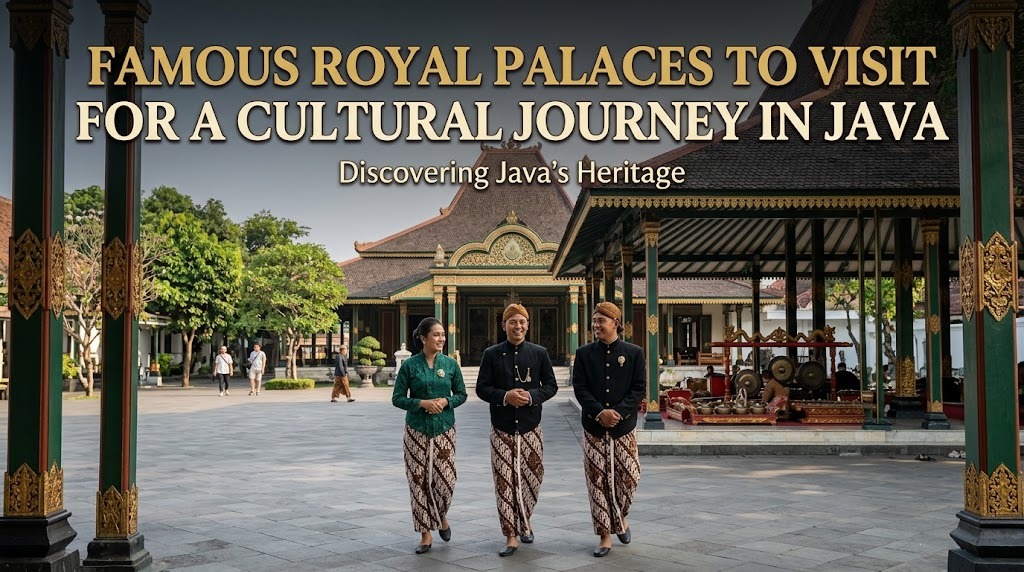
Java is home to many historic royal palaces that preserve stories, traditions, architecture, and artistic practices from generations past. Visiting these places offers more than beautiful scenery because travelers can also learn about the cultural values that continue to shape Javanese society. From Yogyakarta to Surakarta, each palace has its own character and historical background. A cultural journey in Java becomes more meaningful when visitors take time to understand the traditions behind these remarkable sites.
KRATON YOGYAKARTA AS A CENTER OF JAVANESE CULTURE
The Kraton Yogyakarta is one of the most important cultural landmarks in Java. Located in the heart of Yogyakarta, the palace remains closely connected to the Sultanate of Yogyakarta and the cultural life of the city. Its architecture reflects traditional Javanese concepts, while different parts of the complex have specific functions and meanings. Visitors can explore palace areas, museums, traditional performances, and collections that provide insight into Javanese history.
The palace is also important because several traditional ceremonies and cultural activities continue to be associated with it. Visitors may encounter gamelan music, classical Javanese dance, traditional clothing, and other forms of cultural expression. These activities demonstrate how historical traditions can remain relevant in modern society. For travelers interested in Javanese heritage, Kraton Yogyakarta offers an opportunity to experience history through architecture, art, and living traditions.
KASUNANAN SURAKARTA AND ITS CULTURAL HERITAGE
Another significant destination is the Kasunanan Surakarta Palace, commonly known as Keraton Surakarta Hadiningrat. The palace has played an important role in the history and cultural development of Surakarta. Its complex contains traditional buildings, courtyards, and collections associated with the royal heritage of Central Java. Exploring the palace allows visitors to understand how royal institutions influenced art, etiquette, architecture, and community traditions.
The palace is particularly interesting for travelers who want to discover the connection between royal traditions and Javanese arts. Traditional ceremonies, gamelan music, dance, and other cultural practices form an important part of the heritage associated with Surakarta. The palace also provides historical context for understanding the development of Javanese culture. A visit can therefore combine sightseeing with a deeper appreciation of Indonesia's cultural diversity.
PAKUALAMAN PALACE AND ITS HISTORICAL CHARACTER
Pura Pakualaman is another historic palace worth visiting in Yogyakarta. It is associated with the Pakualaman principality and represents a distinct part of the city's royal history. The palace complex combines traditional Javanese architectural elements with historical influences that developed over time. Its buildings, collections, and cultural activities provide valuable information about the traditions maintained by the Pakualaman royal family.
For visitors, Pura Pakualaman offers a quieter cultural experience compared with some larger tourist attractions. Its heritage can be appreciated through traditional architecture, historical objects, and cultural practices. Learning about the palace also helps visitors understand that Javanese royal history is not limited to a single institution. The palace represents another important chapter in the cultural history of Yogyakarta.
MANGKUNEGARAN PALACE AND JAVANESE ARTS
The Mangkunegaran Palace in Surakarta is well known for its historical and artistic heritage. It was established as the center of the Mangkunegaran principality and has preserved many elements of Javanese court culture. The palace features elegant traditional architecture and spaces that reflect the organization of a royal environment. Its cultural collections can help visitors understand the relationship between royal life and the development of Javanese art.
One of the most interesting aspects of the palace is its connection with Javanese performing arts. Music, dance, traditional ceremonies, and artistic traditions have long been part of court culture in Surakarta. Visitors can gain a better understanding of these traditions by observing the palace environment and learning about its history. This makes Mangkunegaran an appealing destination for travelers who want a combination of history, architecture, and cultural experiences.
CIREBON PALACES AND THE DIVERSITY OF JAVANESE HERITAGE
Cirebon in West Java offers a different perspective on royal heritage through historic palace complexes such as Keraton Kasepuhan. The city developed as an important cultural and trading center, creating a distinctive heritage influenced by Javanese, Sundanese, Islamic, Chinese, and other cultural traditions. The architecture and historical collections found in Cirebon reflect this cultural interaction. Visiting its palaces can therefore broaden the understanding of how diverse influences shaped Indonesian history.
Keraton Kasepuhan is especially valuable for travelers interested in cultural diversity. Its buildings and collections demonstrate that royal heritage in Java is not completely uniform from one region to another. Local history, religion, trade, and intercultural relationships contributed to the development of Cirebon's distinctive identity. Exploring these palaces can make a cultural trip through Java more comprehensive and memorable.
HOW TO ENJOY A CULTURAL JOURNEY THROUGH JAVA
A cultural journey through Java becomes more rewarding when travelers prepare before visiting a royal palace. Reading basic information about the palace's history can make architectural details and traditional ceremonies easier to understand. Visitors should also follow local rules, respect restricted areas, and dress appropriately when required. Respect for local customs is an important part of responsible cultural tourism.
Travelers can also combine palace visits with museums, traditional markets, historic neighborhoods, and local cultural performances. This approach provides a broader picture of the communities surrounding the royal institutions. Taking time to listen to guides and learn the meaning behind cultural objects can create a more meaningful experience than simply taking photographs. By visiting responsibly, tourists can enjoy Java's heritage while supporting continued appreciation of its living cultural traditions.
CONCLUSION
Historic royal palaces across Java offer travelers an opportunity to discover Indonesia through architecture, history, art, and living traditions. Kraton Yogyakarta, Kasunanan Surakarta, Pura Pakualaman, Mangkunegaran Palace, and Keraton Kasepuhan each provide different perspectives on the region's cultural development. Their traditions show how heritage can continue to exist alongside modern life. For anyone planning a cultural journey in Java, these royal palaces are valuable destinations for learning, exploration, and appreciation of Indonesia's rich cultural identity.
About the Author
Gusti Ayu Tita P
Author — STEKOM University
An active author focused on academic issues, educational technology, and human resource development in the campus environment.















