
Fascinating Facts About Indonesian History You Should Know
Gusti Ayu Tita P
5 Agustus 2026
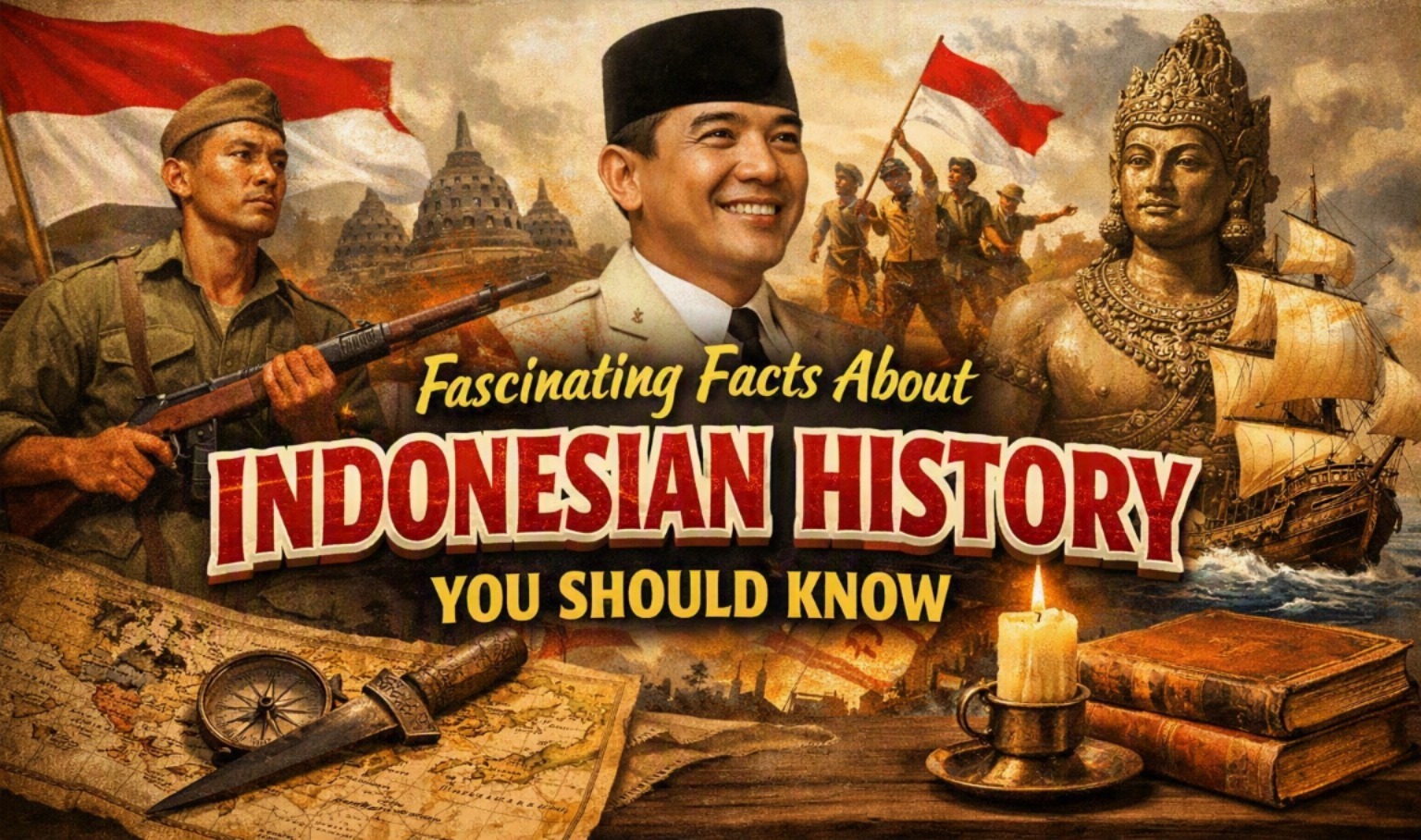
Indonesia has one of the richest and most diverse histories in the world. As the largest archipelago, the country has been shaped by ancient kingdoms, global trade, colonialism, and the struggle for independence. Every period has left a valuable legacy that continues to influence Indonesian culture, politics, and society today. Learning about Indonesian history helps people understand how the nation developed into its present form. These fascinating facts also show why Indonesia remains an important country in Southeast Asia and beyond.
THE EARLIEST CIVILIZATIONS IN INDONESIA
Indonesia has been home to human civilizations for thousands of years. Archaeological discoveries show that ancient humans lived on several islands long before recorded history began. One of the most famous findings is Homo erectus, often called Java Man, whose fossils were discovered in East Java. These discoveries make Indonesia one of the world's most significant locations for studying early human evolution.
As communities developed, people learned farming, fishing, and metalworking. They also built trading networks that connected different islands. These early societies laid the foundation for future kingdoms and cultural traditions. Many ancient customs, arts, and local beliefs can still be seen in various regions of Indonesia today.
POWERFUL KINGDOMS SHAPED THE ARCHIPELAGO
Long before European nations arrived, Indonesia was home to several powerful kingdoms. The Srivijaya Kingdom became a major maritime power that controlled important trade routes across Southeast Asia. Later, the Majapahit Empire expanded its influence over many islands and became one of the greatest kingdoms in Indonesian history. These kingdoms encouraged economic growth, cultural exchange, and regional cooperation.
Religion also played an important role during this period. Hinduism, Buddhism, and later Islam spread through peaceful trade and cultural interaction. This process created a unique blend of traditions that still exists in Indonesia today. Historic temples, royal palaces, and cultural ceremonies remain valuable evidence of this remarkable era.
INDONESIA WAS A CENTER OF THE GLOBAL SPICE TRADE
For centuries, Indonesia was famous for producing valuable spices such as cloves, nutmeg, and pepper. These spices were highly prized in Europe, the Middle East, and Asia because they were used for cooking, medicine, and preserving food. Islands such as the Maluku Islands became known as the world's leading spice producers. Merchants from many countries traveled long distances to trade in Indonesian ports.
The enormous value of spices attracted European colonial powers, including the Portuguese, Dutch, and British. Competition to control the spice trade eventually changed Indonesia's political landscape. Although this period brought economic opportunities, it also led to foreign domination and conflict. The spice trade remains one of the most fascinating chapters in Indonesian history.
THE LONG STRUGGLE FOR INDEPENDENCE
Indonesia experienced centuries of colonial rule, especially under the Dutch. During this period, many Indonesians faced economic exploitation and social inequality. Despite these challenges, nationalism continued to grow through education, youth organizations, and cultural movements. Many national leaders inspired people to unite for freedom.
The most significant moment came on August 17, 1945, when Indonesia declared its independence. However, achieving full international recognition required several more years of diplomatic negotiations and armed resistance. The determination and sacrifice of countless heroes eventually secured Indonesia's sovereignty. This struggle remains an important source of national pride.
INDONESIA CONTINUES TO PRESERVE ITS HISTORICAL HERITAGE
Today, Indonesia actively protects many historical sites, museums, and cultural traditions. Famous landmarks such as Borobudur Temple and Prambanan Temple attract visitors from around the world while preserving important historical knowledge. Museums throughout the country display artifacts that explain Indonesia's long journey from ancient civilizations to modern independence. These institutions help educate younger generations about their national identity.
Historical preservation also supports tourism and cultural appreciation. Schools, universities, and researchers continue studying Indonesia's past to better understand its development. By protecting historical heritage, Indonesia ensures that future generations can continue learning from the achievements and challenges of earlier societies. History remains a valuable guide for building a stronger future.
CONCLUSION
The history of Indonesia is filled with remarkable achievements, rich cultural diversity, and inspiring stories of resilience. From ancient civilizations and powerful kingdoms to the global spice trade and the fight for independence, every era has shaped the nation in meaningful ways. Understanding these fascinating facts helps people appreciate Indonesia's unique identity and its contributions to world history. By preserving historical knowledge, Indonesia continues to inspire future generations while honoring the legacy of its past.
About the Author
Gusti Ayu Tita P
Author — STEKOM University
An active author focused on academic issues, educational technology, and human resource development in the campus environment.















