
Fascinating Reincarnation Stories from Around the World
Gusti Ayu Tita P
9 September 2026
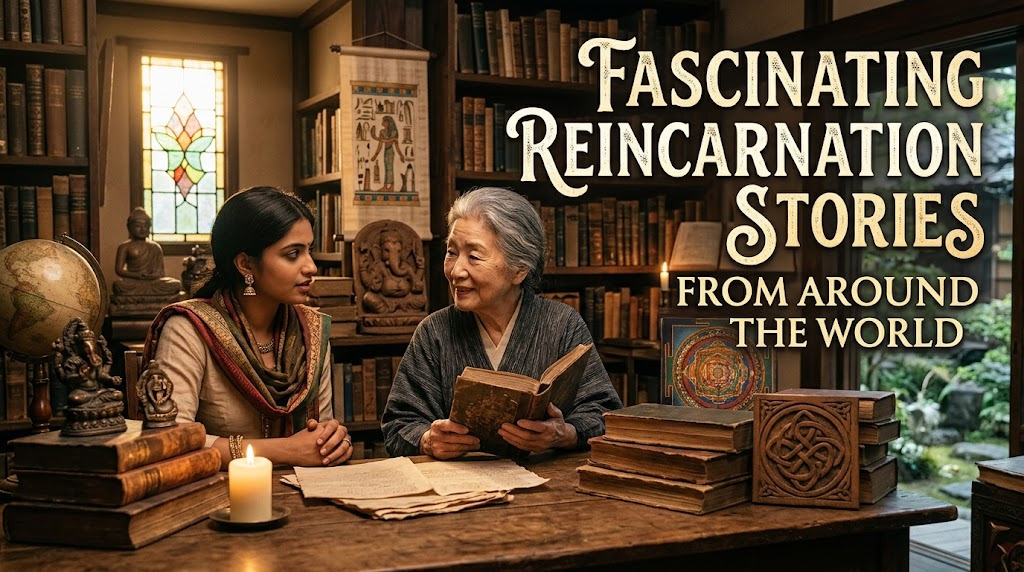
Reincarnation stories have attracted attention in many parts of the world for generations. These stories often describe people who believe they remember details from a past life, including places, names, events, or relationships. Some accounts come from religious traditions, while others are based on personal experiences reported by families and communities. Although such stories can be fascinating, they should be distinguished from scientifically established evidence. Exploring them can provide insight into how different cultures understand reincarnation and life after death.
REINCARNATION STORIES IN DIFFERENT CULTURES
Stories about reincarnation can be found in different religious and cultural settings. In some communities, stories about rebirth are connected to religious teachings about karma and the cycle of life. In other cultures, similar stories may involve ancestors, spirits, or unusual experiences associated with young children. These accounts can have different meanings depending on the beliefs of the communities where they are told.
Many stories are passed down through families and local traditions. Over time, details may change as stories are retold, especially when they become part of popular culture. Some accounts are also reported in books, documentaries, or research discussions. Because of these different sources, each story should be considered within its historical and cultural context.
STORIES OF CHILDREN WHO CLAIM TO REMEMBER PAST LIVES
One of the most widely discussed types of reincarnation stories involves children who claim to remember events from a previous life. Some reports describe children mentioning unfamiliar names, locations, occupations, or events. In certain cases, families have attempted to investigate these statements and compare them with information about deceased individuals. Such reports have attracted interest because some details may appear surprisingly specific.
However, these accounts do not automatically establish that reincarnation has occurred. Children can encounter information through family members, media, conversations, or other sources without remembering where they learned it. Memory can also change over time as people receive questions or suggestions from others. For this reason, these stories are better viewed as reports that can be examined rather than unquestionable proof of a past life.
FASCINATING STORIES FROM ASIA AND OTHER REGIONS
Asia has a long history of religious and cultural traditions associated with rebirth. Hindu and Buddhist communities have developed detailed teachings about life, death, karma, and the continuation of existence. Some local traditions also contain stories about people who are believed to have returned after death. These accounts may be interpreted differently depending on the religious or cultural background.
Outside Asia, people have also reported experiences that they interpret as memories of previous lives. Some stories become well known because they contain unusual details or are investigated by individuals interested in the subject. Nevertheless, the popularity of a story does not necessarily determine its accuracy. A fascinating account can be culturally significant while still requiring careful evaluation.
WHY ARE REINCARNATION STORIES CONSIDERED MYSTERIOUS?
Reincarnation stories are often considered mysterious because they involve experiences that are difficult to verify directly. Claims about a past life may include memories, dreams, strong feelings of familiarity, or statements about people and places. When some details appear to match information from a deceased person's life, readers may find the story particularly intriguing. This can lead to questions about memory, identity, and the possibility of existence beyond death.
At the same time, mystery should not be confused with proof. A story can remain unexplained without necessarily confirming a supernatural explanation. Psychological processes, cultural influences, memory formation, and other possibilities may need to be considered. A careful approach allows people to appreciate these stories without making conclusions that go beyond the available evidence.
HOW TO UNDERSTAND REINCARNATION STORIES WISELY?
The best way to approach reincarnation stories is with both curiosity and critical thinking. Readers should consider where a story originated, how the information was collected, and whether the details can be independently verified. It is also useful to distinguish between religious teachings, personal experiences, cultural folklore, and scientific research. This approach helps prevent assumptions from being presented as established facts.
Respect for cultural and religious beliefs is also important when discussing reincarnation. A story may have deep meaning for a family or community even when its interpretation cannot be scientifically confirmed. Scientific research can examine reported experiences, but research into a claim is not the same as proving the claim. By maintaining a balanced perspective, readers can explore fascinating stories while remaining aware of their limitations.
CONCLUSION
Fascinating reincarnation stories can be found in many cultures and often involve people who believe they remember details from a previous life. Stories involving children, ancestors, and unusual experiences have contributed to the continuing interest in reincarnation. However, these accounts should be distinguished from scientific proof because personal stories can have multiple possible explanations. Understanding the cultural and religious context of each story can make the subject more meaningful and informative. A combination of curiosity, respect, and critical thinking provides the best way to explore these mysterious accounts.
About the Author
Gusti Ayu Tita P
Author — STEKOM University
An active author focused on academic issues, educational technology, and human resource development in the campus environment.















