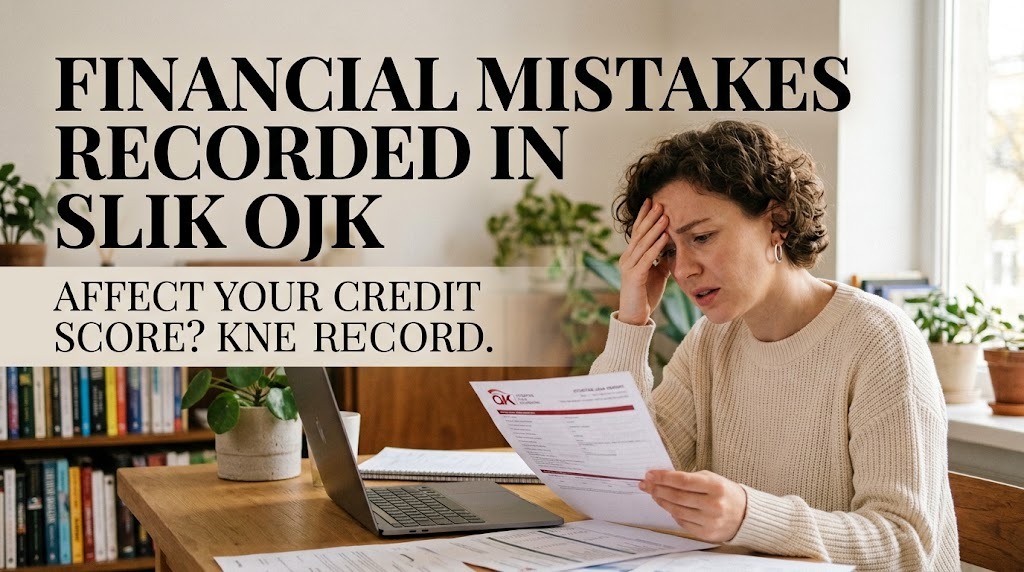
Financial Mistakes Recorded in SLIK OJK
Gusti Ayu Tita P
10 September 2026
SLIK OJK is a financial information system managed by the Financial Services Authority or OJK. It contains debtor information reported by financial institutions, including details about credit and financing facilities. The information can support financial institutions when assessing prospective debtors and managing credit risk. For individuals, understanding SLIK can provide a clearer picture of their recorded financial obligations.
SLIK does not simply label someone as financially good or bad. The information in SLIK is neutral and is not a blacklist. Financial institutions can use SLIK information as one source when analyzing a credit application, but it is not the only factor used to make a decision. The final decision remains the responsibility of each financial institution based on its internal assessment and applicable regulations.
MAKING PAYMENTS LATE
One of the most common financial mistakes is failing to make credit or financing payments on time. When payment obligations are not fulfilled according to the agreed schedule, the related credit quality can be affected. Repeated late payments can create a less favorable payment record in the information reported to SLIK. This is why borrowers should pay close attention to installment due dates.
Late payments can happen because of poor budgeting, forgotten deadlines, or unexpected financial problems. However, allowing payment difficulties to continue without action can make financial management more complicated. Setting reminders and preparing money before the due date can help reduce the risk of missed payments. A consistent payment habit is an important part of responsible borrowing.
BORROWING MORE THAN YOU CAN AFFORD
Another financial mistake is taking on debt without considering repayment capacity. A person may focus on how much money they can receive while overlooking the monthly obligation that follows. Borrowing beyond your financial capacity can increase the risk of payment difficulties. This can become especially challenging when several credit facilities are active at the same time.
Before taking a new loan or financing facility, borrowers should review their income, essential expenses, and existing obligations. The total repayment burden should be considered instead of looking only at the initial amount received. Responsible borrowing means choosing an obligation that can realistically be managed within your financial situation. Careful planning can help prevent unnecessary financial pressure.
ACCUMULATING TOO MANY CREDIT OBLIGATIONS
Having several financial facilities at the same time can make personal finances harder to manage. Each facility may have different payment dates, amounts, and terms. Failing to organize multiple obligations can increase the possibility of missed payments. It can also make it more difficult for borrowers to understand their total outstanding debt.
Borrowers should regularly review all active financial obligations. Creating a simple list of lenders, outstanding balances, installment amounts, and due dates can make debt management easier. Knowing the total amount of debt is essential before deciding to take another financial obligation. This habit can help prevent borrowing decisions that place excessive pressure on monthly finances.
IGNORING EXISTING PAYMENT PROBLEMS
Ignoring a financial problem does not make the obligation disappear. When someone begins experiencing difficulty making payments, avoiding communication can make the situation more difficult to manage. Early action is generally better than allowing payment problems to continue without a clear plan.
Borrowers should review their financial situation and contact the relevant financial institution when they face difficulties. The available options depend on the financial product and the institution's policies. The important habit is to respond to financial problems instead of simply ignoring them. Early communication can help borrowers better understand their obligations and possible next steps.
FAILING TO CHECK YOUR iDeb
Some people only think about their SLIK information when they are preparing to apply for a loan. This can make it harder to notice inaccurate or outdated information before an important financial decision. Checking your iDeb can help you understand the credit and financing information associated with your identity. OJK provides iDebKu as an official service for requesting debtor information.
Reviewing an iDeb can also encourage better financial awareness. Borrowers can compare the information with their own agreements, payment records, and other financial documents. If information appears inaccurate, the borrower can seek clarification from the relevant financial institution. Keeping personal financial records organized makes this process easier.
TAKING CREDIT WITHOUT UNDERSTANDING THE OBLIGATION
Another mistake is accepting a financial facility without fully understanding its repayment terms. Borrowers should know the amount of the obligation, payment schedule, applicable costs, and other important conditions before agreeing to financing. Understanding the complete obligation can prevent people from taking on debt they did not properly anticipate.
A loan should be viewed as a financial responsibility rather than simply extra money. Borrowers need to consider whether the purpose of the financing is necessary and whether the repayment plan fits their financial situation. Reading and understanding the agreement before borrowing can reduce avoidable financial mistakes. Good financial decisions begin before the credit facility is taken.
ASSUMING SLIK IS A BLACKLIST
A common misunderstanding is believing that SLIK is a blacklist that automatically prevents people from obtaining credit. This is incorrect because OJK states that SLIK information is neutral and is not a blacklist. SLIK provides information that can be used as one source in the analysis of prospective debtors.
A problematic credit record may be considered during credit analysis, but it does not automatically determine the outcome of every future application. Each financial institution makes its own decision based on internal risk assessment and applicable regulations. Understanding this distinction helps borrowers avoid unnecessary fear and focus instead on improving their financial behavior.
NOT CORRECTING INACCURATE INFORMATION
Financial information should accurately reflect a person's actual credit or financing situation. If a borrower discovers information that appears inconsistent with their records, simply leaving it unexamined can create unnecessary uncertainty. Borrowers should compare SLIK information with their own financial documents and seek clarification when something does not match.
SLIK information comes from reports submitted by financial institutions. Therefore, questions about a specific reported facility should generally be addressed with the relevant reporting institution. Keeping proof of payments and other financial documents can support the clarification process. Accurate information is important for both borrowers and financial institutions.
DEVELOPING BETTER FINANCIAL HABITS
Recognizing financial mistakes is only the first step toward better money management. Borrowers can improve their habits by paying obligations on time, controlling debt, checking financial information, and planning expenses carefully. Consistent financial discipline can reduce the risk of repeating the same mistakes.
OJK's SLIK optimization that took effect in July 2026 also aims to improve the quality and timeliness of debtor information. One of the changes requires financial service providers to update credit or financing information no later than three working days after repayment, while applying a threshold for debtor information above Rp1 million. More current and accurate information can support better credit analysis and healthier access to financing.
CONCLUSION
Financial mistakes related to credit can affect the information reported in SLIK, particularly when they involve difficulties in fulfilling credit or financing obligations. Late payments, excessive borrowing, poor debt management, and ignoring financial problems are habits that should be avoided. Checking iDeb can also help borrowers understand the information associated with their financial facilities.
However, SLIK is not a blacklist and does not automatically determine whether someone will receive credit. The final decision belongs to the relevant financial institution after considering its own assessment and applicable regulations. By paying obligations responsibly, controlling debt, checking financial information, and correcting discrepancies when necessary, individuals can build healthier financial habits and manage future financial needs more effectively.
About the Author
Gusti Ayu Tita P
Author — STEKOM University
An active author focused on academic issues, educational technology, and human resource development in the campus environment.