
Flag Ceremonies Help Build Responsible Young Generations
Gusti Ayu Tita P
5 Agustus 2026
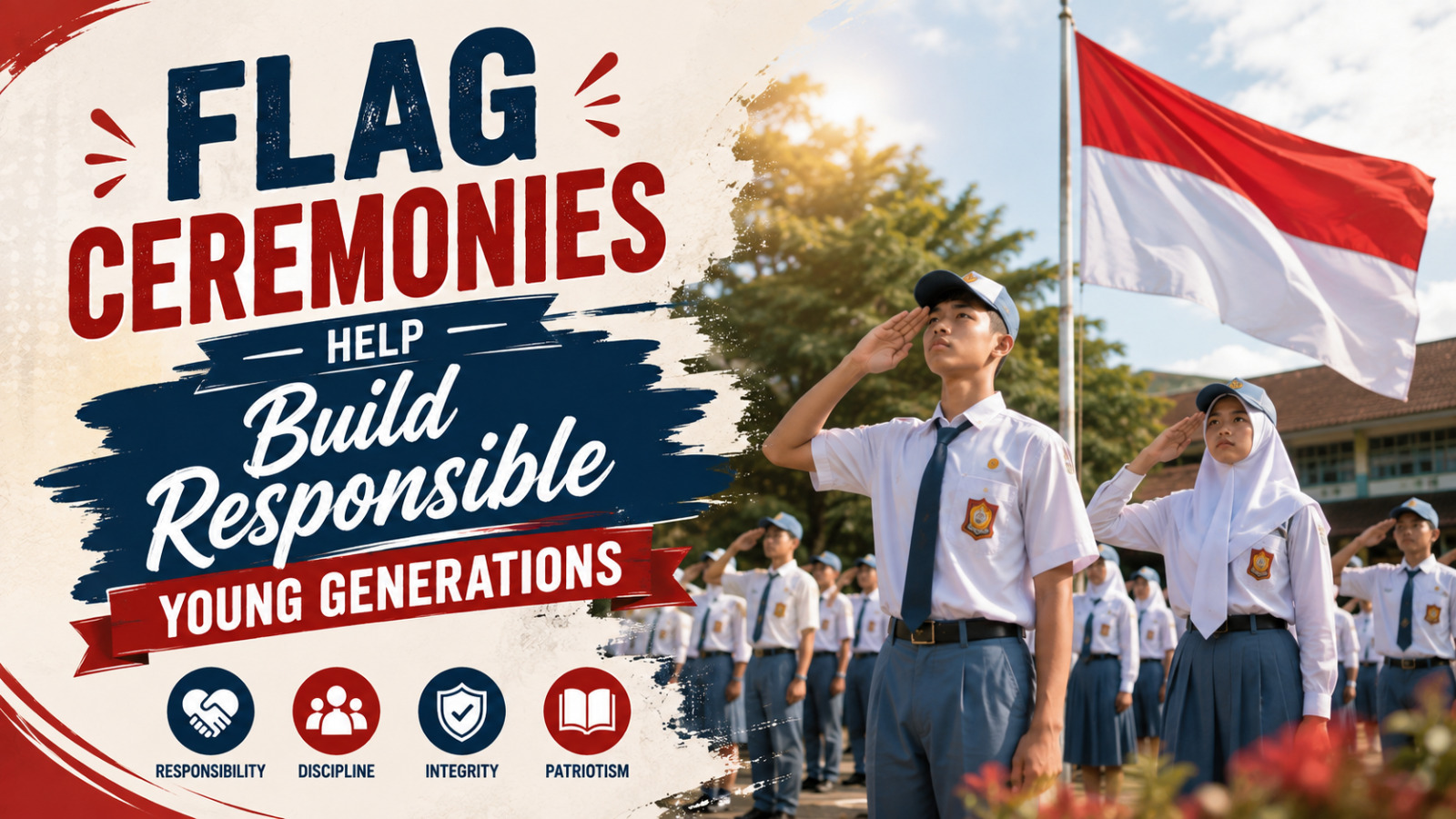
A flag ceremony is an important educational activity that helps build responsible young generations. It is not only a ceremony to honor the national flag but also a meaningful opportunity to teach students discipline, accountability, patriotism, and respect. Through regular participation, students learn to complete their duties, follow school rules, and develop positive habits. These experiences prepare them to become responsible individuals who contribute positively to society.
THE IMPORTANCE OF RESPONSIBILITY
Responsibility is one of the most valuable qualities that young people should develop from an early age. Through flag ceremonies, students learn that every action has consequences and every duty should be completed sincerely. Arriving on time, wearing the correct uniform, and following ceremony procedures teach students to respect commitments and school regulations. These simple routines help build self-discipline and accountability. Over time, responsibility becomes a natural part of their daily behavior.
Responsible students are also more likely to complete assignments on schedule and respect the rights of others. They understand the importance of keeping promises and contributing positively to their school community. These habits support both personal development and academic success.
HOW FLAG CEREMONIES DEVELOP RESPONSIBILITY
Flag ceremonies provide practical opportunities for students to practice responsibility. Every participant has a role, whether serving as a ceremony officer or following the ceremony respectfully as a participant. Students who become ceremony officers must prepare carefully, work with teammates, and complete their duties successfully. These experiences teach commitment, teamwork, and leadership. Such practical learning is highly effective in shaping responsible behavior.
Regular participation also encourages students to become more independent. They learn to manage their time, prepare themselves properly, and fulfill expectations without constant reminders. These qualities are essential for lifelong success.
BUILDING CHARACTER AND PATRIOTISM
Besides developing responsibility, flag ceremonies also strengthen character and patriotism. Students show respect for the national flag and national anthem while remembering the sacrifices made by previous generations. These moments encourage gratitude, national pride, and a stronger sense of belonging. Students become more aware of their role in maintaining unity and contributing to national progress.
The ceremony also develops honesty, respect, and cooperation. Students learn to work together, appreciate different perspectives, and support one another in achieving common goals. These values create a positive school culture and strengthen social relationships.
THE ROLE OF SCHOOLS AND TEACHERS
Schools and teachers play an important role in helping students gain the full benefits of flag ceremonies. Teachers should explain the meaning behind each activity so students understand its educational purpose. When students recognize the value of the ceremony, they participate with greater enthusiasm and sincerity. This understanding makes character education more effective.
Schools should also provide opportunities for students to serve as ceremony officers on a rotating basis. These responsibilities help develop leadership, confidence, and communication skills while strengthening accountability. Active participation allows students to experience character development in a practical way.
CONCLUSION
Flag ceremonies play a vital role in helping build responsible young generations. Through regular participation, students develop discipline, responsibility, leadership, patriotism, and teamwork while strengthening their character. With continuous guidance from teachers and support from schools, flag ceremonies prepare young people to become responsible citizens who contribute positively to their communities and their nation.
About the Author
Gusti Ayu Tita P
Author — STEKOM University
An active author focused on academic issues, educational technology, and human resource development in the campus environment.















