
Functional Positions and Career Direction
Gusti Ayu Tita P
12 Agustus 2026
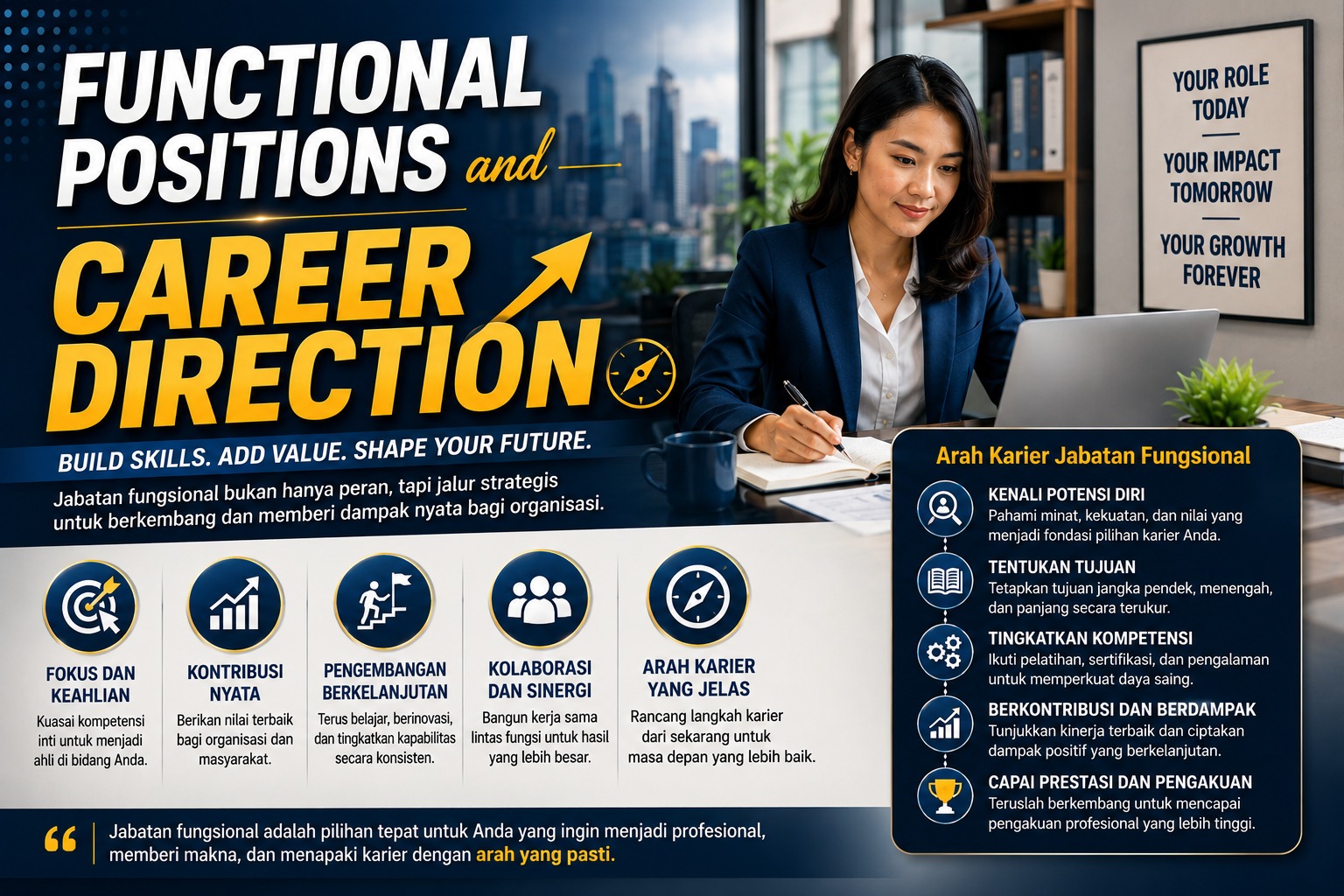
Choosing the right career direction requires more than considering a job title. Professionals need to understand their skills, interests, strengths, and long-term goals before deciding how they want to develop. Functional positions can provide a clear path for individuals who want to build careers through specialized expertise. By understanding the relationship between functional positions and career direction, professionals can make more informed decisions about their future.
The modern workplace continues to change because of technology, organizational needs, and evolving professional standards. These changes require employees to develop relevant competencies while remaining adaptable. A well-planned functional career can help professionals focus their expertise, improve performance, and create sustainable career growth.
UNDERSTANDING FUNCTIONAL CAREER DIRECTION
Functional positions focus on specific areas of expertise and professional responsibility. Employees in these roles are expected to apply specialized knowledge to complete tasks and solve problems. Their career development can be based on improving expertise, gaining experience, and achieving strong performance. This makes functional positions suitable for individuals who want to develop deep professional specialization.
Career direction within a functional position should be based on realistic goals. Professionals need to understand what they want to achieve and which competencies are required to reach those goals. A clear direction can make learning and professional development more focused. It can also help employees identify opportunities that match their career interests and abilities.
MATCHING SKILLS WITH CAREER GOALS
One of the first steps in choosing a career direction is identifying existing skills. Professionals should understand their strongest abilities and compare them with the requirements of their desired functional field. This process can reveal both strengths and competency gaps that need to be addressed. Knowing these differences makes career preparation more systematic.
Career goals should also consider personal interests and professional values. Someone who enjoys analysis may prefer a role involving research or data, while another person may be more interested in communication or service-oriented work. Matching personal characteristics with professional requirements can create better career alignment.
DEVELOPING RELEVANT COMPETENCIES
A clear career direction is difficult to achieve without continuous competency development. Functional professionals need technical knowledge that matches their specific area of responsibility. They may also require supporting skills such as communication, teamwork, critical thinking, and problem solving. These abilities can strengthen professional effectiveness.
Competencies should be developed according to career objectives rather than simply collecting qualifications. Training, education, practical experience, and self-directed learning can all contribute to professional development. By choosing learning activities strategically, employees can build relevant skills for future responsibilities.
USING PERFORMANCE AS A CAREER GUIDE
Work performance can provide useful information about career development. Professionals can evaluate which tasks they perform well and which areas still require improvement. Strong performance in a particular area may indicate a potential specialization or future development opportunity. Regular evaluation can therefore support more informed career decisions.
Feedback is another useful source of career direction. Comments from supervisors, colleagues, or professional peers can reveal strengths that may not be obvious to the individual. When feedback is used constructively, it can help professionals improve weaknesses and strengthen their career development strategy.
ADAPTING TO WORKPLACE CHANGES
Career direction should not be completely rigid because workplace needs can change. Technology, organizational priorities, and professional standards may create new responsibilities or make certain skills more important. Professionals need adaptability to respond to these developments without losing sight of their long-term goals.
Adapting does not mean changing career direction whenever a new trend appears. Instead, professionals should evaluate whether a change is relevant to their expertise and objectives. Combining a clear career foundation with flexible professional development can help employees remain prepared for future opportunities.
BUILDING A LONG TERM CAREER PLAN
A long-term career plan can help professionals organize their development. Goals can be divided into short-term, medium-term, and long-term targets. For example, an individual may first focus on improving technical skills, then gain practical experience, and eventually pursue more advanced professional responsibilities. This approach creates a structured career pathway.
Career plans should be reviewed regularly to ensure they remain relevant. New experiences may change professional interests or reveal different opportunities. By evaluating progress and adjusting goals when necessary, employees can maintain a career direction that is both realistic and adaptable.
CONCLUSION
Functional positions and career direction are closely connected because specialized roles can provide a structured path for professional development. Choosing the right direction requires an understanding of personal strengths, career goals, competency requirements, and workplace trends. Continuous learning, performance evaluation, and adaptability can help professionals remain prepared for changing demands. With clear planning and consistent development, functional positions can become a strong foundation for a sustainable professional career.
About the Author
Gusti Ayu Tita P
Author — STEKOM University
An active author focused on academic issues, educational technology, and human resource development in the campus environment.















