
Functional Positions and Professionalism
Gusti Ayu Tita P
12 Agustus 2026
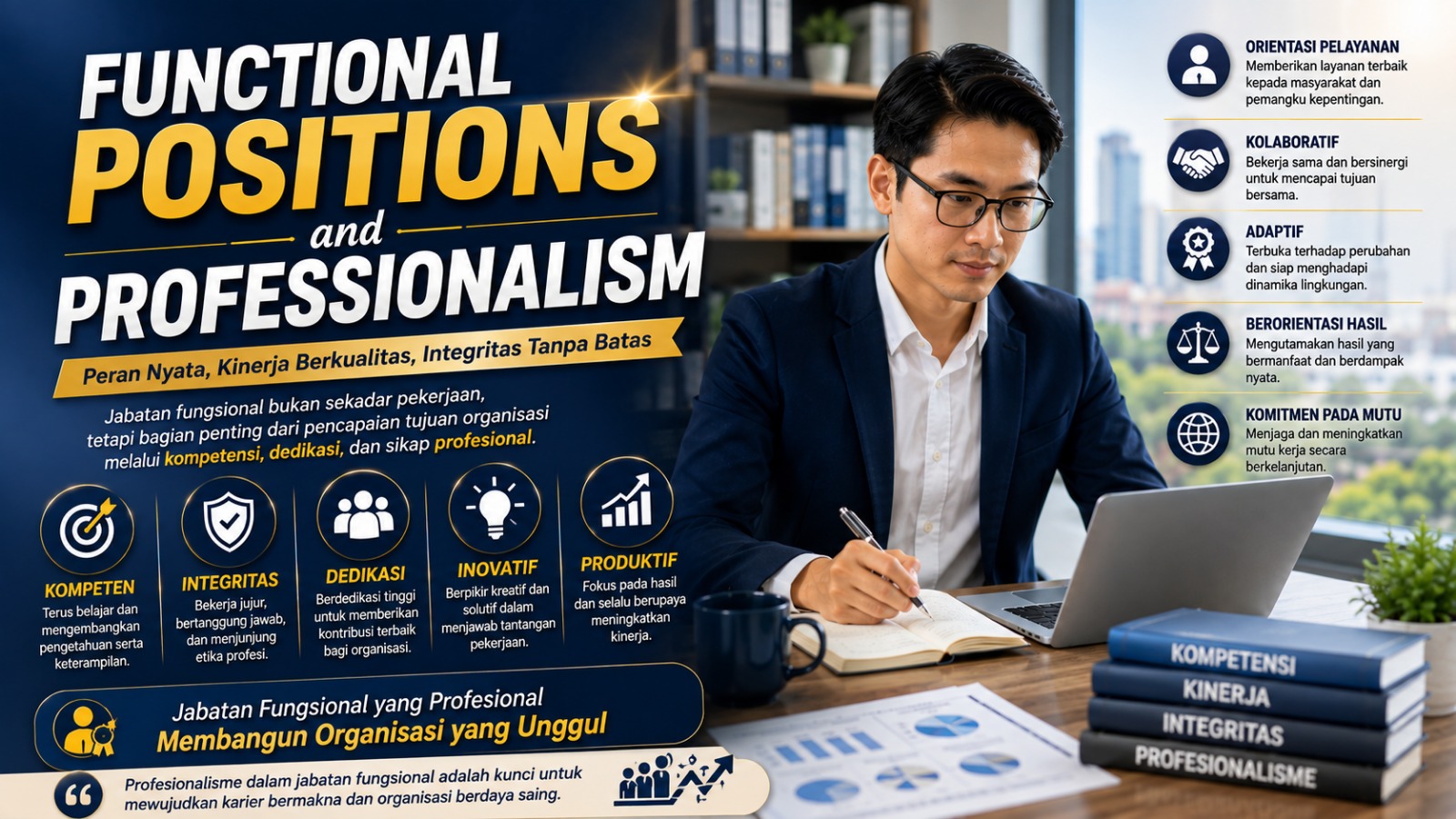
Functional positions play an important role in organizations because they rely on specialized knowledge, professional skills, and clear responsibilities. Employees in these positions are expected to apply their expertise to complete tasks accurately and contribute to organizational goals. However, technical ability alone is not enough to create strong professional performance. Professionalism is equally important because it influences how employees work, communicate, make decisions, and take responsibility for their results.
Modern workplaces continue to change through technology, new systems, and evolving organizational expectations. These changes require professionals to maintain their expertise while developing adaptability and strong work ethics. Understanding the relationship between functional positions and professionalism can help employees build better performance and sustainable career development.
UNDERSTANDING FUNCTIONAL POSITIONS
A functional position focuses on specific professional expertise and responsibilities within an organization. Employees in these roles use their knowledge and skills to perform tasks related to a particular field. The responsibilities can differ depending on the profession, organization, and applicable standards. This specialization allows employees to develop deeper expertise in their chosen area.
Functional positions are valuable because organizations need professionals who can handle tasks that require specific knowledge. Their contribution can support problem solving, service quality, technical processes, and organizational performance. Therefore, employees need to understand both their responsibilities and the professional standards associated with their positions.
PROFESSIONALISM AS A CORE REQUIREMENT
Professionalism refers to the attitudes and behaviors that demonstrate responsibility, competence, integrity, and respect in the workplace. In a functional position, professionalism supports the proper application of technical expertise. An employee may have strong knowledge, but poor discipline or communication can still reduce the quality of their work. For this reason, professional behavior should develop alongside technical competence.
Professionalism can be demonstrated through punctuality, accountability, ethical decision-making, and consistent work quality. Employees should also be willing to accept feedback and improve when weaknesses are identified. These behaviors help create trust and professional credibility within an organization.
DEVELOPING PROFESSIONAL COMPETENCE
Professionalism cannot be separated from competence. Employees need sufficient knowledge and skills to perform their responsibilities correctly. Technical competence allows professionals to understand procedures, solve problems, and produce reliable results. Without adequate competence, it becomes difficult to maintain consistent professional performance.
Competence should also be developed continuously because workplace requirements can change. Training, education, practical experience, mentoring, and independent learning can help professionals update their capabilities. Continuous development allows employees to maintain relevant professional skills while preparing for future responsibilities.
MAINTAINING WORK QUALITY
Professionalism is reflected in the quality of the work produced. Employees should aim to complete tasks accurately, efficiently, and according to established standards. Work quality demonstrates how seriously a professional approaches their responsibilities. Consistency is particularly important because professional credibility is built through repeated performance.
Maintaining quality also requires careful evaluation. Employees can review their work, identify mistakes, and make improvements when necessary. A willingness to learn from errors can strengthen professional performance and support continuous improvement.
BUILDING INTEGRITY AND RESPONSIBILITY
Integrity is a fundamental part of professionalism. Professionals need to perform their duties honestly and make decisions based on appropriate standards and responsibilities. Professional integrity helps organizations build trust among employees, clients, and other stakeholders. It also supports responsible handling of information, resources, and workplace decisions.
Responsibility means being willing to take ownership of both successful outcomes and mistakes. When problems occur, professionals should focus on finding appropriate solutions rather than avoiding accountability. Combining integrity and responsibility can strengthen an employee's reputation and professional reliability.
ADAPTING TO WORKPLACE CHANGES
Modern functional positions are increasingly influenced by technology and changing work systems. Professionals need to adapt to new tools, procedures, and organizational requirements while maintaining their core expertise. Adaptability allows employees to remain effective when their working environment changes.
Being adaptable does not mean accepting every change without consideration. Professionals should evaluate new methods and understand how they affect quality, efficiency, and professional standards. Combining flexibility with professional judgment can help employees respond effectively to workplace transformation.
COMMUNICATION AND COLLABORATION
Functional professionals often need to work with colleagues from different departments and areas of expertise. Clear communication helps employees explain technical information, coordinate responsibilities, and prevent misunderstandings. Communication skills therefore have an important role in maintaining professional relationships.
Collaboration also allows professionals to combine different forms of expertise when solving complex problems. Employees should be able to share ideas, listen to other perspectives, and respect different responsibilities. Strong teamwork can improve organizational effectiveness while strengthening professional development.
CONCLUSION
Functional positions and professionalism are closely connected because specialized expertise needs to be supported by responsible and ethical work behavior. Technical competence, work quality, integrity, adaptability, communication, and accountability are important elements of professional performance. Continuous learning can help employees maintain their competencies as workplace demands change. By combining expertise with professionalism, individuals can strengthen their performance and build a sustainable career in functional positions.
About the Author
Gusti Ayu Tita P
Author — STEKOM University
An active author focused on academic issues, educational technology, and human resource development in the campus environment.















