
Functional Positions and Work Productivity
Gusti Ayu Tita P
12 Agustus 2026
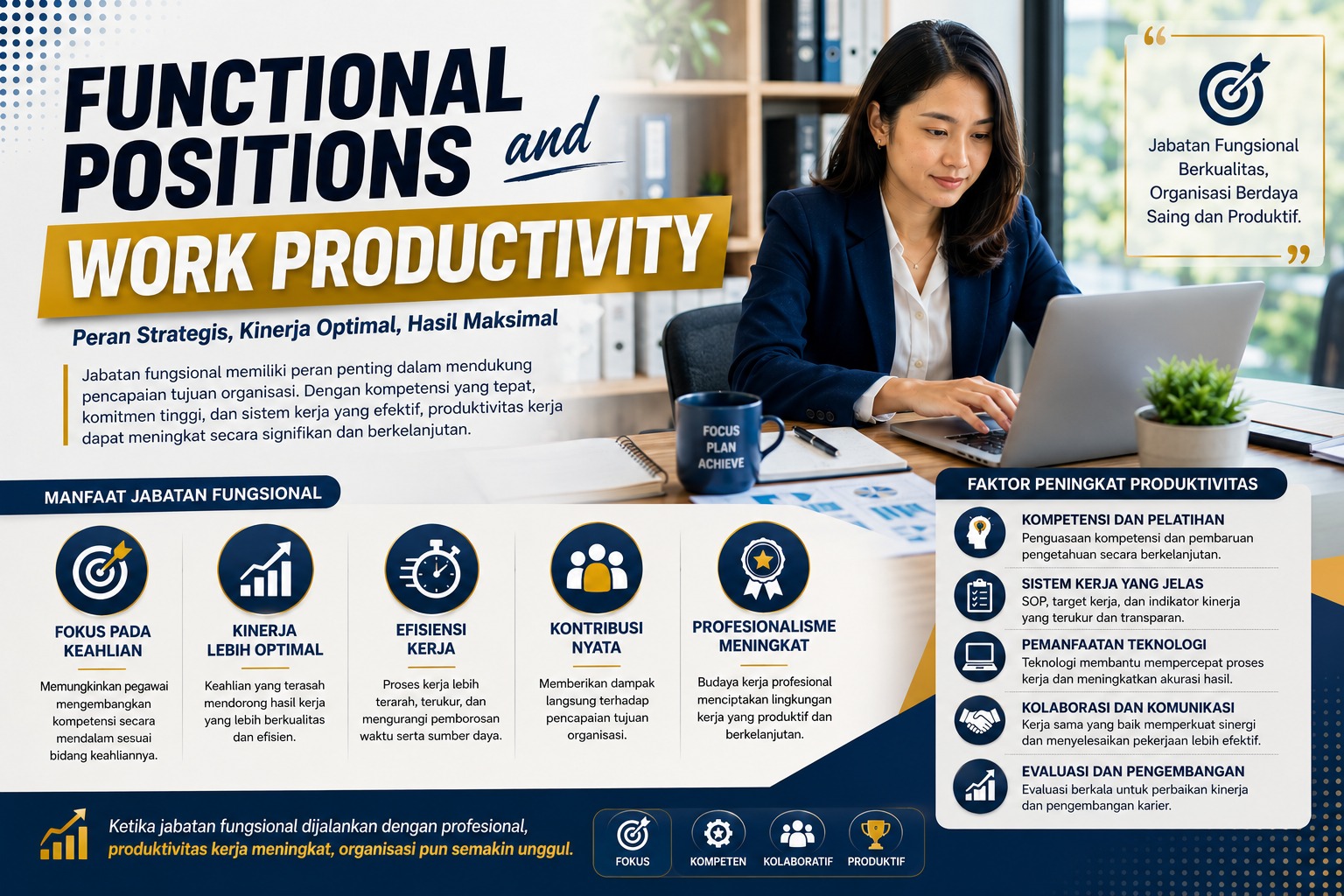
In a modern workplace, functional positions have an important role in improving organizational productivity. These positions rely on specialized expertise that allows professionals to complete tasks efficiently and produce valuable results. Work productivity is not only measured by the amount of work completed but also by the quality, accuracy, and impact of the outcomes. Therefore, professionals in functional positions need to continuously improve their abilities to support better performance.
Increasing productivity requires more than technical knowledge. Employees also need effective time management, digital skills, collaboration, and adaptability to changing work environments. By developing these capabilities, functional professionals can create more efficient workflows and stronger professional contributions.
THE ROLE OF FUNCTIONAL POSITIONS IN PRODUCTIVITY
Functional positions contribute to productivity by providing specialized skills that support organizational activities. Professionals in these roles are responsible for applying their expertise to solve problems, improve processes, and complete tasks according to established standards. Their knowledge allows organizations to handle complex responsibilities more effectively. This makes functional positions an important part of organizational performance improvement.
Productivity increases when employees understand their responsibilities and use appropriate methods to complete their work. Clear duties and professional expertise help reduce errors and improve efficiency. When functional professionals perform their roles effectively, they can create higher quality results with better resource utilization.
BUILDING COMPETENCE FOR BETTER PERFORMANCE
Competence is one of the main factors that influence productivity in functional positions. Professionals need strong technical knowledge and practical skills to perform their responsibilities accurately. Without sufficient competence, employees may spend more time solving problems or correcting mistakes. Therefore, professional competence becomes a foundation for productive performance.
Competency development should be carried out continuously because workplace requirements continue to change. Training, experience, and independent learning can help professionals improve their capabilities. By maintaining relevant skills, employees can complete tasks more confidently and achieve consistent work effectiveness.
TIME MANAGEMENT AND WORK EFFICIENCY
Effective time management is essential for improving productivity in functional positions. Professionals often handle multiple responsibilities that require proper planning and prioritization. Managing tasks based on urgency and importance can help employees complete work more efficiently. Time management skills allow professionals to maintain productivity without reducing work quality.
Efficiency also depends on how employees organize their workflow. Using appropriate methods, reducing unnecessary processes, and utilizing available resources can improve performance. A well-organized work system helps professionals achieve optimal results within available time and resources.
USING TECHNOLOGY TO IMPROVE PRODUCTIVITY
Technology has changed the way many functional positions operate. Digital tools can support data management, communication, reporting, analysis, and task automation. Professionals who understand how to use technology effectively can complete responsibilities faster and more accurately. Digital skills have therefore become an important factor in workplace productivity.
However, technology should be used strategically based on professional needs. Employees need to understand which tools can improve their workflow and how to use them responsibly. Combining technology with professional expertise can create more effective and innovative work processes.
COLLABORATION AND TEAM PRODUCTIVITY
Although functional positions focus on specific expertise, collaboration remains important for achieving organizational goals. Professionals often need to work with other teams to exchange information and complete complex tasks. Strong collaboration can improve coordination and prevent misunderstandings. Teamwork skills help functional employees contribute more effectively within an organization.
Productive collaboration requires clear communication, mutual respect, and shared responsibility. Professionals should be able to explain their expertise while understanding the perspectives of others. When teams work together effectively, organizations can achieve better solutions and improved productivity.
ADAPTING TO WORKPLACE CHANGES
Work environments continue to change due to technology, organizational development, and new professional requirements. Functional professionals need to adapt their working methods to remain effective. Adaptability allows employees to respond positively to changes while maintaining their professional standards.
Adaptation also involves developing a willingness to learn new approaches. Employees who are open to improvement can discover better ways to complete their responsibilities. This ability helps professionals maintain long-term productivity in a dynamic workplace.
MEASURING PRODUCTIVITY AND IMPROVING PERFORMANCE
Measuring productivity helps organizations understand how effectively functional professionals perform their responsibilities. Evaluation can consider work quality, efficiency, accuracy, and achievement of targets. Proper measurement provides useful information about strengths and areas that require improvement. Performance evaluation supports continuous professional development.
Productivity measurement should not only focus on quantity but also consider the value of the results produced. High productivity means achieving meaningful outcomes while maintaining professional standards. Through regular evaluation and improvement, employees can develop better performance strategies.
DEVELOPING A PRODUCTIVE FUNCTIONAL CAREER
A productive functional career requires continuous effort to improve skills and professional habits. Employees should create development plans that focus on strengthening expertise, improving performance, and preparing for future challenges. Career development strategies help professionals maintain direction and achieve long-term goals.
Professionals who consistently improve their abilities can become valuable contributors within their organizations. Productivity grows when expertise is combined with discipline, adaptability, and a commitment to quality. This approach allows individuals to build a successful and sustainable functional career.
CONCLUSION
Functional positions and work productivity are closely connected because specialized expertise can significantly influence organizational effectiveness. Professionals can improve productivity through competency development, efficient work methods, technology utilization, collaboration, and adaptability. Continuous improvement helps employees maintain high performance while responding to workplace changes. By developing strong professional capabilities, functional employees can create greater value and achieve long-term career growth.
About the Author
Gusti Ayu Tita P
Author — STEKOM University
An active author focused on academic issues, educational technology, and human resource development in the campus environment.















