
Functional Positions in Workplace Transformation
Gusti Ayu Tita P
12 Agustus 2026
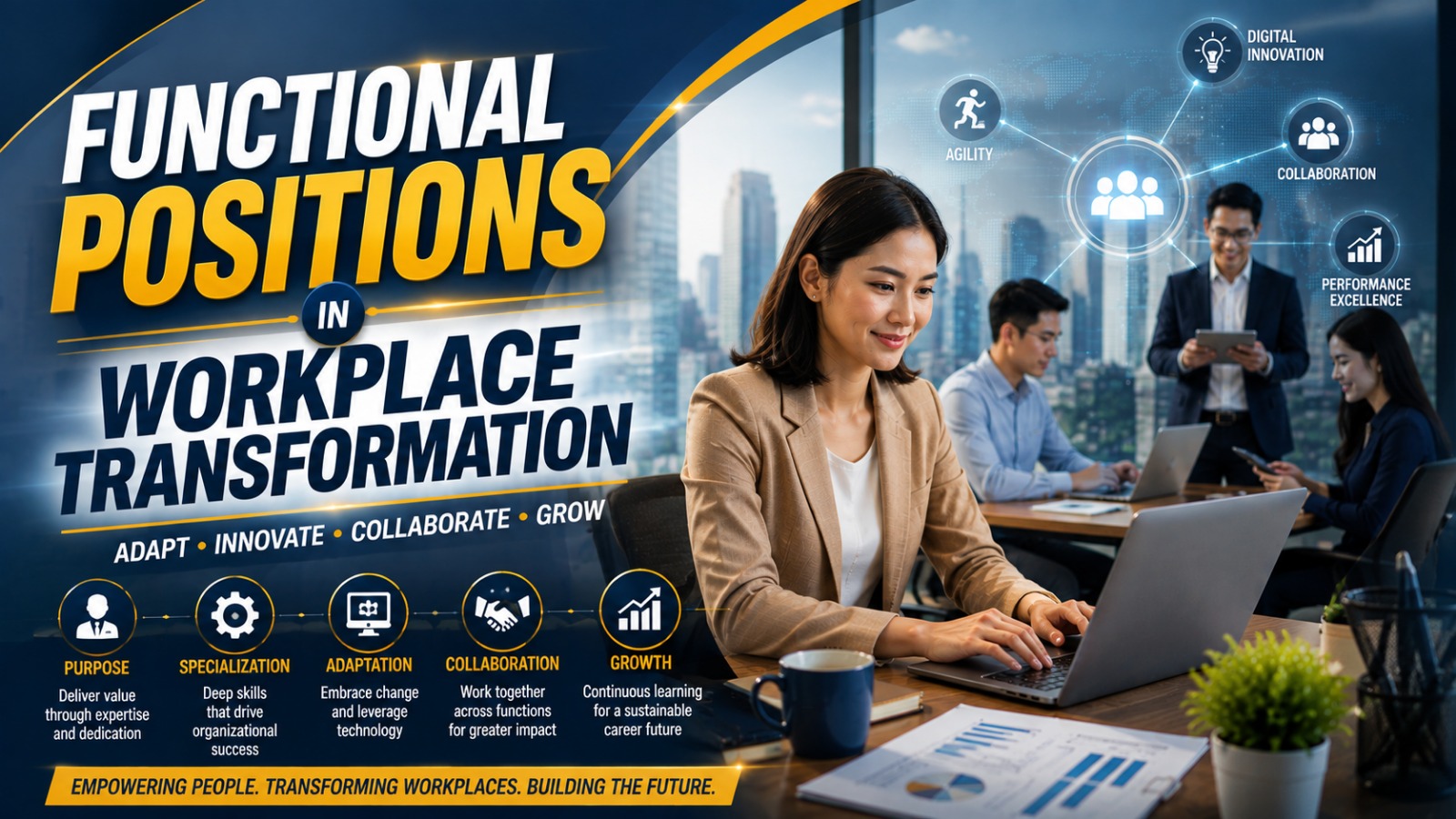
Workplaces are changing rapidly because of digital technology, new work systems, and evolving organizational needs. These changes also influence how functional positions are performed. Professionals are increasingly expected to combine specialized expertise with digital skills, adaptability, and problem-solving abilities. As a result, functional positions have an important role in helping organizations respond to workplace transformation.
Functional roles are no longer limited to routine technical responsibilities. Professionals are expected to contribute ideas, improve processes, and support organizational goals through their expertise. Understanding these changes can help employees prepare for career growth and professional development in a transforming workplace.
THE ROLE OF FUNCTIONAL POSITIONS IN TRANSFORMATION
Functional positions contribute to workplace transformation through specialized knowledge and professional expertise. Employees in these roles can identify problems within their areas of responsibility and develop solutions based on their knowledge. Their expertise can help organizations improve services, processes, and overall work quality. This makes functional professionals valuable during periods of organizational change.
Transformation also requires employees to understand how their individual responsibilities connect with broader organizational objectives. A functional position becomes more strategic when its expertise supports efficiency, innovation, and better decision-making. Therefore, professionals need to understand both their technical responsibilities and their contribution to organizational performance.
DIGITAL TECHNOLOGY AND FUNCTIONAL WORK
Technology has changed many aspects of functional work. Digital platforms can support data processing, communication, documentation, reporting, and other professional activities. These tools can help employees complete tasks more efficiently while reducing repetitive work. Digital competence has therefore become increasingly important across many functional fields.
However, technology does not replace professional expertise. Employees still need to evaluate information, make appropriate decisions, and understand the context of their work. The strongest results often come from combining professional knowledge with digital capabilities.
DEVELOPING NEW PROFESSIONAL COMPETENCIES
Workplace transformation creates new demands for professional competencies. Technical knowledge remains important, but employees may also need skills such as communication, critical thinking, collaboration, and problem solving. These supporting competencies help professionals respond to complex workplace situations.
Continuous learning is essential because professional requirements can change over time. Employees can improve their capabilities through training, education, practical experience, and independent learning. By consistently developing relevant skills, professionals can remain competitive and adaptable in a changing workplace.
ADAPTING TO CHANGING WORK SYSTEMS
Transformation often involves changes in procedures, technology, organizational structures, and responsibilities. These changes can create challenges for employees who are accustomed to established methods. Functional professionals need adaptability to understand new systems and adjust their working methods accordingly. Being open to change can make the transition easier and more effective.
Adaptability does not mean abandoning professional standards. Employees still need to maintain accuracy, accountability, and quality while adopting new approaches. A professional who can combine flexibility with consistent performance is better prepared for workplace transformation.
IMPROVING PERFORMANCE THROUGH INNOVATION
Workplace transformation provides opportunities for functional professionals to improve how tasks are performed. Employees who understand their field can identify inefficient processes and suggest practical improvements. Small changes in procedures or technology can sometimes produce significant improvements in work productivity.
Innovation does not always require creating something completely new. It can involve improving an existing process, simplifying a task, or finding a more effective way to use available resources. A culture that encourages employees to share ideas can strengthen continuous improvement across the organization.
BUILDING A FUTURE READY FUNCTIONAL CAREER
Professionals need to prepare for future workplace demands by understanding the direction of their field. Identifying emerging technologies, developing relevant competencies, and gaining practical experience can strengthen career readiness. A clear development plan can also help professionals determine which skills should be prioritized.
Future-ready professionals are not necessarily those who know every new technology. Instead, they are individuals who can learn, adapt, and apply their expertise to changing situations. Combining specialized expertise, digital skills, and adaptability can provide a strong foundation for long-term career development.
CONCLUSION
Functional positions in workplace transformation are becoming increasingly important as organizations adapt to technological and operational changes. Professionals need to combine specialized expertise with digital competence, adaptability, and problem-solving skills. Continuous learning and innovation can help employees maintain performance while responding to new workplace demands. By developing relevant competencies, functional professionals can contribute to organizational transformation while building a strong and sustainable career.
About the Author
Gusti Ayu Tita P
Author — STEKOM University
An active author focused on academic issues, educational technology, and human resource development in the campus environment.















