
Future Trends of Regional Autonomy in Modern Governance
Gusti Ayu Tita P
31 Juli 2026
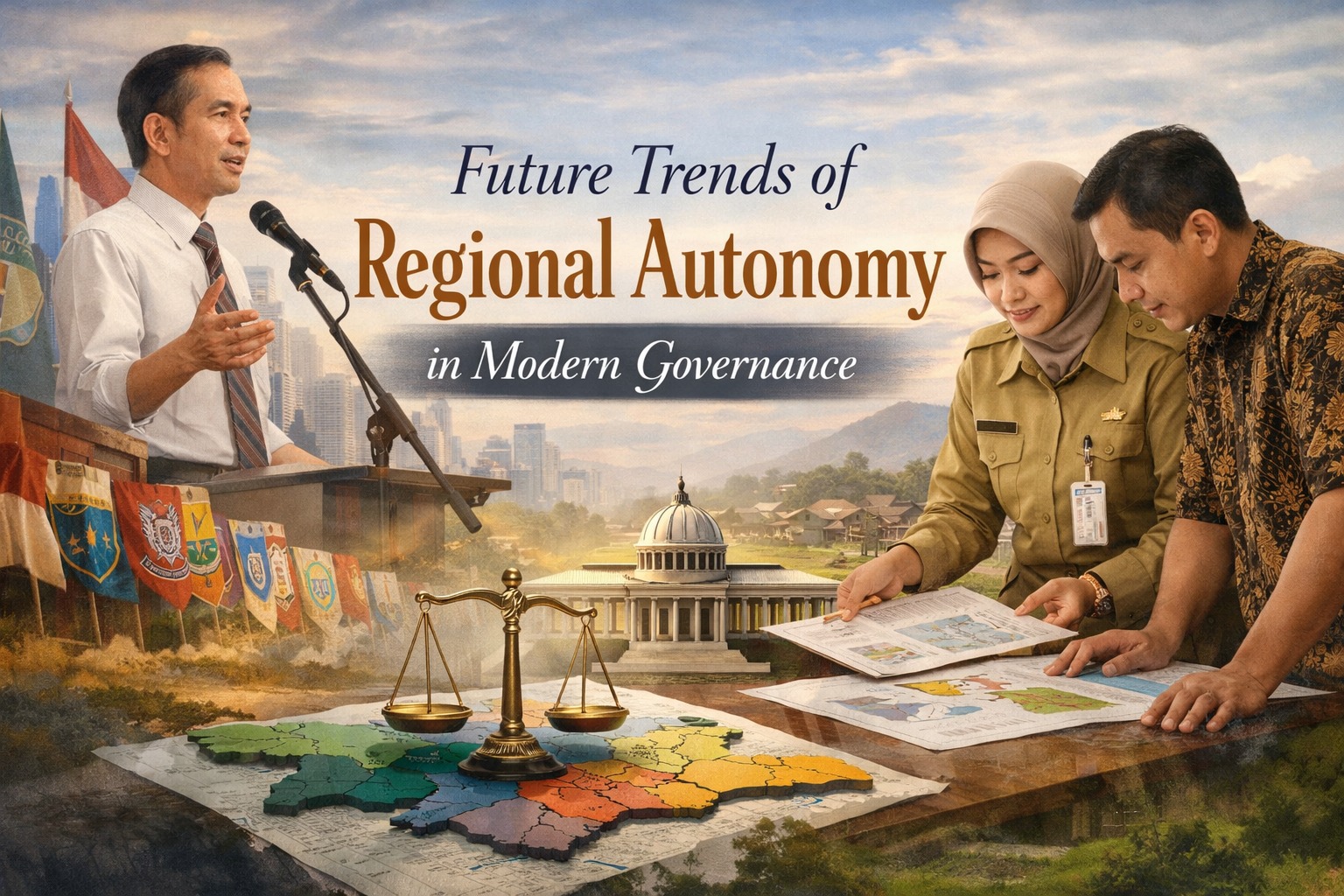
Regional autonomy has become one of the most important governance approaches in many countries. It allows local governments to make decisions that better reflect the needs of their communities while still working within the national legal framework. As technology, society, and the economy continue to evolve, regional autonomy is also entering a new phase of development. Governments are now expected to become more transparent, efficient, and responsive to public demands.
In the coming years, the future of regional autonomy will be shaped by digital transformation, public participation, and sustainable development. Local governments that successfully adapt to these trends will be better prepared to provide high-quality public services and encourage long-term regional growth.
DIGITAL TRANSFORMATION IN LOCAL GOVERNMENT
One of the biggest future trends is the adoption of digital governance. Local governments are increasingly using online platforms to deliver public services, process permits, manage taxes, and communicate with citizens. Digital systems help reduce bureaucracy while improving service speed and accuracy.
Technologies such as artificial intelligence, big data, and cloud computing are also expected to support better policy-making. By analyzing accurate data, regional governments can identify community needs more effectively and allocate resources more efficiently. This trend will make governance more transparent and accountable.
SMART CITIES AND INNOVATIVE PUBLIC SERVICES
The development of smart cities is closely connected with the future of regional autonomy. Smart cities integrate technology into transportation, healthcare, education, environmental management, and public safety. Regional governments play an essential role in implementing these innovations according to local conditions.
Modern public services will increasingly rely on digital applications, automated systems, and real-time information. Citizens will be able to access many government services through smartphones without visiting government offices. This improves convenience while reducing administrative costs.
GREATER PUBLIC PARTICIPATION IN DECISION-MAKING
Future regional autonomy will encourage stronger community participation. Citizens are no longer expected to simply receive government policies but also contribute ideas, feedback, and recommendations through digital platforms and public consultations.
Open communication strengthens public trust and allows governments to design policies that truly address local challenges. Greater participation also encourages transparency because citizens can monitor government performance more easily and provide constructive criticism when necessary.
SUSTAINABLE REGIONAL DEVELOPMENT
Sustainability will become a major priority in regional governance. Local governments are expected to balance economic growth, environmental protection, and social welfare. Development projects should not only generate income but also preserve natural resources for future generations.
Regional autonomy allows each area to develop strategies based on its unique characteristics. Coastal regions, agricultural areas, and urban centers can implement different development models while still supporting national sustainability goals.
STRONGER INTERGOVERNMENTAL COLLABORATION
Although regional autonomy provides greater authority to local governments, collaboration with the central government will remain essential. Future governance will focus on better coordination, shared digital infrastructure, and integrated public policies.
Partnerships between neighboring regions will also become more common. Cooperation in transportation, disaster management, tourism, healthcare, and environmental conservation can improve efficiency while reducing operational costs. Strong collaboration creates better outcomes for citizens across multiple regions.
IMPROVED TRANSPARENCY AND ACCOUNTABILITY
Citizens increasingly expect governments to operate with honesty, openness, and accountability. Digital reporting systems, open data initiatives, and online budget monitoring will become standard practices in many regions.
These innovations help reduce corruption risks while strengthening public confidence. Transparent governance also enables independent organizations and citizens to evaluate government performance more effectively, leading to continuous improvement in public administration.
CHALLENGES FOR FUTURE REGIONAL AUTONOMY
Despite many opportunities, several challenges remain. Some regions still face limited technological infrastructure, budget constraints, and shortages of skilled human resources. Differences in regional capacity may create unequal development if not properly addressed.
Cybersecurity is another growing concern as governments become more dependent on digital systems. Local governments must invest in data protection, employee training, and modern cybersecurity solutions to maintain secure and reliable public services.
CONCLUSION
The future of regional autonomy will be driven by digital innovation, smart governance, public participation, and sustainable development. Regional governments that embrace these trends will be able to deliver faster, more transparent, and more effective public services. Strong collaboration between local communities and national institutions will further strengthen governance systems. Although challenges such as technological readiness and cybersecurity remain, continuous investment in innovation and capacity building will help regions adapt successfully. Ultimately, modern regional autonomy will play a crucial role in creating more inclusive, efficient, and resilient governance for future generations
About the Author
Gusti Ayu Tita P
Author — STEKOM University
An active author focused on academic issues, educational technology, and human resource development in the campus environment.















