
Getting to Know MRT Jakarta and Its Advantages as Public Transportation
Gusti Ayu Tita P
11 Agustus 2026
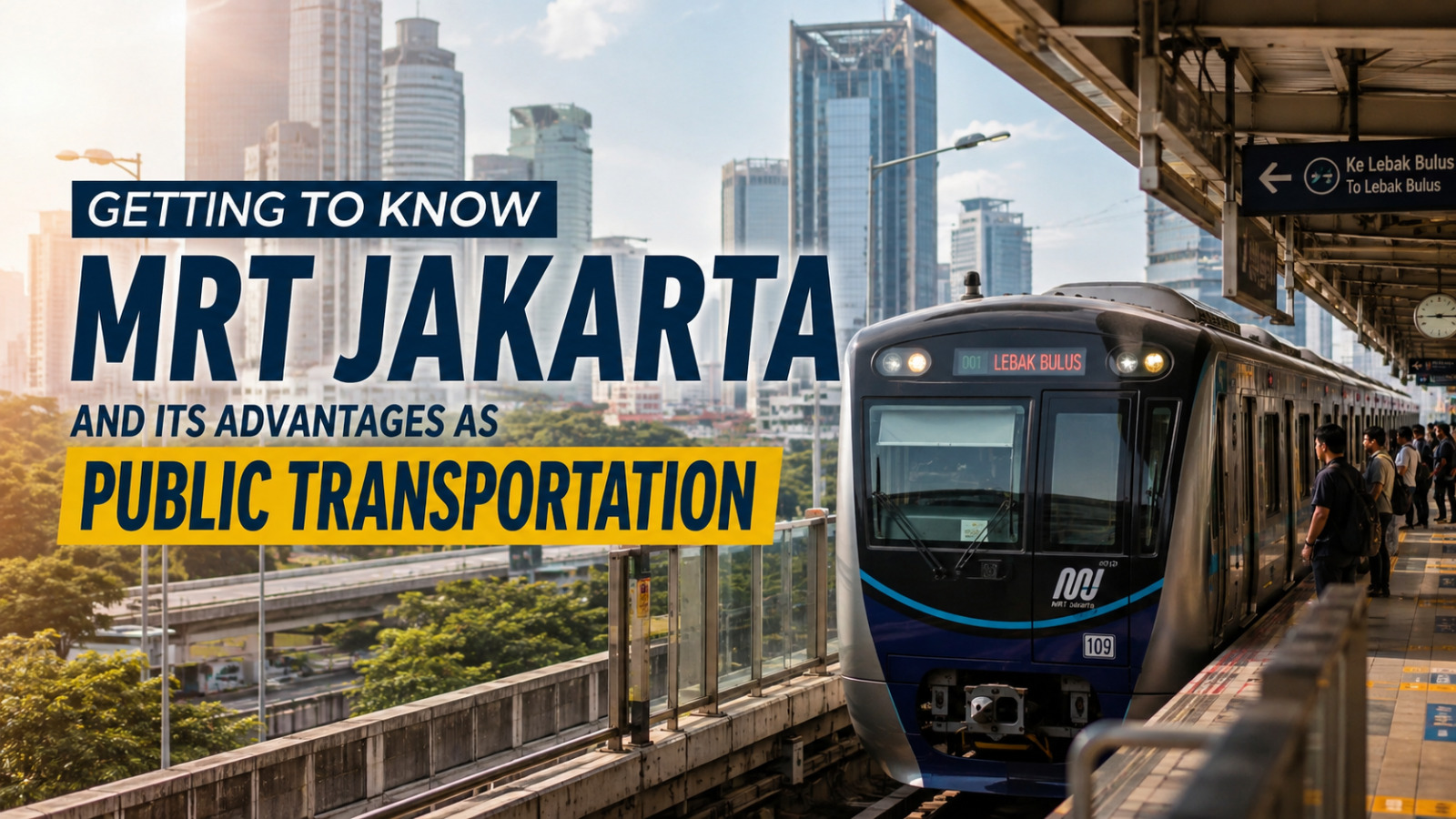
MRT Jakarta is one of the modern public transportation options available in Indonesia, particularly for people traveling around the capital city. It provides a rail-based service designed to support daily mobility in areas with high transportation demand. Unlike most road-based transportation, MRT operates on dedicated tracks, allowing its services to avoid direct interaction with road traffic. This makes MRT an important part of Jakarta’s efforts to develop a more organized transportation system.
For people who regularly travel for work, education, business, or other activities, MRT Jakarta can provide a practical transportation alternative. Its stations are supported by various facilities, while its services can be connected with other modes of transportation. Understanding its advantages can help people decide when MRT is the most suitable option for their journey. It also helps new passengers become more familiar with the system.
WHAT IS MRT JAKARTA?
MRT Jakarta is a mass rapid transit system that uses electric trains to serve passengers along designated railway corridors. The first phase of the Jakarta MRT system officially began passenger operations in March 2019. Its initial route connected Lebak Bulus in South Jakarta with Bundaran HI in Central Jakarta. The network has continued to develop as part of Jakarta’s long-term public transportation plans.
The MRT system includes both elevated and underground sections, depending on the location of the railway corridor. Stations are equipped with facilities designed to help passengers enter, exit, wait for trains, and continue their journeys. Dedicated railway tracks are one of its main characteristics because they separate MRT operations from ordinary road traffic. This provides a different travel experience compared with buses, cars, or motorcycles.
ADVANTAGE OF A DEDICATED RAIL SYSTEM
One of the main advantages of MRT Jakarta is its operation on a dedicated rail network. Because trains do not normally share road space with cars and motorcycles, their journeys are less directly affected by traffic congestion. This can make travel times more predictable on the MRT corridor. For commuters with regular schedules, this predictability can be especially useful.
The rail system also allows MRT to carry many passengers in a single train. Instead of requiring each passenger to use a separate vehicle, a large number of people can travel together. High passenger capacity makes MRT suitable for a densely populated city with significant daily travel demand. This is one reason mass transit is important for urban transportation planning.
COMFORTABLE AND ORGANIZED TRAVEL
MRT Jakarta provides various facilities designed to support a comfortable passenger experience. Stations generally include elevators, escalators, stairs, passenger information systems, ticketing or payment gates, and designated platform areas. Inside the trains, passengers can use seats, handrails, and travel information displays. These facilities make the system easier to use for both regular passengers and newcomers.
Passenger comfort also depends on orderly behavior. People are expected to queue properly, allow passengers to exit before entering, and avoid blocking train doors. Priority seating should be given to passengers who need it according to the applicable rules. By combining good facilities with responsible passenger behavior, MRT can provide a more pleasant journey for everyone.
INTEGRATION WITH OTHER TRANSPORTATION
MRT Jakarta is not intended to operate as an isolated transportation service. Its usefulness increases when passengers can connect it with other public transportation modes. A passenger may use a bus or another feeder service to reach an MRT station and then continue by train. After leaving the MRT, another transportation mode can be used to reach the final destination.
This integration is important because not every home, school, workplace, or public facility is located directly beside an MRT station. Good connections can make public transportation more convenient for longer and more complex journeys. Integrated transportation also gives people more reasons to choose public transportation instead of using private vehicles for every part of a trip. Therefore, MRT works best as part of a wider urban transportation network.
SUPPORTING BETTER URBAN MOBILITY
MRT Jakarta can support Jakarta’s mobility by providing an alternative to private cars and motorcycles. When people choose mass transit for suitable journeys, fewer private vehicles may be needed for those trips. This can help reduce pressure on busy roads, although MRT alone cannot solve traffic congestion. Effective congestion management requires several transportation policies and well-connected public transportation services.
The system can also contribute to more sustainable urban mobility because it uses electric trains and encourages shared transportation. Its environmental benefits depend on factors such as passenger numbers, electricity sources, and whether people actually shift from private vehicles to public transportation. Continued improvements in service, accessibility, and transportation integration can strengthen these benefits. MRT Jakarta therefore has an important role in the future development of the city’s transportation system.
CONCLUSION
MRT Jakarta is a modern public transportation system that offers several advantages for urban travel. Its dedicated railway network, high passenger capacity, organized stations, and supporting facilities make it a practical option for many journeys. The system can also provide more predictable travel on its operating corridor because it is separated from ordinary road traffic.
Another important advantage is its ability to connect with other transportation modes. Through integrated public transportation, MRT can become part of a wider journey rather than simply a single transportation option. By improving connectivity, accessibility, and service quality, MRT Jakarta can continue supporting efficient and sustainable mobility for the people of Jakarta.
About the Author
Gusti Ayu Tita P
Author — STEKOM University
An active author focused on academic issues, educational technology, and human resource development in the campus environment.















