Governors and Efforts to Build Effective Government
Gusti Ayu Tita P
12 Agustus 2026
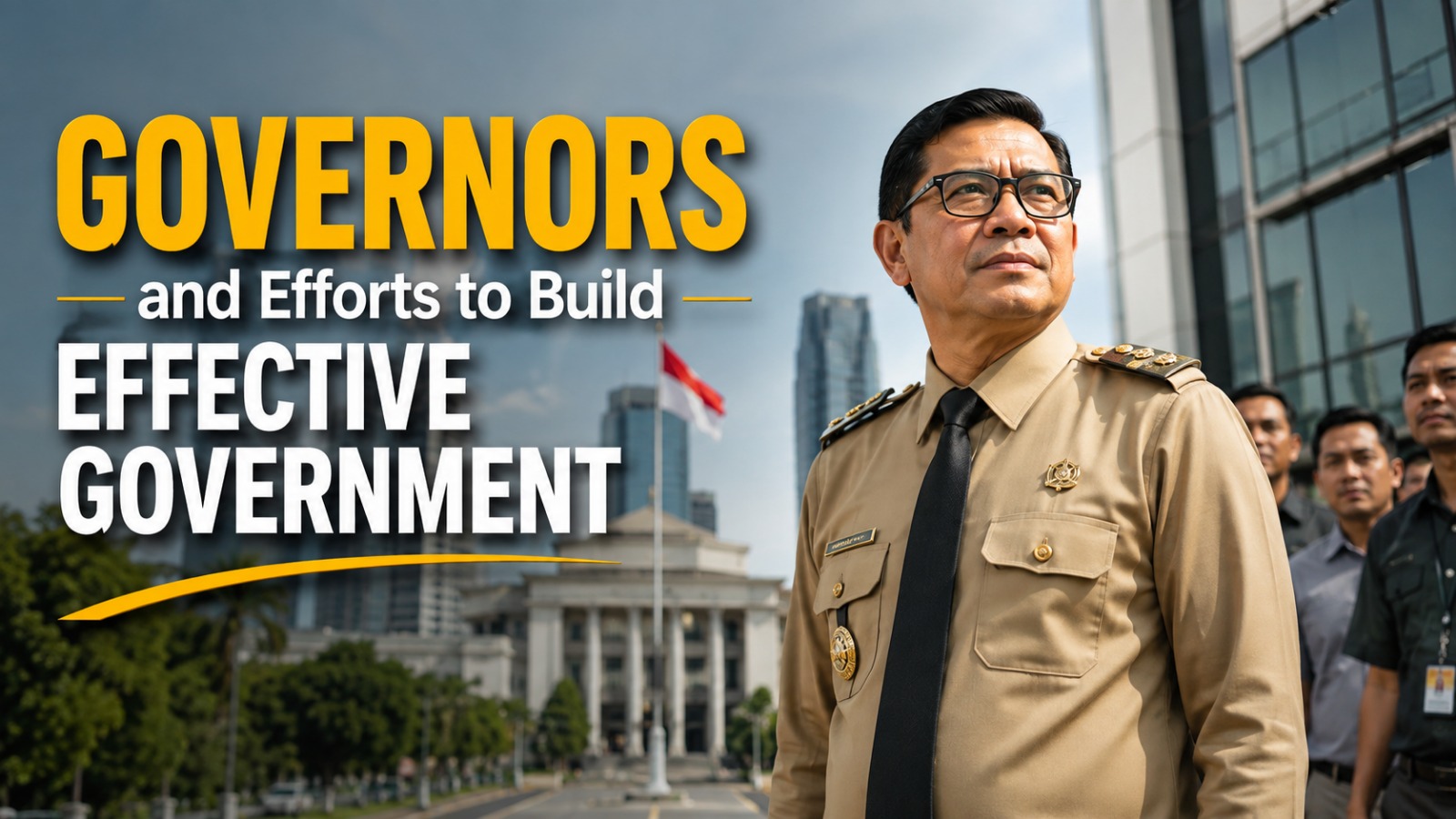
Governors play an important role in building effective government at the regional level. As heads of provincial governments, they are responsible for leading government affairs within their legal authority and ensuring that public programs are implemented properly. Effective government requires more than good policies because it also depends on strong leadership, competent officials, efficient services, and responsible use of public resources.
Building effective government is a continuous process. Governors need to coordinate with regional agencies, local governments, the central government, and communities to address different challenges. Through good planning, transparent management, digital innovation, and regular evaluation, regional governments can improve performance and respond more effectively to public needs.
PROVIDING STRONG REGIONAL LEADERSHIP
Strong leadership is one of the foundations of effective regional government. Governors provide direction for government programs and help establish priorities based on regional conditions and public needs. They work with regional government agencies to ensure that policies are translated into concrete programs. Clear leadership can help government institutions work toward common goals.
Governors also need to make decisions based on laws, reliable information, and objective considerations. Regional challenges can change over time, so leaders must be able to respond appropriately without losing sight of long term development priorities. Good communication is also essential when explaining policies to government officials and the public. Effective leadership can create a more organized and responsive government environment.
DEVELOPING CLEAR GOVERNMENT PLANS
Effective government begins with good planning. Regional programs should be based on actual problems, available resources, development priorities, and community needs. Governors work with regional agencies to establish development plans and determine which programs should receive priority. Clear planning helps prevent resources from being spread across too many activities without measurable results.
Government plans should also have clear targets and performance indicators. These indicators allow officials to measure whether programs are achieving their intended outcomes. When a program does not produce the expected results, the government can review the causes and make appropriate improvements. Planning combined with regular evaluation can make government programs more focused and effective.
IMPROVING PUBLIC SERVICES
One of the clearest signs of effective government is the quality of services received by citizens. Governors can encourage regional agencies to improve services so they become more accessible, efficient, transparent, and responsive. Simple procedures and clear information can make it easier for people to obtain government services. Service quality should also be monitored to identify areas that need improvement.
Technology can support these efforts by providing digital access to selected government services. Online systems may reduce administrative delays and make information easier to obtain. However, digital services should remain inclusive because not everyone has the same access to technology. Regional governments need to ensure that alternative service channels remain available when appropriate.
MANAGING PUBLIC RESOURCES RESPONSIBLY
Public resources are essential for implementing government programs. Governors need to ensure that regional budgets and other resources are managed according to applicable laws and development priorities. Spending should be efficient, transparent, accountable, and focused on programs that provide meaningful public benefits. Responsible resource management can strengthen the credibility of regional government.
Every major program should have a clear purpose and expected outcome. Monitoring can help determine whether resources are being used as planned. Evaluation can also reveal whether the benefits of a program justify the resources used. This approach helps regional governments make better decisions when setting future priorities.
STRENGTHENING GOVERNMENT OFFICIALS
Competent government officials are necessary for effective policy implementation. Governors can support professional development through training, capacity building, and performance evaluation. Officials need technical skills as well as communication, problem solving, and administrative abilities. A capable workforce can help government agencies deliver policies more consistently.
Integrity is equally important in public administration. Government officials should work professionally, follow applicable regulations, and provide services fairly. A strong organizational culture can encourage discipline and accountability. When competence is combined with integrity, government performance can become more reliable.
USING TECHNOLOGY AND DATA
Digital technology can help regional governments improve administrative efficiency and public services. Governors can encourage government agencies to use appropriate digital systems for administration, communication, monitoring, and service delivery. Data can also help officials understand regional conditions and identify priority issues. Decisions based on reliable information are generally easier to measure and evaluate.
Technology, however, needs proper management. Government systems should consider data security, privacy, accessibility, and the ability of officials to operate them effectively. Staff may require training to use new systems properly. When technology is introduced with clear objectives, it can become a practical tool for improving government performance.
STRENGTHENING COORDINATION
Regional problems often involve more than one government institution. Governors therefore need to strengthen coordination among provincial agencies and, within their authority, with district and city governments. Coordination can help align programs, reduce duplication, and address issues that cross administrative boundaries. Effective communication is essential to ensure that each institution understands its responsibilities.
Governors also coordinate with the central government in matters involving national policies and regional implementation. Cooperation between different levels of government can make policy implementation more consistent. It can also help regional governments communicate local needs through appropriate channels. Strong coordination makes it easier to respond to complex regional challenges.
ENCOURAGING PUBLIC PARTICIPATION
Effective government should listen to the people it serves. Governors can encourage public participation through consultation, feedback mechanisms, complaint channels, and other appropriate forms of engagement. Citizens can provide information about problems that may not be fully visible through government data. Public participation can therefore improve the relevance of regional policies.
Government agencies should provide clear information so people can participate meaningfully. Feedback should also be reviewed and used as an input for policy improvement when appropriate. Listening to citizens does not mean every suggestion can be implemented, but it helps government understand community expectations. Strong communication can build greater trust between regional government and society.
MONITORING AND EVALUATING GOVERNMENT PERFORMANCE
Government programs need regular monitoring to ensure that implementation follows established plans and regulations. Governors can use performance reports, data, public feedback, and other evaluation tools to assess progress. Monitoring helps identify problems early and allows government agencies to respond before issues become more serious. It also supports accountability in public administration.
Evaluation should focus not only on whether an activity was completed but also on whether it produced meaningful results. A completed project does not automatically mean that its objectives have been achieved. By focusing on outcomes, governments can identify which programs are effective and which need adjustment. Continuous evaluation is essential for building a government that learns and improves over time.
CONCLUSION
Governors and efforts to build effective government are closely connected because governors have an important leadership role in provincial administration. Effective government requires clear planning, quality public services, responsible resource management, competent officials, appropriate technology, strong coordination, and public participation.
A government cannot become effective through one policy or program alone. Continuous monitoring, transparent decision making, and willingness to improve are equally important. With strong leadership and cooperation among government institutions and communities, governors can help create regional governments that are more efficient, accountable, responsive, and focused on public needs.
About the Author
Gusti Ayu Tita P
Author — STEKOM University
An active author focused on academic issues, educational technology, and human resource development in the campus environment.