
Governors and Regional Infrastructure Development
Gusti Ayu Tita P
12 Agustus 2026
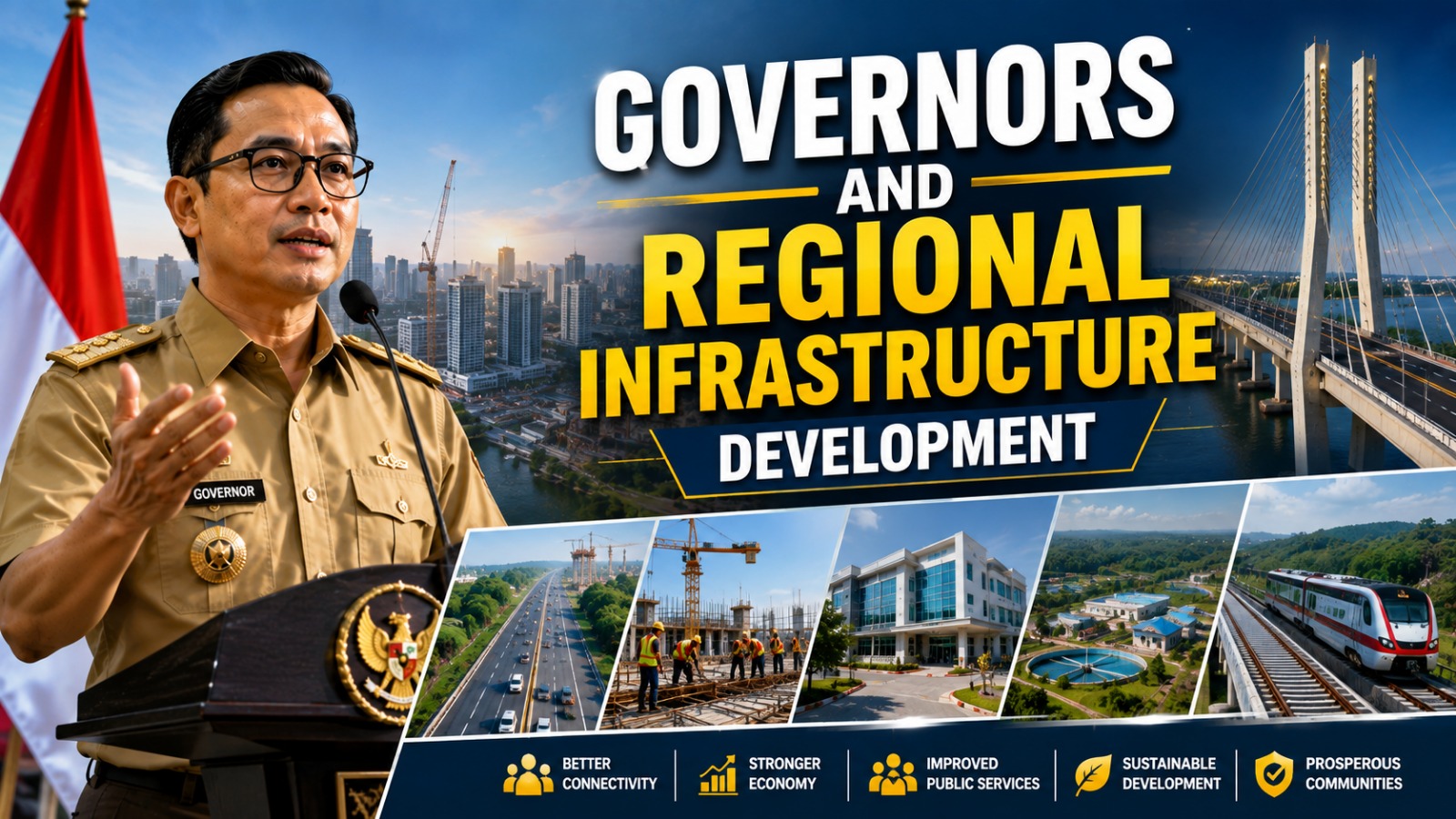
Regional infrastructure development is an important part of building strong, connected, and competitive communities. Roads, bridges, public transportation, schools, healthcare facilities, water systems, and digital networks all support economic and social activities. Governors play an important role in guiding infrastructure policies and ensuring that regional development meets public needs.
Infrastructure projects often require cooperation between regional governments, national authorities, local administrations, private companies, and communities. A governor must therefore do more than approve development plans. Strong coordination, careful budgeting, effective supervision, and long term planning are also needed to make infrastructure projects useful and sustainable.
THE GOVERNOR'S ROLE IN INFRASTRUCTURE PLANNING
One of the key responsibilities of governors is helping establish infrastructure priorities within their legal authority. They assess regional needs, development targets, population growth, economic potential, and existing infrastructure conditions. These factors can be used to determine which projects should receive attention first. Good planning helps governments use limited public resources more effectively.
Infrastructure planning should also consider long term regional development. A new road, bridge, or transportation system can influence housing, business activity, tourism, and access to public services. Governors therefore need to consider how individual projects connect with wider development goals. Careful planning can prevent infrastructure from being built without a clear public purpose.
DEVELOPING ROADS AND TRANSPORTATION
Roads and transportation networks are essential for connecting communities and supporting economic activity. Governors can help prioritize the construction, improvement, and maintenance of infrastructure that falls under regional authority. Better transportation can reduce travel difficulties and improve the movement of people and goods between areas.
Transportation development can also create opportunities for businesses and local communities. Farmers can reach markets more easily, companies can distribute products more efficiently, and residents can access education and healthcare more conveniently. Governors need to consider both current transportation problems and future regional growth when developing these systems.
PROMOTING FAIR INFRASTRUCTURE DEVELOPMENT
Infrastructure development should not focus only on major cities or economically advanced areas. Governors can help promote more balanced development by identifying communities that have limited access to roads, transportation, utilities, healthcare, education, and other essential facilities. Fair infrastructure investment can help reduce regional inequality.
Balanced development also supports wider economic participation. Communities with better infrastructure are often better positioned to access markets, employment, education, and public services. By considering different regional needs, governors can help ensure that infrastructure benefits are distributed more broadly.
MANAGING INFRASTRUCTURE BUDGETS
Large infrastructure projects require significant financial resources. Governors often have an important role in proposing or managing regional budgets, depending on the legal system of their jurisdiction. Budget decisions should consider project priorities, available revenue, operating costs, and long term maintenance requirements.
Financial responsibility is essential because infrastructure should provide lasting public value. A project that looks successful when completed can become costly if it is poorly designed or not properly maintained. Governors and regional agencies therefore need strong financial planning and monitoring throughout the project cycle.
COORDINATING WITH NATIONAL AND LOCAL GOVERNMENTS
Infrastructure projects frequently cross administrative boundaries and areas of government responsibility. Governors may need to coordinate with national ministries, municipalities, districts, neighboring regions, and public agencies. This cooperation is especially important for major transportation networks, water management, environmental projects, and regional economic infrastructure.
Effective coordination can reduce duplication and improve the connection between different projects. It can also help regional governments obtain technical assistance, funding, or policy support when necessary. Strong cooperation allows infrastructure development to become part of a wider and more integrated development strategy.
ENSURING QUALITY AND ACCOUNTABILITY
Infrastructure development requires proper supervision from planning through construction and maintenance. Governors work through relevant government agencies to ensure that projects follow applicable regulations, technical standards, budgets, and development plans. Monitoring is important because poor construction or weak oversight can reduce the value of public investment.
Accountability is equally important when public money is used for infrastructure. Governments should maintain transparent procedures and provide appropriate information about projects and their progress. Effective oversight can help reduce waste, improve quality, and strengthen public confidence in regional development programs.
SUPPORTING SUSTAINABLE INFRASTRUCTURE
Modern infrastructure development should consider environmental and social impacts. Governors can encourage projects that use resources efficiently, improve resilience, and respond to future challenges such as population growth and climate related risks. Sustainable planning can make infrastructure more useful over a longer period.
Digital infrastructure is also becoming increasingly important for regional development. Reliable internet connectivity and digital public services can support education, business, government administration, and access to information. Combining physical infrastructure with digital development can help regions become more adaptable and competitive.
CONCLUSION
Governors have an important role in regional infrastructure development through planning, budgeting, coordination, supervision, and policy implementation within their legal authority. Their decisions can influence transportation, public facilities, economic opportunities, and access to essential services. However, successful infrastructure development depends on cooperation among different levels of government and other stakeholders.
Good infrastructure should be carefully planned, financially responsible, inclusive, high quality, and sustainable. When governors connect infrastructure projects with broader regional priorities, development can create lasting benefits for communities. Effective infrastructure development can ultimately improve connectivity, support economic growth, reduce regional inequality, and strengthen public welfare.
About the Author
Gusti Ayu Tita P
Author — STEKOM University
An active author focused on academic issues, educational technology, and human resource development in the campus environment.















