
Ground Transportation and Modern Mobility
Gusti Ayu Tita P
11 Agustus 2026
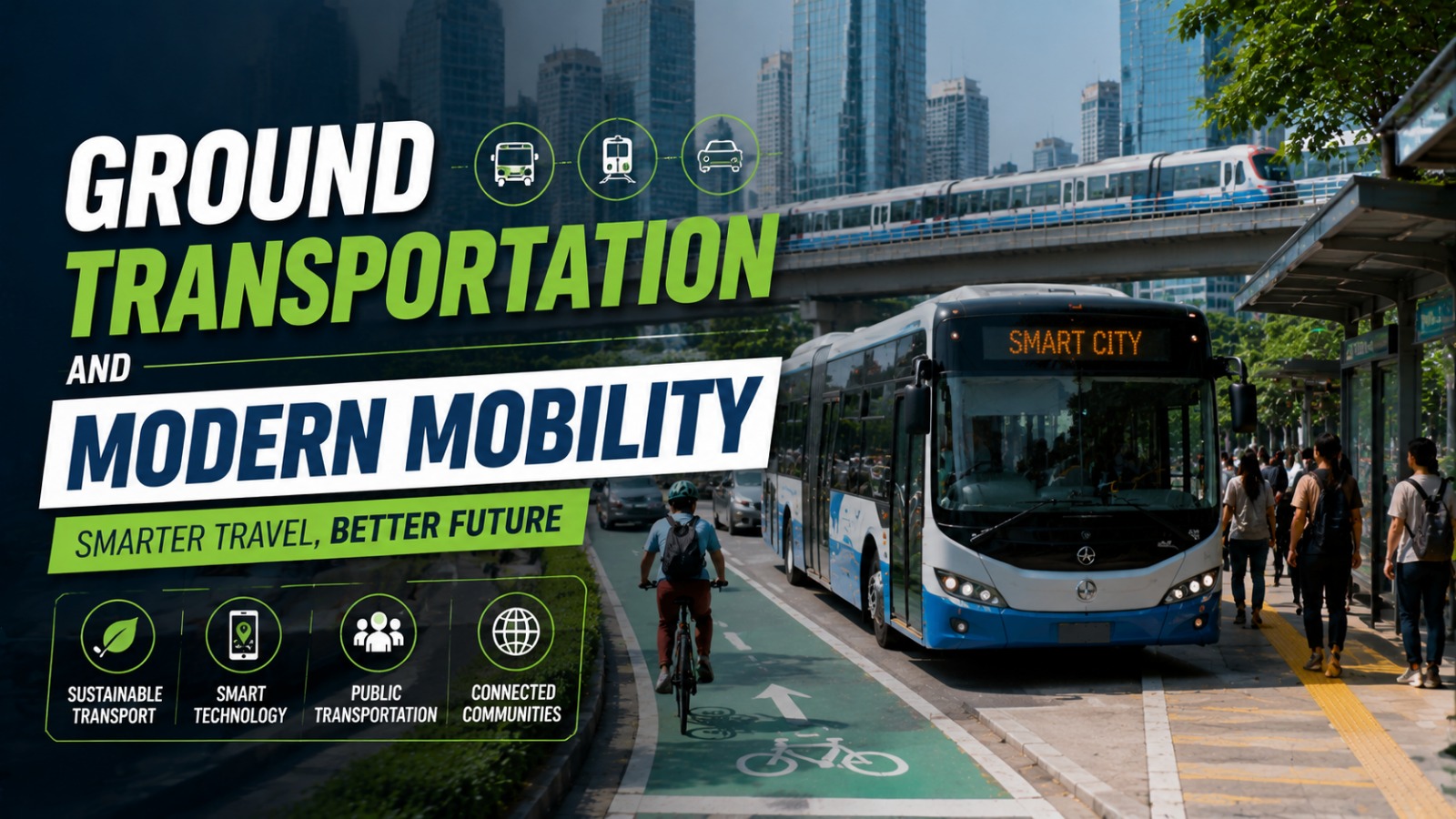
Ground transportation plays an essential role in supporting daily activities and connecting people across different areas. As cities continue to grow, the demand for transportation systems that are faster, safer, and more efficient is increasing. Modern mobility is not only about moving from one place to another but also about creating a better travel experience through technology and sustainable solutions. The development of transportation networks has become an important part of building smarter and more connected communities.
Today, ground transportation includes various options such as buses, trains, electric vehicles, and shared mobility services. These systems help reduce travel barriers and improve access to workplaces, education, healthcare, and economic opportunities. With continuous innovation, modern mobility solutions are changing how people travel and interact with urban environments.
THE ROLE OF GROUND TRANSPORTATION IN DAILY LIFE
Ground transportation has become a fundamental part of modern society because it supports the movement of people and goods. Every day, millions of individuals depend on transportation networks to complete their activities efficiently. Reliable transportation helps communities stay connected and allows businesses to operate smoothly. Without effective transportation systems, economic and social activities would face many challenges.
In urban areas, ground transportation helps manage the increasing demand for mobility. Public buses, commuter trains, and other shared transportation options provide alternatives to private vehicles. Public transportation can reduce road congestion while improving accessibility for many people. A well-planned transportation system creates a more organized and productive city environment.
THE DEVELOPMENT OF MODERN TRANSPORTATION SYSTEMS
Transportation systems have experienced significant changes due to technological advancements. Traditional vehicles are now being improved with digital features, automation, and cleaner energy sources. These developments aim to make transportation more efficient and environmentally friendly. Smart transportation has become one of the key concepts in modern mobility planning.
Digital technology allows transportation services to provide real-time information, online ticketing, and better route management. Passengers can now plan their journeys more easily through mobile applications and integrated platforms. These innovations improve convenience and help transportation providers deliver better services. The combination of technology and infrastructure creates a more connected mobility experience.
THE IMPORTANCE OF SUSTAINABLE GROUND TRANSPORTATION
Environmental concerns have encouraged the development of more sustainable transportation options. Conventional vehicles that rely heavily on fossil fuels contribute to air pollution and greenhouse gas emissions. As a result, many cities are promoting cleaner alternatives such as electric buses, electric cars, and energy-efficient transportation systems. Sustainable transportation is becoming an important goal for future mobility development.
Electric vehicles offer several advantages, including lower emissions and reduced dependence on fuel. However, successful implementation requires proper charging infrastructure and reliable energy sources. Sustainable mobility requires cooperation between governments, industries, and communities. Through these efforts, transportation can become more environmentally responsible while maintaining efficiency.
TECHNOLOGY AND THE FUTURE OF MOBILITY
Technology has a major influence on the future of ground transportation. Advanced systems such as artificial intelligence, connected vehicles, and intelligent traffic management are changing how transportation operates. These technologies can improve safety, reduce delays, and provide better travel information. Mobility technology allows transportation systems to respond more effectively to user needs.
In the future, vehicles may become increasingly connected and automated. Smart infrastructure can communicate with vehicles to improve traffic flow and reduce accident risks. However, technological development must be supported by proper regulations and public awareness. Innovation should focus not only on speed and convenience but also on safety and sustainability.
CHALLENGES IN DEVELOPING MODERN MOBILITY
Although ground transportation continues to improve, several challenges remain. Rapid urban growth, increasing vehicle numbers, and limited infrastructure can create problems such as congestion and inefficient travel. Many cities need better planning to balance transportation demand with available resources. Addressing these challenges requires long-term strategies and cooperation from different sectors.
Another challenge is ensuring equal access to transportation services. Not all communities have the same level of connectivity or transportation facilities. Affordable and reliable transportation should be available for people in both urban and rural areas. Transportation accessibility is an important factor in creating inclusive mobility systems.
INTEGRATION OF TRANSPORTATION MODES FOR BETTER CONNECTIVITY
Modern mobility depends on the integration of different transportation modes. People often need to combine buses, trains, bicycles, and other services to complete their journeys. A connected transportation network makes transfers easier and improves overall travel efficiency. Integrated mobility helps create a smoother experience for passengers.
The development of integrated systems requires cooperation between transportation operators and city planners. Digital payment systems, connected stations, and coordinated schedules can improve the relationship between different modes. When transportation networks work together, cities can reduce dependency on private vehicles. This approach supports more efficient and sustainable urban development.
THE FUTURE OF GROUND TRANSPORTATION
The future of ground transportation will be shaped by innovation, sustainability, and changing user expectations. People increasingly demand transportation that is faster, safer, and more environmentally friendly. Future mobility systems will focus on improving convenience while reducing negative impacts on the environment. Future mobility represents a transformation toward smarter and more responsible transportation.
As technology continues to advance, ground transportation will become more connected and adaptable. Cities that invest in modern transportation infrastructure will be better prepared for future challenges. The combination of smart technology, sustainable energy, and effective planning can create transportation systems that benefit society. Modern mobility is not only about movement but also about improving quality of life.
About the Author
Gusti Ayu Tita P
Author — STEKOM University
An active author focused on academic issues, educational technology, and human resource development in the campus environment.















