
Hedonistic Lifestyle vs Simple Living Which Is More Beneficial?
Gusti Ayu Tita P
8 September 2026
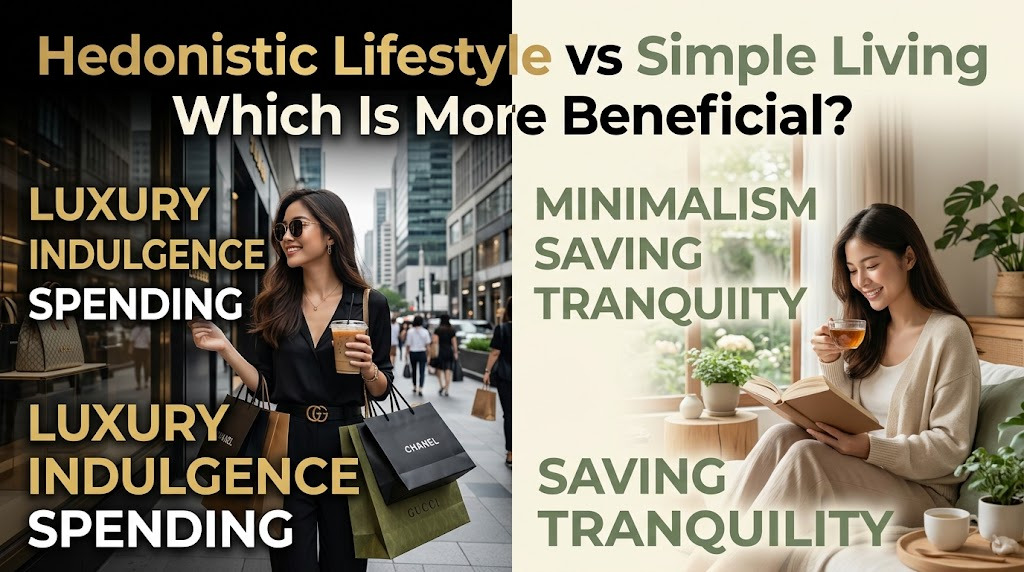
People have different ways of enjoying life and managing their priorities. Some prefer a hedonistic lifestyle, which focuses strongly on pleasure, comfort, entertainment, and personal satisfaction. Others choose simple living, which emphasizes moderation, essential needs, meaningful experiences, and careful use of resources. Understanding the differences between these lifestyles can help young people decide which approach is more suitable for their financial condition, personal goals, and future plans.
UNDERSTANDING THE HEDONISTIC LIFESTYLE
A hedonistic lifestyle is generally characterized by a strong focus on pleasure and immediate satisfaction. A person may spend money on entertainment, fashionable products, travel, restaurants, gadgets, or other activities that provide enjoyment. There is nothing inherently wrong with spending money on things that make life enjoyable. The main concern appears when pleasure becomes the primary priority and important responsibilities are consistently neglected.
Among young people, hedonistic behavior can be influenced by social media, advertising, peer pressure, and digital shopping platforms. Seeing other people enjoy luxurious experiences may create a desire to follow similar trends. When this behavior is not supported by adequate financial planning, it can lead to impulsive spending and reduced savings. Therefore, the effect of a hedonistic lifestyle depends greatly on how well a person controls consumption.
WHAT DOES SIMPLE LIVING MEAN?
Simple living is a lifestyle that focuses on using resources thoughtfully and giving greater attention to what is genuinely important. It does not mean avoiding comfort, entertainment, or enjoyable experiences completely. Instead, people who practice simple living tend to reduce unnecessary consumption and avoid spending simply to follow trends. The goal is often to create a more intentional and balanced way of life.
Simple living can also encourage people to prioritize needs over wants. For example, someone may choose to purchase a durable product instead of repeatedly buying items because they are popular. They may also prefer meaningful experiences, close relationships, personal development, and financial security over material possessions. This approach can make it easier to control expenses and maintain clearer long-term priorities.
THE DIFFERENCE IN SPENDING HABITS
The most visible difference between these two lifestyles can be found in spending habits. A hedonistic lifestyle may involve more frequent spending on entertainment, luxury, fashion, dining, and experiences that provide immediate pleasure. In contrast, simple living generally encourages people to evaluate whether a purchase is necessary and useful before spending money. Both approaches can include spending on enjoyment, but the level of consumption and the reasons behind it can be different.
For young people with limited income, simple living may provide greater financial flexibility. Reducing unnecessary expenses can create more opportunities to build personal savings and emergency funds. However, excessive restriction can also make life feel unnecessarily difficult if people never allow themselves to enjoy their income. The healthiest approach is often not choosing one extreme, but finding a reasonable balance between enjoyment and responsibility.
WHICH LIFESTYLE IS BETTER FOR FINANCIAL HEALTH?
From a financial perspective, simple living can offer several advantages because it encourages controlled consumption and greater awareness of expenses. People may have more opportunities to save, invest, or prepare for unexpected financial needs. Lower unnecessary spending can also reduce the risk of relying on debt to maintain a particular lifestyle. These habits can support stronger financial stability over time.
However, a hedonistic lifestyle is not automatically financially harmful. Someone with a high and stable income may be able to spend significantly on leisure while still meeting savings and investment goals. The important factor is whether lifestyle expenses are appropriate for income and financial priorities. Financial health depends less on the label of a lifestyle and more on responsible money management.
THE EFFECT ON HAPPINESS AND PERSONAL SATISFACTION
A hedonistic lifestyle can provide short-term happiness because enjoyable activities can reduce stress and create memorable experiences. Traveling, spending time with friends, enjoying good food, or purchasing something meaningful can contribute positively to quality of life. However, if happiness becomes dependent on continuous consumption, satisfaction may become temporary. A person may constantly seek new products or experiences to recreate the same feeling.
Simple living can encourage a different understanding of happiness. Instead of relying heavily on material consumption, people may find satisfaction through relationships, hobbies, learning, nature, creativity, or personal achievements. This does not mean simple living guarantees happiness, but it can encourage long-term satisfaction through meaningful priorities. Ultimately, people need to understand which activities genuinely improve their well-being rather than simply providing temporary excitement.
FINDING A BALANCE BETWEEN THE TWO LIFESTYLES
Young people do not necessarily have to choose between complete hedonism and extremely simple living. A balanced lifestyle can combine enjoyment with financial responsibility. For example, someone can regularly set aside money for savings while also allocating a reasonable amount for entertainment. This allows the person to enjoy the present without completely sacrificing future plans.
The key is developing conscious consumption. Before making a purchase, it can be useful to consider whether it is affordable, necessary, and genuinely valuable. People should also avoid comparing their lifestyles with carefully selected images on social media. By understanding personal priorities and financial limits, young people can enjoy life without becoming controlled by consumer pressure.
CONCLUSION
So, hedonistic lifestyle vs simple living, which one is more beneficial? There is no single answer that applies to everyone. A hedonistic lifestyle can provide enjoyment and memorable experiences when spending remains controlled, while simple living can support financial stability, intentional consumption, and long-term goals. The problem with either lifestyle usually appears when it becomes excessive and prevents a person from maintaining balance.
For many young people, combining the positive aspects of both approaches may be the most practical solution. They can enjoy entertainment and experiences while maintaining a budget, building savings, and avoiding unnecessary consumption. The most beneficial lifestyle is ultimately one that supports happiness, financial health, personal growth, and future security at the same time.
About the Author
Gusti Ayu Tita P
Author — STEKOM University
An active author focused on academic issues, educational technology, and human resource development in the campus environment.



