
Hidden Stories Behind Economy Train Travel
Gusti Ayu Tita P
24 Agustus 2026
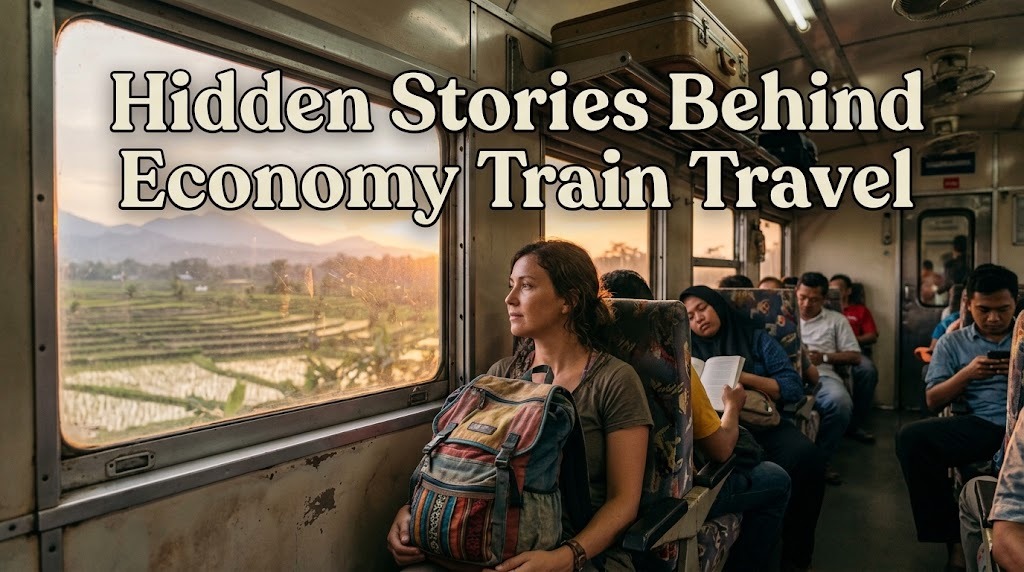
Economy train travel is often viewed simply as an affordable way to reach a destination. However, behind every journey, there are hidden stories that make the experience more meaningful. A train carries people with different backgrounds, purposes, and personal journeys, creating a constantly changing atmosphere inside each carriage. The scenery outside the window also reveals small details about communities and places along the railway. For this reason, economy train travel can offer much more than an inexpensive transportation option.
EVERY PASSENGER HAS A DIFFERENT STORY
One of the most interesting aspects of economy train travel is the diversity of passengers. A single carriage may include students, workers, families, tourists, and people returning to their hometowns. Each person travels for a different reason and carries a personal story that may never be fully known by others. This diversity creates a unique atmosphere during every journey.
Some passengers may be traveling for important family events, while others may simply be taking a short trip. Even when people do not talk to one another, their presence contributes to the character of the journey. Passenger stories are often invisible but remain an important part of the experience. A train can therefore become a temporary meeting place for people from many walks of life.
THE TRAIN WINDOW REVEALS EVERYDAY LIFE
Looking through the window can reveal details that are rarely seen from conventional tourist routes. Travelers may see houses, farms, markets, rivers, schools, roads, and people carrying out their daily activities. These ordinary scenes provide a glimpse into local life beyond famous attractions. They show how different communities live and work along the railway.
The scenery also changes gradually as the train moves between cities and rural areas. Busy urban environments can give way to quieter neighborhoods and open landscapes. These changes create a visual story throughout the journey. For travelers who pay attention, the train window becomes a simple way to observe the diversity of a region.
SMALL MOMENTS CAN BECOME MEMORIES
Not every memorable experience needs to be dramatic. A short conversation with another passenger, an unexpected beautiful view, or a quiet moment while watching the landscape can become meaningful. Simple travel moments often stay in people's memories because they happen naturally. They are not always planned or expected.
These moments can also change how travelers remember a particular journey. Years later, a person may forget the exact travel schedule but still remember a specific sunset, station, or conversation. This shows that the emotional value of a journey does not always depend on its cost. Travel memories can grow from experiences that seem small at the time.
ECONOMY TRAINS CONNECT DIFFERENT COMMUNITIES
Railways play an important role in connecting cities, towns, and communities. Economy services can make train travel accessible to people with different travel budgets. This creates opportunities for more people to move between regions for work, education, family visits, and leisure. Affordable transportation can therefore support greater mobility between communities.
The connection is not only physical but also social. People from different areas can share the same carriage for several hours despite having completely different backgrounds. This creates a temporary environment where diverse experiences exist side by side. In this sense, economy train travel reflects the diversity of society.
THE JOURNEY SHOWS MORE THAN TOURIST ATTRACTIONS
Travelers often focus on famous landmarks when visiting a new city. However, train journeys can reveal parts of a region that are not included in typical tourist itineraries. Small neighborhoods, agricultural areas, local businesses, and ordinary streets can all become visible from the railway. These views provide a broader understanding of the destination.
Seeing everyday environments can make travel feel more authentic. Travelers can begin to understand that cities are not defined only by their popular attractions. Authentic travel experiences can also come from observing ordinary life. The journey therefore becomes an opportunity to discover a destination beyond its most recognizable places.
DIFFERENT JOURNEYS CREATE DIFFERENT ATMOSPHERES
No two train journeys are exactly the same. The time of departure, weather, passenger composition, and route conditions can influence the atmosphere. A morning journey may offer soft light and peaceful scenery, while an evening trip can create a completely different mood. Train travel experiences are shaped by many small factors.
Even traveling along the same route multiple times can feel different. One journey may be filled with conversations and activity, while another may feel quiet and relaxing. These changing conditions are part of the charm of train travel. They make every trip feel like a new chapter rather than an exact repetition of the previous one.
LEARNING TO ENJOY THE SLOWER MOMENTS
Modern life often encourages people to move quickly and stay constantly connected. A train journey can provide an opportunity to slow down for a while. Passengers can read, listen to music, rest, or simply observe the scenery without needing to manage traffic themselves. Slow travel can make the journey feel less stressful.
Taking time to notice small details can also improve the overall travel experience. Instead of constantly checking the arrival time, travelers can focus on what is happening around them. This does not mean ignoring the schedule, but rather allowing the journey to become part of the experience. A slower approach can reveal stories that might otherwise be overlooked.
PREPARATION CAN MAKE THE EXPERIENCE BETTER
Although spontaneity can make travel exciting, basic preparation remains important. Travelers should check their ticket, departure time, route, luggage requirements, and other relevant travel information before leaving. Bringing essential items such as water, a charger, and personal necessities can also improve comfort. Travel preparation helps prevent avoidable problems.
It is equally important to respect other passengers throughout the journey. Keeping noise under control, maintaining cleanliness, and protecting personal belongings contribute to a better environment. Following train regulations also helps ensure safety and comfort. Good preparation combined with responsible travel habits can make an economy train journey much more enjoyable.
DISCOVERING STORIES AFTER ARRIVING
The stories connected to a train journey do not necessarily end when the train reaches its destination. The experience can influence how travelers explore the city afterward. A landscape seen from the train may encourage someone to learn more about a particular area. A conversation with another passenger may even lead to a new recommendation for food or sightseeing.
Travelers can also preserve their experiences through photographs, notes, or personal memories. Recording small details can help keep the journey alive after returning home. Travel storytelling allows ordinary moments to become meaningful narratives. Over time, these stories can become some of the most valuable parts of a trip.
CONCLUSION
Hidden stories behind economy train travel can be found in many places, from the passengers inside the carriage to the communities visible outside the window. Every journey contains different people, landscapes, moments, and experiences that contribute to its unique character. These elements make train travel more than simply an affordable way to reach a destination.
Ultimately, the real value of economy train travel lies not only in its practical benefits but also in the experiences it creates. By observing local life, appreciating simple moments, respecting fellow passengers, and remaining open to unexpected experiences, travelers can discover stories that are easy to miss. Sometimes, the most memorable part of a journey is not where the train arrives, but what happens along the way.
About the Author
Gusti Ayu Tita P
Author — STEKOM University
An active author focused on academic issues, educational technology, and human resource development in the campus environment.















