
Hidden Stories Behind the Historic Palaces of Java
Gusti Ayu Tita P
4 September 2026
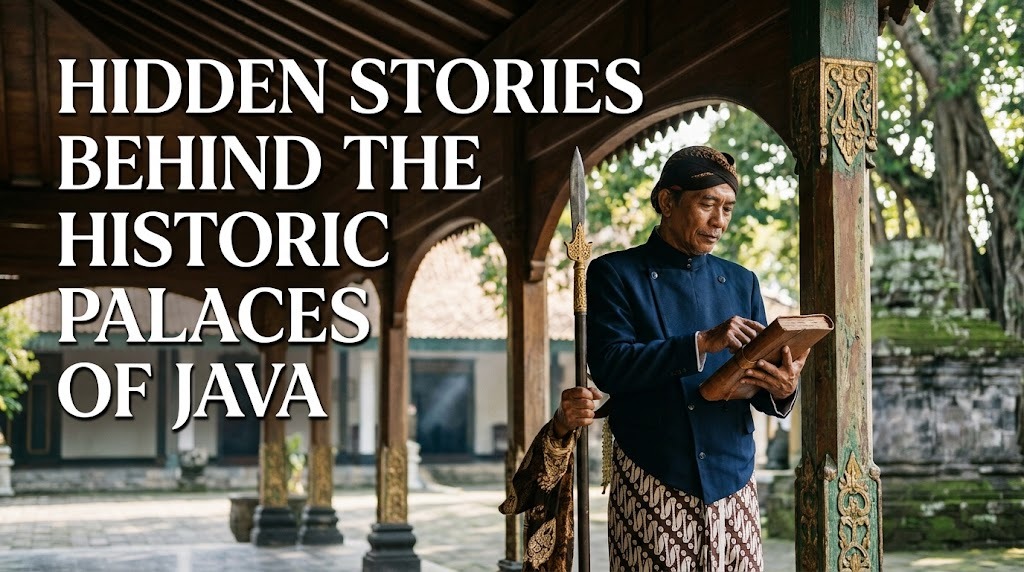
Historic palaces in Java are more than beautiful buildings with traditional architecture. They are places where history, culture, traditions, and local values have developed over generations. Many palaces have witnessed important political changes, cultural developments, and social transformations that shaped Javanese society.
Behind their large gates, traditional halls, and artistic decorations, there are many hidden stories behind the historic palaces of Java. Some stories are connected to royal families, while others reflect the lives of palace servants, artists, craftsmen, and surrounding communities. Exploring these stories can help visitors understand Java beyond its famous tourist attractions.
THE HISTORICAL ROLE OF JAVANESE PALACES
Javanese palaces have played an important role in the history of the island. In the past, palaces were centers of government, political authority, cultural activities, and royal life. They were not simply residences for kings and their families but also places where important decisions were made.
Several historic palaces in Java developed during periods when powerful kingdoms and sultanates influenced the region. The Yogyakarta Palace and Surakarta Palace, for example, became important cultural centers after the division of the Mataram Sultanate in the eighteenth century. Their history is closely connected to political changes that affected the development of Central Java.
Over time, the political function of many palaces changed. However, their cultural importance remained strong. Today, these places continue to preserve traditional ceremonies, arts, architecture, and historical objects that provide valuable connections to Java's past.
STORIES HIDDEN IN PALACE ARCHITECTURE
The architecture of a Javanese palace contains many meanings that may not be immediately visible to visitors. Buildings, courtyards, gates, and open spaces are often arranged according to traditional Javanese concepts and philosophies. The layout can represent ideas about order, harmony, social relationships, and the relationship between humans and their environment.
Traditional structures such as the pendopo are particularly important. This open pavilion is commonly used for gatherings, ceremonies, artistic performances, and other activities. Its open design reflects the Javanese idea of creating a space where people can meet and communicate.
Palace gates and pathways can also have symbolic meanings. Moving from one area to another may represent different levels of access and social function. Therefore, palace architecture should not be viewed only as decoration because every space can tell a story about Javanese values and traditions.
FORGOTTEN STORIES OF PALACE COMMUNITIES
The history of a palace is not only about kings and royal families. Behind palace walls, many people have contributed to maintaining its daily activities. Palace servants, craftsmen, musicians, dancers, cooks, and traditional workers have all played roles in preserving palace life.
Some of their stories may not appear in popular history books. Their knowledge has often been passed from one generation to another through practice and direct experience. Traditional skills such as preparing ceremonial equipment, maintaining cultural objects, playing gamelan, and performing traditional dances can become part of this living heritage.
These communities demonstrate that cultural preservation depends on more than historical buildings. People are an essential part of palace heritage because traditions cannot survive without individuals who continue to practice and teach them.
TRADITIONS THAT KEEP THE PAST ALIVE
One of the most fascinating aspects of historic palaces in Java is the survival of traditional ceremonies. Various royal and cultural events continue to be held according to established customs, although their forms and contexts can change over time.
Ceremonies connected with Javanese cultural traditions may involve processions, traditional clothing, music, prayers, offerings, dances, or other symbolic activities. Some ceremonies are associated with important moments in the royal calendar, while others have broader cultural significance for local communities.
These traditions provide opportunities for younger generations to learn about their cultural heritage. They also allow visitors to observe how historical values can remain relevant in modern society. Living traditions make historic palaces more than museums because the culture continues to be practiced rather than simply displayed.
WHY THESE HIDDEN STORIES MATTER TODAY
Understanding the hidden stories of Javanese palaces is important because cultural heritage can easily become misunderstood when it is viewed only through photographs or tourist descriptions. Learning about the people, traditions, architecture, and historical events connected to a palace provides a more complete perspective.
Historic palaces can also support cultural tourism and education. Visitors can learn about Javanese history while experiencing traditional architecture, arts, ceremonies, and local customs. Responsible tourism can contribute to preservation when visitors respect palace rules and appreciate the cultural meaning of the places they visit.
Most importantly, these stories remind people that heritage is not simply something from the past. Cultural identity is continuously shaped by how communities remember, practice, and protect their traditions. Preserving palace stories therefore means protecting an important part of Java's cultural memory for future generations.
CONCLUSION
The historic palaces of Java contain stories that extend far beyond their impressive buildings and royal histories. They preserve evidence of political change, traditional architecture, community life, artistic practices, and cultural ceremonies that have developed over generations.
Exploring these hidden stories allows people to see Javanese palaces from a broader perspective. They are not only historical attractions but also living centers of cultural heritage where traditions continue to evolve. By understanding and respecting these stories, future generations can help ensure that the cultural legacy of Java remains meaningful and protected.
About the Author
Gusti Ayu Tita P
Author — STEKOM University
An active author focused on academic issues, educational technology, and human resource development in the campus environment.















