
Historic Events That Changed the Course of Indonesian History
Gusti Ayu Tita P
5 Agustus 2026
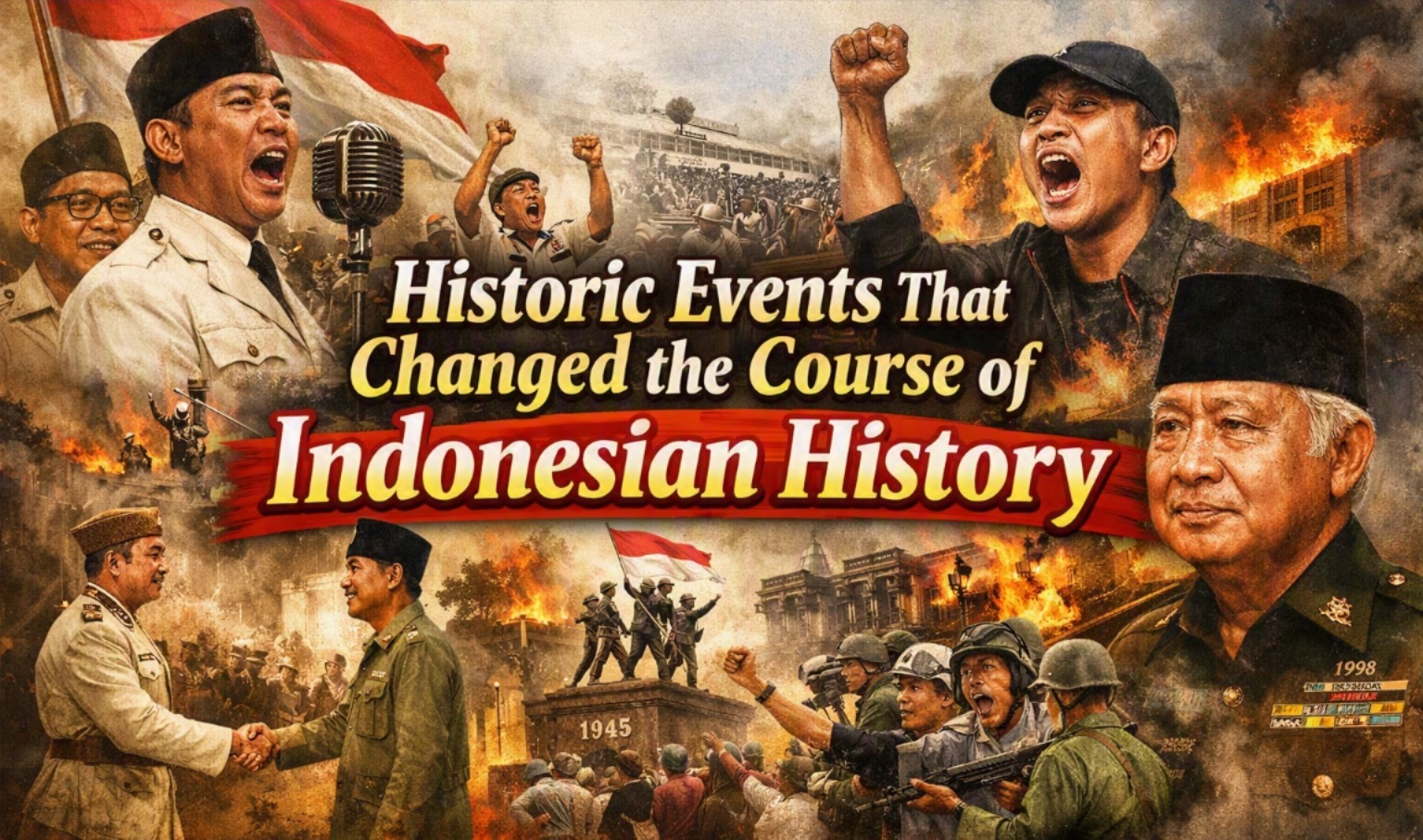
Indonesia has experienced many historic events that have shaped its identity as a modern nation. From the rise of powerful kingdoms to the struggle for independence and the development of democracy, each period has left a lasting impact on the country. These events influenced politics, culture, education, the economy, and national unity. Understanding the nation's past helps people appreciate the sacrifices and achievements that built Indonesia. This article explores the most significant historical milestones that changed the course of Indonesian history.
THE RISE OF EARLY INDONESIAN KINGDOMS
The history of Indonesia began long before independence with the emergence of powerful kingdoms across the archipelago. Kingdoms such as Srivijaya and Majapahit became influential centers of trade, culture, and political power. Their strategic locations allowed them to control important maritime trade routes connecting Asia and the Middle East. These kingdoms also introduced advanced systems of governance that influenced later Indonesian societies.
The Majapahit Empire, especially during the reign of Hayam Wuruk and the leadership of Gajah Mada, promoted the idea of unity across the archipelago. The famous Sumpah Palapa symbolized the ambition to unite many regions under one authority. These early kingdoms also encouraged the spread of Hinduism and Buddhism before Islam gradually became more widespread. Their cultural heritage remains visible today through temples, literature, and traditional customs.
THE ARRIVAL OF EUROPEAN COLONIAL POWERS
The arrival of European traders in the 16th century marked a major turning point in Indonesian history. Initially seeking valuable spices, the Portuguese, followed by the Dutch and British, competed to dominate trade in the region. Eventually, the Dutch East India Company established strong economic and political control over many parts of Indonesia. This period transformed local governance and trade systems.
Dutch colonial rule lasted for centuries and deeply affected Indonesian society. The colonial government introduced plantation agriculture, built infrastructure, and expanded administrative systems. However, these developments often benefited colonial interests while many Indonesians faced forced labor, unequal treatment, and economic hardship. These conditions encouraged the growth of resistance movements that later inspired the struggle for independence.
THE INDONESIAN NATIONAL AWAKENING
The early 20th century witnessed the rise of national awareness among Indonesians. Educated leaders established organizations that encouraged unity, education, and political participation. The founding of Budi Utomo in 1908 became an important milestone in the National Awakening movement. This organization inspired many other groups to work toward social and political progress.
Another significant event was the Youth Pledge of 1928, where young Indonesians declared one homeland, one nation, and one language. This declaration strengthened national identity despite the country's ethnic and cultural diversity. The movement encouraged cooperation among different communities in the struggle against colonial rule. It also laid the foundation for the unity that would later support independence.
THE PROCLAMATION OF INDONESIAN INDEPENDENCE
One of the most important moments in Indonesian history occurred on August 17, 1945, when Soekarno and Mohammad Hatta proclaimed Indonesia's independence. This declaration marked the beginning of Indonesia as a sovereign nation after centuries of colonial domination. The proclamation inspired millions of Indonesians to defend their newly declared freedom. It also attracted international attention to Indonesia's struggle.
Following the proclamation, Indonesia faced several years of conflict to secure international recognition of its independence. Through diplomacy and armed resistance, Indonesians demonstrated determination and national solidarity. In 1949, the Netherlands officially recognized Indonesian sovereignty after lengthy negotiations. This achievement became a defining chapter in the country's national history.
THE ESTABLISHMENT OF MODERN DEMOCRACY
After independence, Indonesia experienced different political systems, including parliamentary democracy, guided democracy, and the New Order era. Each period brought unique challenges and opportunities for national development. Political reforms became increasingly important as society demanded greater transparency, accountability, and public participation. These developments eventually led to major democratic changes.
The Reformasi Movement of 1998 marked another historic turning point. The movement encouraged democratic reforms, free elections, decentralization, and stronger protection of civil rights. Since then, Indonesia has continued to strengthen democratic institutions while addressing various social and economic challenges. Modern democracy remains one of the country's most significant achievements in shaping its future.
THE CONTINUING LEGACY OF INDONESIAN HISTORY
The history of Indonesia continues to influence national identity and future development. Historical experiences provide valuable lessons about unity, leadership, resilience, and the importance of cooperation among diverse communities. Schools, museums, historical sites, and national celebrations help preserve these memories for future generations. Learning history also strengthens appreciation for the nation's cultural richness.
Today, Indonesia continues to build upon the achievements of previous generations while facing new global challenges. Economic growth, technological progress, education, and environmental sustainability have become priorities for national development. By understanding the country's historical journey, citizens can make wiser decisions for the future. The legacy of these historic events remains an important foundation for Indonesia's continued progress.
CONCLUSION
The historic events that changed the course of Indonesian history demonstrate the nation's remarkable journey from ancient kingdoms to an independent democratic country. Every major event contributed to shaping Indonesia's political system, cultural identity, and national unity. The struggles, achievements, and reforms of the past continue to inspire present and future generations. Understanding these milestones helps people appreciate the sacrifices that built modern Indonesia. History remains an essential guide for creating a stronger, more united, and prosperous nation.
About the Author
Gusti Ayu Tita P
Author — STEKOM University
An active author focused on academic issues, educational technology, and human resource development in the campus environment.















