How Basic Salary Shapes Financial Stability for Workers?
Gusti Ayu Tita P
14 Agustus 2026
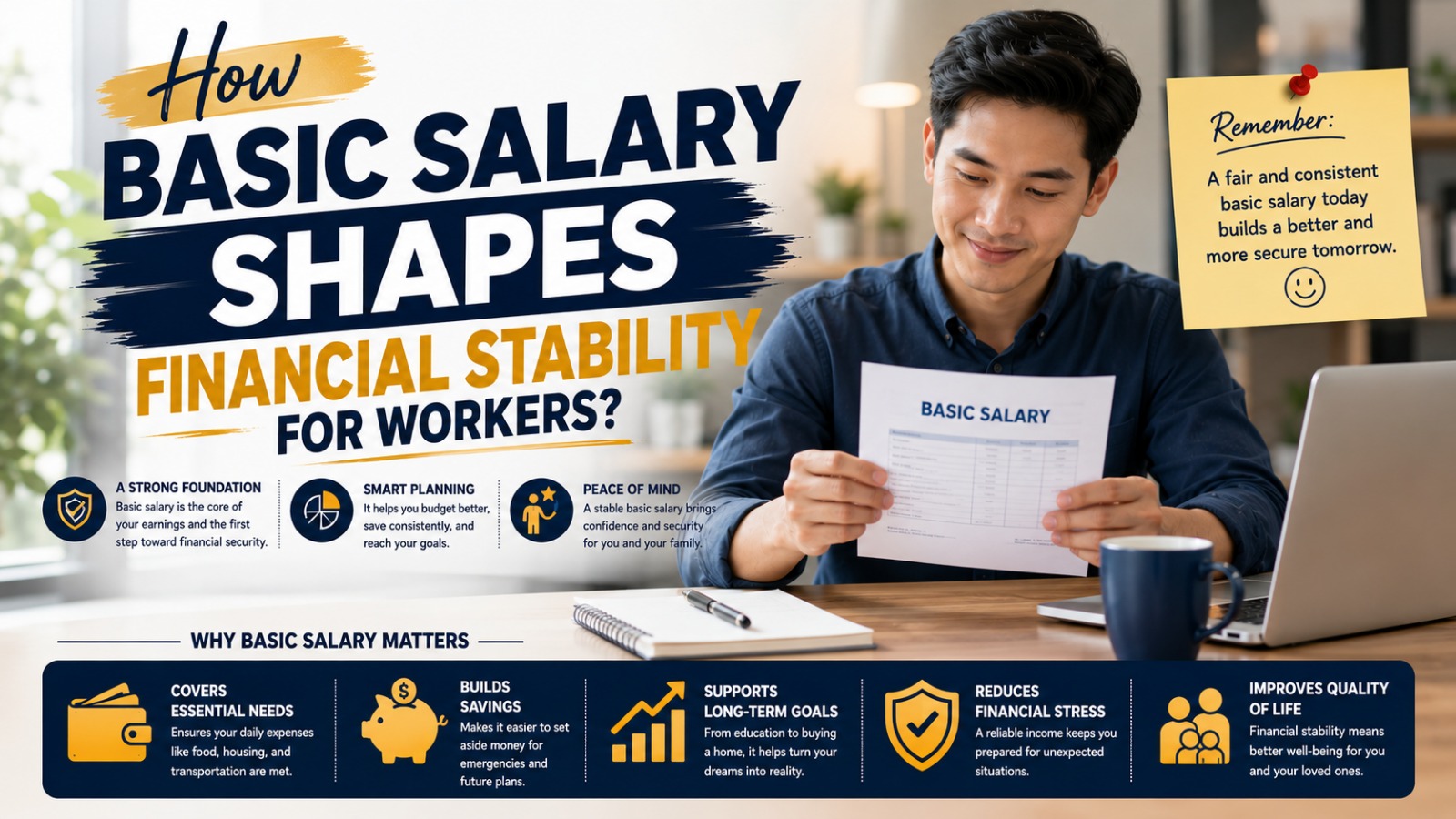
Basic salary plays an important role in helping workers achieve financial stability. As a predictable source of regular income, it allows employees to plan their daily expenses, savings, and financial commitments more effectively. Understanding how basic salary works can help workers make better decisions about spending, saving, and career development. It also provides a useful foundation for evaluating whether an employment package can support long-term financial needs.
THE IMPORTANCE OF BASIC SALARY FOR WORKERS
Basic salary is the fixed amount an employee receives for performing their regular job responsibilities, excluding certain additional payments such as bonuses, commissions, overtime, or allowances. Because it is generally predictable, workers can use it as the foundation of their monthly financial planning. A stable salary makes it easier to estimate how much money will be available for essential expenses. It can also reduce uncertainty when managing recurring financial obligations. However, the exact definition and components of basic salary can differ depending on the employment contract and applicable labor regulations.
For many workers, basic salary represents the most reliable part of their employee income. Variable payments may provide additional financial benefits, but they can change depending on performance, working hours, company results, or other conditions. Relying primarily on predictable income can make household budgeting more manageable. Workers can then treat bonuses and other variable payments as additional resources rather than money needed for essential expenses.
BASIC SALARY AND MONTHLY BUDGETING
A stable basic salary makes monthly budgeting easier because workers can estimate their regular income before planning expenses. Essential costs such as food, transportation, housing, utilities, and education can be organized around the amount of predictable income available. A clear budget can help workers identify unnecessary spending and prioritize important financial commitments. It can also make it easier to determine how much money can reasonably be allocated to savings. The goal is to ensure that regular expenses remain manageable without creating excessive financial pressure.
Workers should distinguish between gross income and net income when preparing a budget. Gross income refers to earnings before applicable deductions, while net income is the amount remaining after taxes and other deductions. The actual calculation depends on local regulations, employment arrangements, and individual circumstances. Budgeting based on the amount actually received can provide a more realistic picture of available funds. This approach helps workers avoid spending money that will later be deducted from their earnings.
BASIC SALARY AND EMERGENCY SAVINGS
A predictable salary can support the development of an emergency fund. Workers can set aside a portion of their regular income to prepare for unexpected expenses such as urgent repairs, temporary unemployment, or other financial emergencies. Building savings gradually may be more practical than waiting until a large amount of money becomes available. Even small, consistent contributions can strengthen financial resilience over time. The appropriate emergency savings target depends on individual expenses, responsibilities, and financial circumstances.
Using variable income for additional savings can further strengthen financial security. Bonuses, commissions, or other irregular payments can be allocated toward an emergency fund when they are received. This reduces the need to depend on uncertain income for essential monthly expenses. Workers should also keep emergency savings accessible and separate from money intended for everyday spending. A disciplined savings system can make unexpected financial situations easier to handle.
BASIC SALARY AND DEBT MANAGEMENT
Debt management is another area directly affected by basic salary. Workers with predictable income can estimate how much they can reasonably allocate toward loan payments, credit obligations, and other debts. Before taking on new debt, it is important to compare the required payments with regular take-home income. A manageable payment structure reduces the risk of financial stress when unexpected expenses occur. Workers should avoid assuming that future bonuses or uncertain income will always be available to cover debt obligations.
A stable basic salary can also support a debt repayment strategy. Workers may prioritize high-cost debt while continuing to meet minimum payments on other obligations. Creating a realistic repayment plan can prevent debt from consuming an excessive portion of monthly income. When additional income is received, some of it can be used to reduce outstanding debt more quickly. The specific approach should reflect the interest rates, terms, and conditions of each financial obligation.
BASIC SALARY AND LONG TERM SAVINGS
Basic salary can provide a foundation for long-term savings. Regular contributions toward retirement, education, home ownership, or other major goals are easier to maintain when income is predictable. Workers can establish a fixed savings amount or percentage of their regular income and adjust it as their financial situation changes. Starting early can give savings more time to grow, although the appropriate strategy depends on individual goals and risk tolerance. Long-term planning should also account for inflation and changes in income over time.
Workers should avoid treating long-term savings as money that can easily be used for everyday purchases. Separating savings from spending accounts can make it easier to maintain financial discipline. Automatic transfers after receiving salary can help establish a consistent saving habit. When basic salary increases, workers may consider increasing their savings contributions rather than immediately increasing their lifestyle expenses. This can help convert career progression into stronger long-term financial security.
BASIC SALARY AND LIFESTYLE CHOICES
The level of basic salary can influence a worker’s lifestyle choices, but higher income does not automatically guarantee financial stability. Workers may experience financial pressure if spending increases as quickly as income. This situation, often associated with lifestyle inflation, can reduce the amount available for savings and future goals. Maintaining reasonable spending habits can help workers benefit more from salary increases. Financial stability depends on the relationship between income, expenses, debt, and savings rather than salary alone.
Workers should regularly review their living expenses when their salary changes. A salary increase can provide an opportunity to strengthen savings, reduce debt, or prepare for future financial needs. It is reasonable to improve quality of life, but spending decisions should remain consistent with long-term priorities. A balanced approach allows workers to enjoy the benefits of higher income without creating unnecessary financial obligations. This can make financial progress more sustainable.
BASIC SALARY AND CAREER GROWTH
Career development can influence basic salary and therefore affect a worker’s financial stability. Employees who develop valuable skills, gain experience, and take on greater responsibilities may have opportunities for promotions or salary adjustments. However, salary growth is not automatic and depends on factors such as employer policies, industry conditions, performance, and labor market demand. Workers should therefore focus on developing skills that are relevant to their career goals. Keeping evidence of professional achievements can also be useful during performance reviews and salary negotiations.
A higher basic salary can provide more flexibility for financial planning, but workers should continue managing income carefully. Increased earnings can support larger savings contributions, stronger emergency reserves, and more effective debt repayment. It can also provide greater capacity to handle unexpected expenses. However, financial stability should be built through consistent habits rather than depending entirely on future salary increases. Combining career development with responsible financial management can create a stronger foundation for long-term security.
CONCLUSION
Basic salary provides an important foundation for financial stability because it gives workers a predictable source of regular income. It supports budgeting, emergency savings, debt management, and long-term financial planning. Workers can strengthen their financial position by basing essential expenses on reliable income rather than uncertain bonuses or commissions. They should also understand the difference between gross salary, net income, allowances, and variable compensation. A clear understanding of these components makes financial decisions more realistic.
Ultimately, financial stability depends on more than the amount of basic salary. Spending habits, savings, debt levels, career development, and financial planning all influence a worker’s ability to remain financially secure. A stable income combined with disciplined money management can help workers prepare for both short-term needs and long-term goals. By using basic salary wisely, employees can create greater financial resilience and make more confident decisions about their future.
About the Author
Gusti Ayu Tita P
Author — STEKOM University
An active author focused on academic issues, educational technology, and human resource development in the campus environment.