
How Better Transit Can Support Local Economic Growth?
Gusti Ayu Tita P
11 Agustus 2026
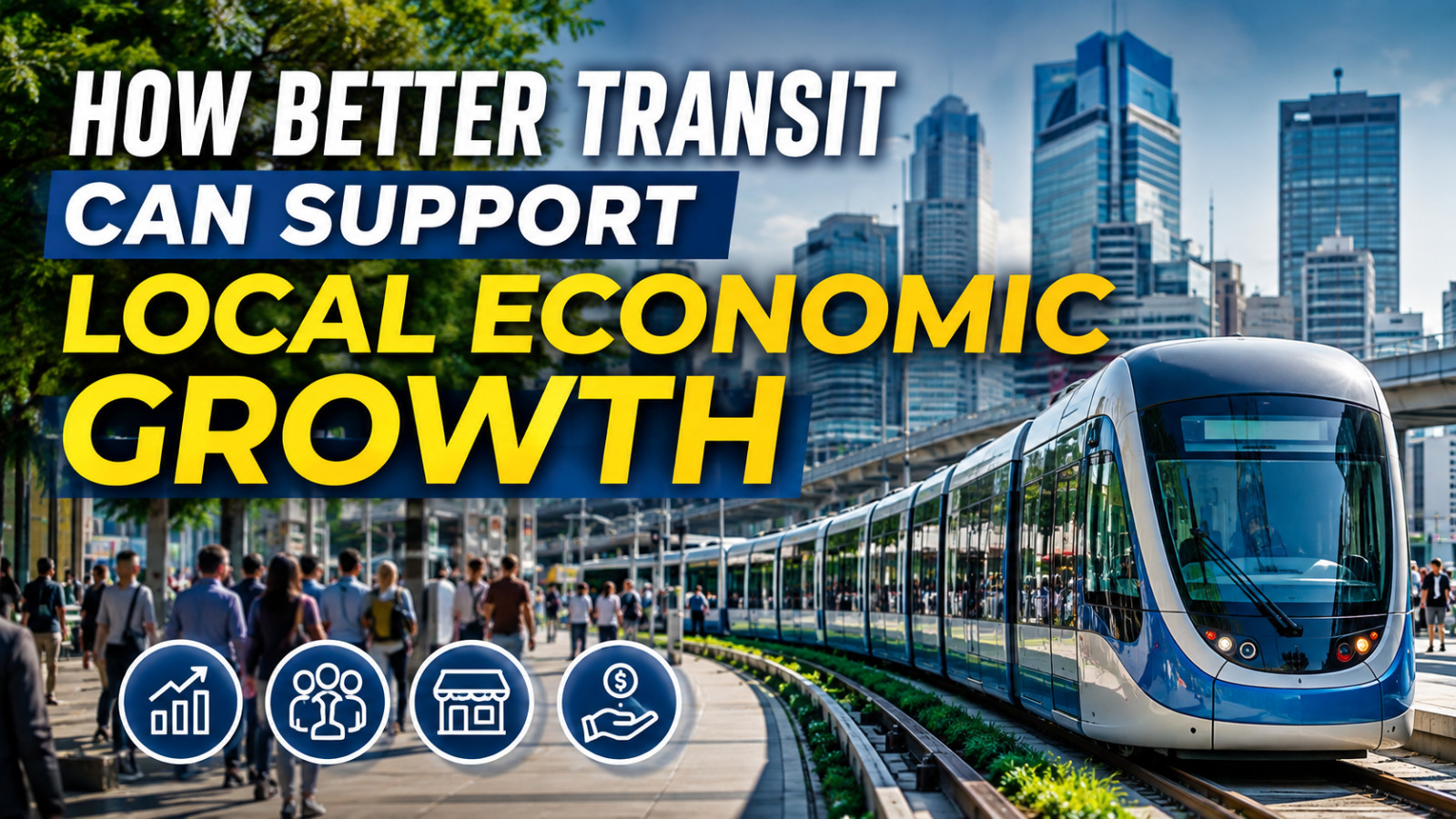
Public transportation is more than a way to move people from one place to another. A reliable transit system can support local economic growth by helping workers reach their jobs, customers visit businesses, and companies access a wider labor market. When public transit is safe, affordable, and efficient, it can create better connections between different parts of a city. These connections can make daily economic activities easier and more productive.
Investing in public transportation can also encourage the development of businesses around transit routes and stations. Improved mobility gives communities greater access to employment, education, shopping areas, and essential services. As cities continue to grow, better transit infrastructure can become an important part of building a stronger and more inclusive local economy.
BETTER ACCESS TO JOB OPPORTUNITIES
One of the most important economic benefits of better public transit is greater access to employment opportunities. Reliable buses, trains, and other forms of public transportation can help people travel to workplaces without depending entirely on private vehicles. This is especially valuable for workers who cannot afford to own or maintain a car. Better transportation connections can allow people to consider jobs that were previously difficult to reach.
Public transit can also help businesses reach a larger pool of potential employees. When workers can travel efficiently across different areas, companies have more opportunities to recruit suitable candidates. Improved workforce mobility can support productivity and reduce problems caused by limited access to jobs. In the long term, better connections between residential areas and business districts can strengthen the local labor market.
SUPPORTING LOCAL BUSINESSES
Better transit can provide significant advantages for local businesses. Shops, restaurants, markets, and service providers located near busy transit routes can benefit from increased customer movement. People who use public transportation may stop at nearby businesses before or after traveling to work, school, or other destinations. This can create additional opportunities for small businesses to attract customers.
Transit stations can also become centers of commercial activity when they are planned properly. New stores, offices, and services may develop around areas with strong transportation connections. Higher customer accessibility can make commercial locations more attractive to entrepreneurs and investors. As business activity increases, it can contribute to more employment and stronger local economic activity.
REDUCING TRANSPORTATION COSTS
Transportation costs can have a major effect on household budgets and business operations. Affordable public transportation gives residents an alternative to spending heavily on fuel, parking, vehicle maintenance, and other private transportation expenses. When people can save money on daily travel, they may have more income available for food, education, shopping, and other local needs. This can increase spending within the local economy.
Businesses can also benefit when employees have affordable transportation options. Workers may face fewer financial barriers when commuting to their workplaces, while companies can potentially access employees from a wider geographic area. Lower transportation costs can therefore support both households and businesses. A more affordable transit system can contribute to a healthier economic environment, particularly for lower and middle income communities.
ENCOURAGING URBAN DEVELOPMENT
Public transportation can influence how cities grow and where new economic activity develops. Well-connected transit routes can make certain areas more attractive for housing, offices, retail spaces, and public facilities. Transit-oriented development can encourage communities to grow around transportation hubs instead of relying entirely on car-based development. This approach can create more active and accessible urban areas.
When transportation infrastructure improves, surrounding properties may become more attractive to residents and businesses. However, successful development requires careful planning to ensure that economic benefits are shared across the community. Cities should consider housing affordability, pedestrian access, and local business needs when expanding transit networks. Balanced development can help transportation investment produce long-term economic value.
CREATING MORE EFFICIENT CITIES
Efficient public transportation can help cities use their limited urban space more effectively. Large numbers of private vehicles require roads, parking areas, and other infrastructure that can consume valuable land. A strong transit system can move many passengers using less road space per person than individual car travel. Efficient urban mobility can therefore support more productive use of city resources.
Better transit can also reduce the time people spend traveling. Shorter and more predictable journeys can help workers arrive at their workplaces on time and allow businesses to operate more efficiently. When transportation networks function well, economic activities can become easier to coordinate. Over time, this efficiency can contribute to higher productivity and a more competitive local economy.
ATTRACTING INVESTMENT AND TOURISM
Cities with dependable public transportation can become more attractive to investors and visitors. Investors often consider transportation access when evaluating locations for offices, commercial developments, and other projects. Tourists also benefit when they can easily travel between hotels, attractions, shopping districts, and cultural destinations. A convenient transit system can therefore strengthen a city's economic appeal.
Better transportation can improve the overall image and functionality of an urban area. Visitors are more likely to explore different neighborhoods when transportation is easy to understand and reasonably priced. Local businesses can benefit from this additional visitor spending. In this way, public transit can support economic activity beyond the immediate areas surrounding transit stations.
CONCLUSION
Better public transportation can play an important role in supporting local economic growth. It improves access to jobs, helps local businesses reach customers, reduces transportation costs, and encourages well-planned urban development. Reliable transit can also improve productivity and make cities more attractive to investors and visitors.
However, transportation investment should be supported by thoughtful planning and good management. Cities need to focus on affordability, reliability, safety, accessibility, and connectivity to ensure that transit benefits different groups of residents. When these factors are addressed together, public transportation can become more than a mobility service. It can serve as an important foundation for a stronger, more connected, and economically active local community.
About the Author
Gusti Ayu Tita P
Author — STEKOM University
An active author focused on academic issues, educational technology, and human resource development in the campus environment.















