
How Black Magic Became Part of Traditional Folklore?
Gusti Ayu Tita P
10 September 2026
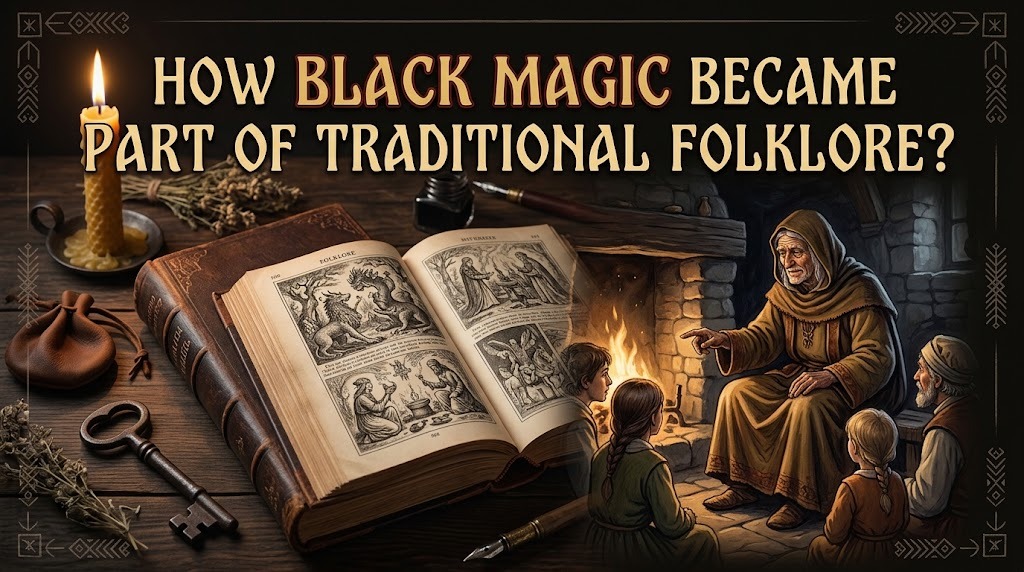
Stories about black magic have appeared in many societies for centuries. Before modern science became widely accepted, people often used supernatural explanations to understand events they could not easily explain. As these stories were passed from one generation to another, they became part of traditional folklore. Different communities developed their own characters, rituals, warnings, and supernatural creatures connected with magical practices. Although beliefs vary greatly, these stories often reflect the fears, values, and cultural traditions of the people who created them.
THE EARLY ROOTS OF MAGICAL BELIEFS
The idea of magic is much older than the term black magic itself. Ancient societies often believed that certain people could communicate with spirits, influence natural events, or use supernatural forces. Archaeological and historical evidence from civilizations such as ancient Egypt and Mesopotamia shows that magical practices were connected with religion, healing, protection, and daily life. Not all forms of ancient magic were considered harmful, because some practices were intended to protect individuals or bring good fortune.
Over time, communities began to distinguish between magic that was considered beneficial and practices believed to cause harm. This distinction helped create ideas that later became associated with harmful magic or black magic. The meaning was not identical across cultures, however. What one society considered acceptable spiritual practice could be viewed as dangerous or forbidden by another.
BLACK MAGIC IN TRADITIONAL FOLKLORE
Traditional folklore helped preserve stories about supernatural powers through oral storytelling. Before books and mass media became common, families and communities often shared legends through spoken stories, ceremonies, and local traditions. Stories about people believed to possess magical abilities could serve as entertainment, warnings, or explanations for unusual events. In some communities, these stories also helped reinforce social rules by showing the supposed consequences of breaking accepted customs.
Folklore about black magic often includes witches, sorcerers, curses, spirits, magical objects, and mysterious rituals. These elements differ according to local culture and historical period. Some stories portray magical figures as villains, while others present them as complicated characters who may use supernatural abilities for different purposes. Because folklore changes as it is retold, the same basic story can develop many different versions.
CULTURAL BELIEFS THAT SHAPED MAGICAL STORIES
Culture has played an important role in determining how people understand supernatural practices. Religious beliefs, local customs, social fears, and historical experiences can influence the way magical stories are created and remembered. For example, communities may connect supernatural stories with particular places, forests, houses, objects, or unexplained events. These details make folklore more closely connected to the identity and history of a particular community.
Social conditions can also influence the development of magical legends. In some historical societies, accusations of witchcraft were connected to fear, conflict, illness, and unusual behavior. People sometimes searched for supernatural explanations when they lacked scientific knowledge about diseases or natural events. As a result, stories about magic could become powerful cultural narratives even when there was no reliable evidence that supernatural forces were responsible.
HOW BLACK MAGIC STORIES WERE PASSED DOWN
The survival of black magic folklore was strongly influenced by storytelling traditions. Parents, grandparents, elders, and community storytellers could pass legends to younger generations. Each storyteller might add details or change parts of a story, allowing the legend to evolve over time. This process explains why similar supernatural themes can appear in different versions across regions.
The development of written literature, theater, films, and television later gave these stories new forms. Folklore that once existed mainly through oral traditions could be recorded and adapted for wider audiences. Modern authors and filmmakers have also combined traditional ideas with fictional elements. As a result, contemporary representations of black magic may contain a mixture of historical beliefs, folklore, imagination, and entertainment.
BLACK MAGIC AS A CULTURAL STORY
It is important to understand that folklore about black magic does not automatically prove that supernatural practices are real. Instead, such stories can be studied as part of cultural history and human storytelling. They can reveal how communities understood danger, morality, illness, nature, and unexplained experiences at different points in history. Studying these stories also helps explain why supernatural themes remain interesting to people today.
Black magic folklore can therefore be viewed as a reflection of human imagination and cultural memory. Some stories warn people about forbidden behavior, while others provide explanations for mysterious events. Even when people no longer accept the original supernatural explanation, the story itself may continue to have cultural value. This is one reason traditional magical legends remain present in books, festivals, entertainment, and popular culture.
CONCLUSION
Black magic became part of traditional folklore through a long process involving ancient magical beliefs, oral traditions, cultural values, and social fears. Different societies developed their own interpretations of supernatural practices, so there is no single universal definition of black magic. As stories were passed between generations, they changed and adapted to new cultural environments. Written literature and modern entertainment later helped these legends reach much larger audiences. Understanding black magic folklore is therefore less about proving supernatural claims and more about exploring how human societies create, preserve, and transform stories about the unknown.
About the Author
Gusti Ayu Tita P
Author — STEKOM University
An active author focused on academic issues, educational technology, and human resource development in the campus environment.















