How Can a Community Patrol System Improve Neighborhood Safety?
Gusti Ayu Tita P
18 September 2026
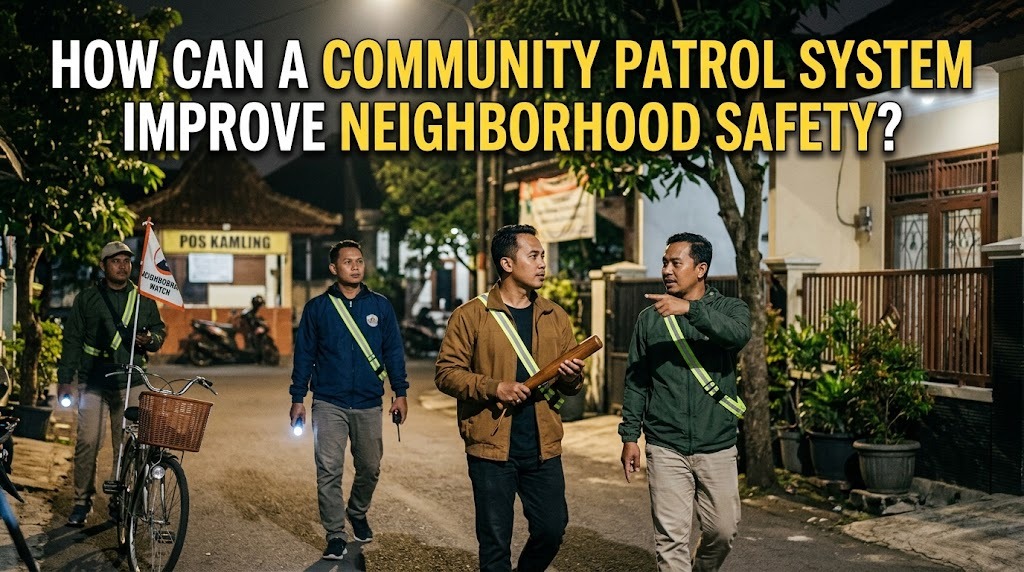
Community safety depends on cooperation, awareness, and consistent participation among residents. One practical way to support a safer neighborhood is through a community patrol system, where residents take turns monitoring their surroundings. This system allows people to pay attention to unusual situations, communicate with one another, and respond appropriately when potential problems arise. A well-organized patrol can also encourage residents to become more aware of the conditions around their homes.
A community patrol system is not intended to replace professional law enforcement. Instead, it works as a community-based preventive effort that can help identify concerns early and report serious incidents to the appropriate authorities. When residents understand their roles and follow clear procedures, patrol activities can become more organized, responsible, and useful for maintaining neighborhood safety.
THE ROLE OF COMMUNITY PATROLS IN NEIGHBORHOOD SAFETY
A community patrol system involves residents taking turns monitoring shared areas within their neighborhood, particularly during hours when activity is lower. Patrol members may observe streets, public spaces, entrances, and other important areas while remaining alert to unusual situations. Their presence can increase community awareness because residents become more attentive to what is happening around them. Regular patrols can also encourage neighbors to communicate when they notice potential safety concerns.
The main purpose of patrol activities is prevention and early awareness, rather than confrontation. If residents notice suspicious behavior, they should avoid taking unnecessary risks and instead follow established reporting procedures. A clear communication system can help patrol members quickly inform neighborhood leaders, security personnel, or relevant authorities when necessary. This approach allows community participation to complement formal security services.
HOW PATROLS CAN HELP PREVENT CRIME
Visible community patrols can contribute to crime prevention by increasing observation in areas that may otherwise receive little attention. People who see residents regularly monitoring their surroundings may become more cautious about engaging in inappropriate or criminal activities. However, patrols should not be presented as a guarantee that crime will be eliminated. Their value is mainly associated with deterrence, awareness, and timely reporting.
Patrol members can also identify environmental conditions that may create safety concerns. For example, they may notice poor lighting, damaged public facilities, blocked pathways, or isolated areas that require attention. Reporting these problems can help the community address conditions that may contribute to accidents or security concerns. In this way, patrol activities can support both crime awareness and general neighborhood safety.
ORGANIZING AN EFFECTIVE COMMUNITY PATROL SYSTEM
An effective patrol system requires clear schedules and defined responsibilities. Residents can create rotating shifts so that participation is distributed fairly among households or volunteers. The schedule should consider residents' availability, local conditions, and the hours when patrols are most useful. A designated coordinator can help maintain the schedule and communicate important information to participants.
Patrol members should also understand basic safety procedures before beginning their duties. They should know how to contact neighborhood leaders, security personnel, emergency services, or law enforcement when appropriate. Patrol members should never be expected to confront dangerous individuals or investigate potentially violent situations themselves. Clear guidelines can reduce confusion and help residents focus on observation and responsible reporting.
EQUIPMENT AND COMMUNICATION FOR COMMUNITY PATROLS
Simple equipment can make patrol activities more practical and organized. Depending on local needs, residents may use flashlights, reflective clothing, communication devices, identification cards, notebooks, and basic first aid supplies. These items can improve visibility and help patrol members communicate or record important observations. Equipment should be maintained properly and used only for legitimate community safety purposes.
Communication technology can also support patrol activities when used responsibly. Residents may create a dedicated communication channel for sharing relevant safety information, reporting environmental problems, or coordinating schedules. However, personal information and sensitive incident details should not be shared carelessly. A community should establish rules about privacy, responsible communication, and information verification to prevent rumors or unnecessary panic.
COMMUNITY COOPERATION AND RESIDENT PARTICIPATION
The effectiveness of a patrol system depends heavily on resident participation. When more people contribute their time and attention, the responsibility for neighborhood safety does not fall on only a few individuals. Participation can also strengthen relationships between neighbors because residents have more opportunities to communicate and work toward shared goals. This cooperation can create a stronger sense of responsibility for the condition of the surrounding environment.
Young people can also contribute through appropriate activities, such as helping with community events, supporting communication, or participating in safety education under proper adult supervision. Their involvement can encourage intergenerational cooperation and introduce younger residents to positive forms of community participation. At the same time, patrol responsibilities involving potentially dangerous situations should remain with trained or appropriately prepared adults. Everyone involved should understand their limits and prioritize personal safety.
CONCLUSION
A community patrol system can improve neighborhood safety by encouraging residents to monitor their surroundings, communicate concerns, and support preventive efforts. Its effectiveness depends on consistent participation, organized schedules, responsible reporting, and cooperation with local authorities or security personnel. Patrol members should focus on observation and prevention rather than confrontation. With clear procedures and appropriate equipment, community patrols can become a practical part of a broader neighborhood safety strategy.
A successful patrol system is ultimately built on collective responsibility. When residents work together, maintain communication, and respond to safety concerns appropriately, they can create a more aware and cooperative community. The goal is not to replace professional security services but to strengthen the community's ability to recognize concerns and respond responsibly.
About the Author
Gusti Ayu Tita P
Author — STEKOM University
An active author focused on academic issues, educational technology, and human resource development in the campus environment.