How Can a Neighborhood Watch Post Help Prevent Crime?
Gusti Ayu Tita P
18 September 2026
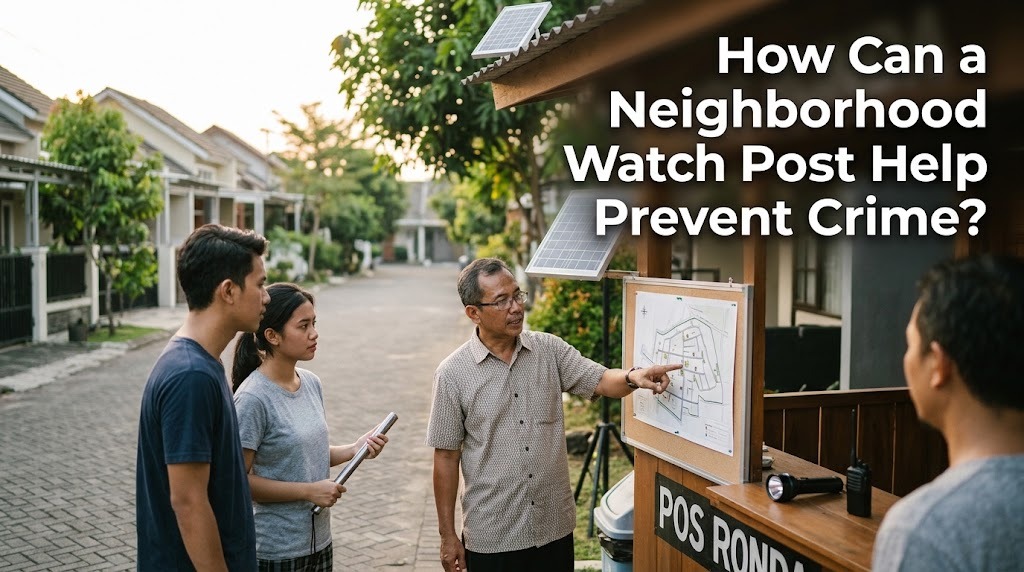
A neighborhood watch post can play an important role in helping residents maintain safety and security in their local area. It provides a place where community members can coordinate patrol activities, share information, and stay alert to unusual situations. Although it cannot replace professional law enforcement, an active watch post can support preventive efforts through regular community participation. When residents work together, they can respond to potential security concerns more quickly and responsibly.
Crime prevention is not only about reacting after an incident happens. It also involves creating an environment where residents are aware, cooperative, and prepared. A well-managed neighborhood watch post can encourage communication between residents and help build habits that make the community more attentive to its surroundings.
CREATING A VISIBLE SECURITY PRESENCE
One way a neighborhood watch post can help prevent crime is by creating a visible security presence in the community. Residents who regularly conduct patrols can make streets and shared areas more actively monitored, particularly during hours when fewer people are outside. The presence of responsible community members may discourage some suspicious or potentially harmful activities. However, residents should focus on observation and reporting rather than confronting people they consider suspicious.
A visible watch system can also make residents feel more connected to the security of their neighborhood. Regular patrols can help identify unusual conditions, such as unlocked public facilities, damaged street lighting, or unfamiliar activity. These observations can then be communicated to the appropriate neighborhood leaders or authorities when necessary.
ORGANIZING REGULAR COMMUNITY PATROLS
A neighborhood watch post becomes more useful when residents have a clear patrol schedule. A rotating schedule allows security responsibilities to be shared among community members instead of relying on only a few individuals. The schedule can be adjusted according to the size of the neighborhood, the number of volunteers, and local security needs. Clear coordination also helps prevent confusion about who is responsible for a particular patrol period.
During patrols, volunteers should pay attention to public spaces, entrances, streets, and other areas that may require observation. They can record relevant incidents or unusual conditions and report serious concerns through appropriate channels. Patrol members should avoid unnecessary risks and should never take the law into their own hands. Their main purpose is to observe, communicate, and help maintain community awareness.
IMPROVING COMMUNICATION AMONG RESIDENTS
Good communication is another important part of crime prevention. A neighborhood watch post can become a central point for sharing information about security concerns, community activities, and emergency procedures. Residents can use meetings or appropriate communication channels to discuss issues that affect the neighborhood. This helps ensure that important information does not remain known only to a small number of people.
Effective communication also encourages residents to report problems early. For example, information about broken street lights, suspicious incidents, or unsafe public areas can be communicated to neighborhood leaders for appropriate action. Residents should avoid spreading unverified accusations because inaccurate information can create fear and conflict. Security communication should therefore be based on clear observations and responsible reporting.
USING SIMPLE SECURITY EQUIPMENT
A neighborhood watch post can also support prevention efforts through the use of basic security equipment. Useful items may include flashlights, communication devices, first aid supplies, reflective vests, notebooks, and other equipment appropriate for local patrol activities. Some communities may also use security cameras or lighting systems where legally permitted and properly managed. The equipment should support observation and communication rather than encourage residents to confront suspected offenders.
Proper maintenance is equally important. Equipment should be checked regularly so that residents know whether it is functional when needed. If cameras or other monitoring systems are used, communities should also consider privacy, access control, data protection, and applicable local regulations. Technology can support community safety, but responsible management remains essential.
BUILDING COMMUNITY AWARENESS AND COOPERATION
Crime prevention becomes more effective when residents understand that community safety is a shared responsibility. A neighborhood watch post can provide opportunities for residents to meet, exchange information, and discuss practical safety measures. These interactions can strengthen trust and encourage people to pay greater attention to their surroundings. Cooperation can also make it easier to organize emergency responses and other community activities.
Young people can participate in suitable activities as well, such as community cleanups, safety campaigns, or educational programs. Their involvement can help develop awareness and responsibility from an early age. At the same time, patrol and security responsibilities should be assigned appropriately, with safety and supervision taken into account. A cooperative community is better positioned to recognize problems early and communicate with the appropriate authorities.
RESPONDING TO SECURITY INCIDENTS RESPONSIBLY
A neighborhood watch post should have a clear response procedure for different types of incidents. Minor concerns may be documented and reported to neighborhood leaders, while emergencies should be communicated to the appropriate emergency or law enforcement services. Residents should avoid physically confronting, chasing, or attempting to punish suspected offenders. Taking unnecessary risks can put volunteers and other residents in greater danger.
The goal of a neighborhood watch system is primarily prevention, observation, communication, and cooperation. After an incident, the community can review what happened and identify practical improvements, such as better lighting, revised patrol schedules, or stronger communication procedures. Regular evaluation can help keep the system useful as neighborhood conditions change. By combining community participation with appropriate support from authorities, a watch post can contribute to a safer and more organized environment.
CONCLUSION
A neighborhood watch post can help prevent crime by supporting regular patrols, improving communication, increasing community awareness, and creating a visible security presence. Its effectiveness depends largely on consistent participation, responsible reporting, proper coordination, and appropriate equipment. Residents should understand that community patrols are intended to support safety rather than replace professional law enforcement.
When managed responsibly, a neighborhood watch post can become an important part of community cooperation. By staying alert, sharing accurate information, maintaining security facilities, and contacting the proper authorities when necessary, residents can contribute to a more aware, organized, and safer community.
About the Author
Gusti Ayu Tita P
Author — STEKOM University
An active author focused on academic issues, educational technology, and human resource development in the campus environment.