How Can a New SAR Team Improve Search and Rescue Operations?
Gusti Ayu Tita P
29 September 2026
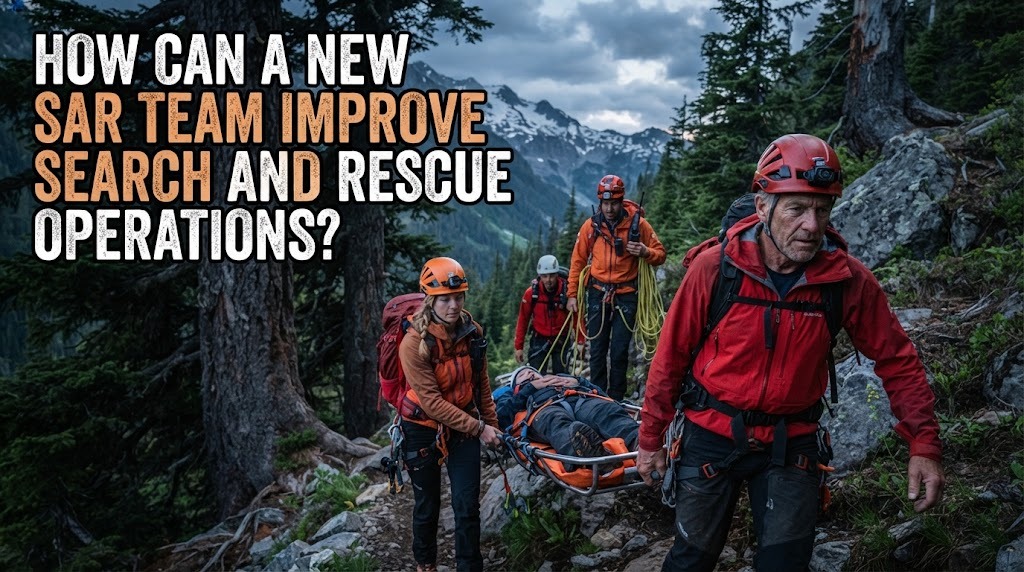
A new SAR team can improve search and rescue operations by bringing trained personnel, organized procedures, better communication, and appropriate equipment into emergency response activities. Search and rescue missions can involve missing people, natural disasters, accidents, collapsed structures, or other situations that require coordinated action. A new team can increase operational capacity while supporting existing rescue organizations. However, its effectiveness depends on proper preparation, clear roles, and regular training.
Improving search and rescue operations is not only about responding quickly. Teams also need to collect accurate information, assess risks, manage resources, communicate with other responders, and review their performance after each mission. INSARAG guidance emphasizes coordinated operations, information management, preparedness, and communication as important elements of effective USAR response.
IMPROVING TRAINING AND RESCUE SKILLS
One of the first ways a new SAR team can improve operations is by establishing consistent and practical training. Members should develop skills that match the team's operational responsibilities and local environment. Training can cover navigation, first aid, search techniques, communication, evacuation, and appropriate technical rescue skills. Regular exercises allow members to practice procedures before they face real emergencies.
Training should also include realistic simulations that test how members respond when conditions change. Teams can use these exercises to identify communication problems, equipment shortages, or unclear responsibilities. FEMA's preparedness framework includes training, exercises, operational coordination, communications, and risk assessment as important preparedness activities. Continuous training can therefore help a new team build stronger and more consistent operational capabilities.
STRENGTHENING COMMUNICATION AND COORDINATION
Clear communication helps a SAR team share information about victim locations, hazards, team positions, and operational priorities. Every member should understand the communication system used during an incident and know how to report important updates. Information should be concise, accurate, and delivered through established channels. This can reduce misunderstandings when multiple teams are working in the same area.
A new team should also practice coordination with local authorities and other emergency organizations. INSARAG guidance places strong emphasis on coordination among response entities and on information exchange during USAR operations. Better coordination can help teams understand which areas have already been searched, what resources are available, and what tasks still require attention.
USING TECHNOLOGY AND INFORMATION MANAGEMENT
Technology can support search and rescue operations when it is appropriate for the environment and mission. GPS devices, digital maps, communication systems, drones, databases, and other tools can help teams collect and organize operational information. These tools can make it easier to record locations, monitor resources, and share updates. However, technology should support trained rescuers rather than replace basic operational skills.
Information management is especially important when an incident involves many teams or large amounts of data. INSARAG has an Information Management Working Group focused on strengthening information management and decision-making for USAR operations. A new SAR team can improve its performance by establishing simple systems for recording search results, victim information, equipment status, and important operational updates.
MANAGING EQUIPMENT AND RESOURCES
A new SAR team needs reliable equipment that matches its operational responsibilities. Before deployment, members should check communication devices, medical supplies, protective equipment, navigation tools, lighting equipment, ropes, stretchers, or specialized tools as appropriate. Equipment should be maintained and organized so members can access it quickly during an emergency. INSARAG national accreditation guidance specifically includes equipment condition, inventory systems, maintenance, logistics, and communications planning among team capability requirements.
Resource management also includes knowing when additional assistance is required. A team should not attempt to perform specialized tasks beyond its training or available equipment. Instead, it should communicate resource needs through the established command structure. Efficient resource management helps prevent unnecessary delays and supports safer operations when an incident becomes more complex.
IMPROVING RISK ASSESSMENT AND OPERATIONAL SAFETY
A new SAR team can improve rescue operations by making risk assessment part of every mission. Rescuers may face unstable structures, difficult terrain, strong water currents, hazardous materials, severe weather, or other threats depending on the incident. Identifying these hazards before beginning a task can help the team determine safer methods and required resources. Safety planning should continue throughout the operation rather than happening only at the beginning.
Operational leaders should also monitor changes in the environment and adjust plans when necessary. FEMA materials for USAR operations describe site assessment, site control, planning, and safety assessment as important considerations before rescue activities. A strong safety culture protects rescuers while helping the team avoid creating additional emergencies during a rescue.
EVALUATING PERFORMANCE AFTER EVERY MISSION
A new SAR team can improve significantly by reviewing its performance after training exercises and real operations. An after-action review can examine what happened, which procedures worked well, and which problems need correction. The team can evaluate communication, response time, equipment readiness, coordination, and decision-making. These findings can then become part of future training and planning.
Evaluation should lead to practical improvements rather than simply documenting mistakes. FEMA's exercise framework follows a cycle of design, conduct, evaluation, and improvement planning. By applying a similar continuous improvement process, a new SAR team can gradually strengthen its procedures and become more prepared for future missions.
CONCLUSION
A new SAR team can improve search and rescue operations through better training, stronger communication, effective resource management, appropriate technology, careful risk assessment, and continuous evaluation. These elements help the team work in a more organized way while supporting other emergency responders. Operational coordination is especially important when an incident involves multiple organizations or complex conditions.
The goal of a new team should not simply be to respond faster, but to respond safely, systematically, and according to its capabilities. Regular exercises, clear information systems, reliable equipment, and cooperation with other response agencies can strengthen operational readiness. With consistent improvement, a new SAR team can become a more effective part of the wider emergency response system.
About the Author
Gusti Ayu Tita P
Author — STEKOM University
An active author focused on academic issues, educational technology, and human resource development in the campus environment.