
How Can Adiwiyata Schools Build Environmental Awareness in Students?
Gusti Ayu Tita P
15 September 2026
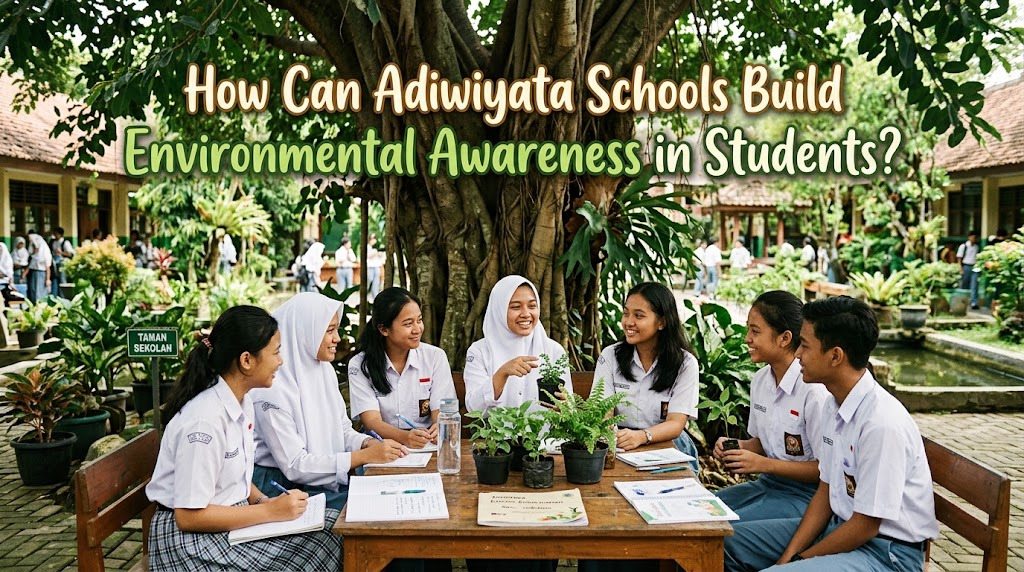
Building environmental awareness among students is an important goal of an Adiwiyata School. Students spend a large part of their daily lives at school, so the school environment can strongly influence their habits and attitudes. Through the Adiwiyata Program, students can learn that protecting nature is not only a theory but also a responsibility that can be practiced every day. Simple activities such as sorting waste, saving water, caring for plants, and keeping classrooms clean can provide meaningful experiences. With consistent guidance, schools can help students develop environmental awareness that continues beyond the school environment.
WHY IS ENVIRONMENTAL AWARENESS IMPORTANT FOR STUDENTS?
Environmental awareness helps students understand how their actions can affect nature and their surroundings. Activities such as wasting water, using too many disposable products, or throwing rubbish carelessly can create environmental problems when they become common habits. By understanding these effects, students can become more careful when making daily choices. They can also learn that environmental protection requires participation from individuals as well as communities. Therefore, student environmental awareness is an important foundation for creating responsible future citizens.
Environmental awareness can also support students' personal development. Through environmental activities, students can learn discipline, responsibility, cooperation, creativity, and leadership skills. They can practice these values while working with classmates to solve environmental problems around the school. This makes environmental education connected to real-life situations rather than limited to classroom theory. As students become more familiar with responsible environmental behavior, good habits can gradually become part of their daily lives.
HOW CAN ENVIRONMENTAL EDUCATION BUILD STUDENT AWARENESS?
Environmental education can introduce students to important topics such as pollution, waste, conservation, biodiversity, cleanliness, and sustainable living. Teachers can explain these topics using simple examples that are connected to situations students experience at school. Lessons can also include discussions, observations, projects, presentations, and assignments. When students are encouraged to ask questions and find solutions, they can develop a deeper understanding of environmental problems. This approach makes environmental education more practical and engaging.
Schools can connect environmental topics with different subjects when appropriate. For example, students can write articles about environmental issues in language classes, study plants in science lessons, or create environmental posters in art activities. Technology can also be used to create videos, digital posters, and educational campaigns. These activities allow students to use their academic and creative skills while learning about environmental responsibility. As a result, environmental awareness can become part of the wider learning experience.
WHAT ENVIRONMENTAL ACTIVITIES CAN STUDENTS PRACTICE?
Practical activities are one of the most effective ways to help students understand environmental responsibility. Schools can organize tree planting, school gardening, classroom cleaning, recycling projects, waste separation, and conservation campaigns. Students can be given clear responsibilities according to their abilities and interests. By directly participating, they can see the results of their actions and understand why environmental care matters. These activities can strengthen the environmental culture of an Adiwiyata School.
Students can also participate in creative environmental campaigns. They can design posters, create short videos, write articles, or prepare presentations about reducing waste and protecting natural resources. School competitions can encourage students to work together while promoting positive environmental habits. However, activities should focus not only on winning but also on learning and building responsibility. When environmental activities are enjoyable and meaningful, students may become more motivated to participate.
HOW CAN WASTE MANAGEMENT INCREASE ENVIRONMENTAL AWARENESS?
Waste management can provide a simple and practical way to teach students about environmental responsibility. Schools can introduce different waste categories and explain why waste should be separated properly. Students can practice placing waste in the appropriate containers and reducing unnecessary disposable products. Recycling and reuse projects can also show students that some materials can have another useful purpose. Through these activities, waste management becomes more than a school rule because students understand the reasons behind it.
Students can also participate in campaigns that encourage waste reduction. For example, schools can promote the use of reusable bottles, lunch containers, and other reusable items. Students can observe how much waste is produced in classrooms or school areas and discuss ways to reduce it. These simple observations can encourage students to think critically about their consumption habits. Over time, regular waste management activities can help build stronger environmentally responsible behavior.
WHAT ROLE DO TEACHERS AND SCHOOL STAFF PLAY?
Teachers and school staff play an important role in building environmental awareness because they interact with students every day. They can explain environmental values, provide guidance, and remind students to practice responsible habits. More importantly, teachers and staff can become examples by keeping their surroundings clean, saving resources, and following school environmental rules. Students are more likely to respect environmental habits when they see adults practicing them consistently. Therefore, teachers and staff can become important environmental role models.
School management can also provide facilities that make environmental behavior easier to practice. Suitable waste bins, green spaces, water-saving facilities, and energy-saving reminders can support the school's environmental goals. Teachers can evaluate student participation and provide constructive feedback when improvements are needed. Cooperation among teachers, staff, students, and school management can create a consistent environmental message. This shared approach can strengthen the Adiwiyata School Program and make environmental responsibility part of everyday school life.
HOW CAN STUDENTS APPLY ENVIRONMENTAL HABITS OUTSIDE SCHOOL?
Environmental awareness becomes more meaningful when students apply what they learn outside the classroom. Students can practice saving water and electricity at home, reducing waste, reusing useful items, and keeping their neighborhoods clean. They can also share environmental information with family members and friends. These simple actions can extend the positive influence of the Adiwiyata Program beyond school. In this way, students can become examples of an environmentally friendly lifestyle.
Schools can encourage this process by giving students projects that connect school learning with their daily lives. Students might record their conservation habits at home or create a simple campaign about reducing household waste. They can then discuss their experiences with classmates and teachers. Such activities help students realize that environmental responsibility is not limited to school rules. Instead, it is a habit that can be practiced wherever they live and interact with others.
CONCLUSION
Adiwiyata Schools can build environmental awareness in students through environmental education, practical activities, teacher guidance, and consistent daily habits. Activities such as waste management, school gardening, recycling, conservation, and environmental campaigns can help students understand the importance of protecting nature. Teachers and school staff can strengthen these efforts by becoming positive environmental role models and providing suitable facilities. Students can also extend their environmental habits to their homes and communities. Through continuous participation, the Adiwiyata School Program can help create responsible students who understand, respect, and care for the environment.
About the Author
Gusti Ayu Tita P
Author — STEKOM University
An active author focused on academic issues, educational technology, and human resource development in the campus environment.















