How Can Communities Keep a Neighborhood Watch Post Active and Well Maintained?
Gusti Ayu Tita P
18 September 2026
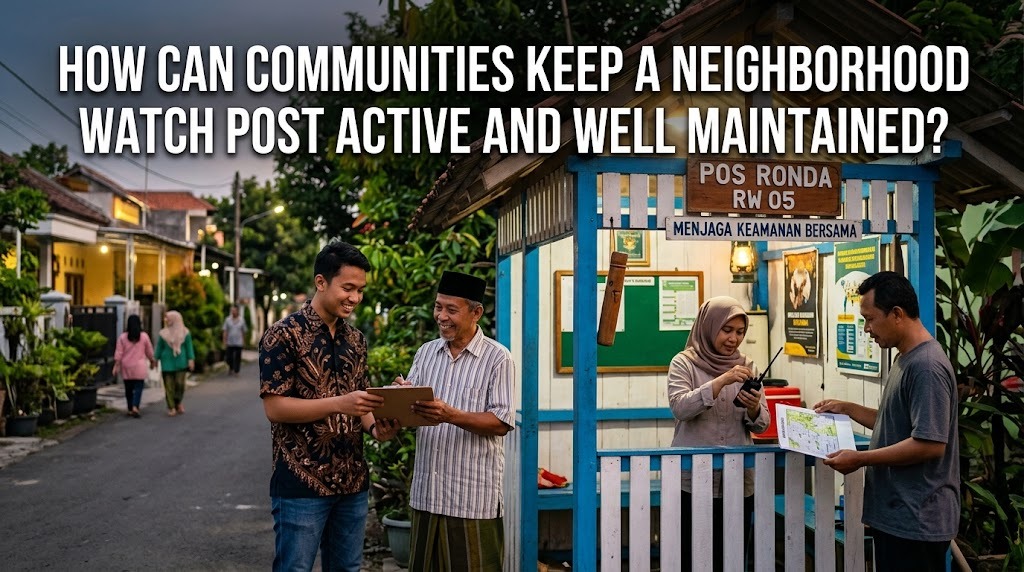
Community safety depends on active participation, good communication, and consistent cooperation among residents. One practical way to support these efforts is through a neighborhood watch post, a shared place where residents can organize security activities and monitor local conditions. However, a watch post can only provide meaningful benefits when it is used regularly and maintained properly. An unused or poorly maintained post may gradually lose its function and community support. Therefore, residents need to develop simple and sustainable ways to keep the facility active.
Maintaining a neighborhood watch post is not only about keeping the physical building clean. It also involves organizing regular patrols, encouraging residents to participate, maintaining equipment, and creating clear communication between households. When these elements work together, the watch post can become a useful part of the community's safety system. It can also strengthen relationships between neighbors and encourage people to respond responsibly to local concerns.
ESTABLISH A REGULAR WATCH SCHEDULE
A regular watch schedule is one of the most important ways to keep a neighborhood watch post active. Residents can create a rotating schedule so that security responsibilities are shared fairly among participating households. The schedule should consider residents' working hours, personal responsibilities, and availability to prevent excessive burdens on particular individuals. A clear schedule also makes it easier for everyone to know when they are expected to participate. Communities can review the schedule periodically and make adjustments when circumstances change.
The watch system does not need to operate in a complicated way. A simple written schedule or digital group can be used to communicate duty times and changes. Residents should also have a procedure for reporting when someone cannot attend their assigned shift. Consistency is more important than creating an overly demanding system. When residents see that the watch post is regularly occupied and activities are organized, participation can become a normal part of community life.
KEEP THE WATCH POST CLEAN AND FUNCTIONAL
A neighborhood watch post should be clean, safe, and comfortable for residents who use it. Regular cleaning can include sweeping the floor, removing rubbish, checking windows and doors, and keeping the surrounding area free from unnecessary objects. The condition of basic facilities should also be checked regularly. Damaged chairs, lighting, electrical equipment, or other essential items should be repaired or replaced when necessary. A well-maintained facility creates a more welcoming environment for residents.
Communities can divide maintenance responsibilities among several residents instead of assigning everything to one person. A simple maintenance checklist can help identify problems before they become more serious. Residents should also avoid storing unrelated items inside the watch post because excessive clutter can reduce its usefulness. Proper maintenance demonstrates that the community values the facility and its purpose. It can also encourage residents to take greater responsibility for other shared public spaces.
ENCOURAGE ACTIVE COMMUNITY PARTICIPATION
A watch post will be difficult to maintain if only a small number of people are responsible for all activities. Communities should therefore encourage broader participation from residents of different ages and backgrounds. Participation can involve taking part in patrols, cleaning activities, meetings, communication groups, or community discussions. Not every resident needs to perform the same task, allowing people to contribute according to their abilities and availability. This approach can make community security activities more inclusive.
Residents can also organize occasional activities that strengthen relationships between neighbors. Informal gatherings, community discussions, or neighborhood cleanups can make the watch post more than just a place for security duties. Stronger social connections can make residents more willing to communicate when they notice unusual situations or community problems. Community cooperation becomes easier when neighbors know and trust one another. Over time, this social connection can help keep the watch post active and relevant.
PROVIDE AND CHECK BASIC EQUIPMENT
A functioning neighborhood watch post needs basic equipment that supports its activities. Depending on local needs, this may include chairs, tables, lighting, communication devices, first aid supplies, a clock, notebooks, and other appropriate safety equipment. Communities should avoid purchasing unnecessary items and instead prioritize equipment that serves a clear purpose. All equipment should be stored securely and checked periodically. Damaged or missing items should be reported and addressed through an agreed community process.
Technology can also support the management of a modern watch post. Residents may use messaging applications to communicate duty schedules, share general safety information, or report problems that require attention. However, digital tools should support rather than replace responsible human participation. Privacy and responsible communication should also be considered when using technology. Information about incidents should be shared carefully and only with people who genuinely need to know.
CREATE CLEAR RULES AND RESPONSIBILITIES
Clear rules can help prevent confusion about how neighborhood watch activities should operate. Residents can agree on roles and responsibilities, including who manages schedules, who maintains equipment, and who coordinates communication. The rules should explain what participants are expected to do and how problems should be handled. They should also emphasize that residents should observe, communicate, and seek appropriate assistance rather than taking unnecessary risks. Clear procedures can make community activities more organized and responsible.
The community should also establish a simple way to evaluate whether the watch post is still functioning effectively. Periodic meetings can be used to discuss attendance, maintenance needs, communication problems, and suggestions from residents. Feedback should be treated as an opportunity to improve the system rather than as criticism of particular individuals. Regular evaluation can help communities identify weaknesses before participation declines significantly. When responsibilities and expectations are clear, maintaining the watch post becomes a shared responsibility.
CONCLUSION
Keeping a neighborhood watch post active and well maintained requires more than maintaining the physical building. Communities need consistent schedules, regular maintenance, active participation, suitable equipment, clear responsibilities, and effective communication. These elements can help ensure that the watch post continues to serve a useful role in supporting neighborhood awareness and cooperation. Regular evaluation is also important so that activities can adapt to changing community needs. Most importantly, security should remain a shared community responsibility based on cooperation and responsible action.
A well-managed neighborhood watch post can become a valuable community facility when residents use it consistently and maintain it together. By encouraging participation and keeping activities organized, communities can strengthen communication and awareness while making better use of shared resources. Sustainable community involvement is the key to keeping the watch post useful over time.
About the Author
Gusti Ayu Tita P
Author — STEKOM University
An active author focused on academic issues, educational technology, and human resource development in the campus environment.