
How Can Diplomats Build Stronger Economic Cooperation Between Countries?
Gusti Ayu Tita P
4 Agustus 2026
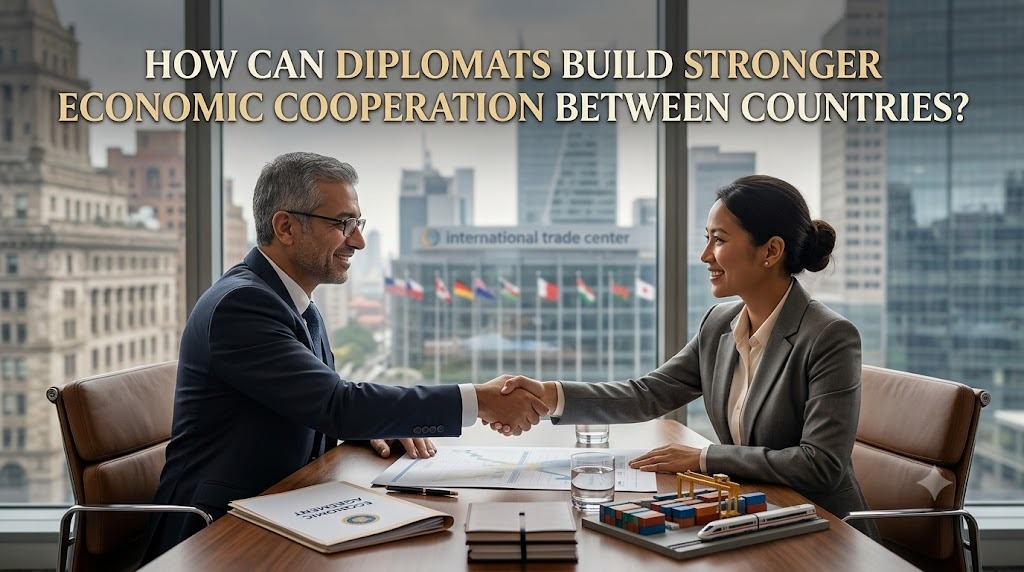
Economic cooperation between countries plays an important role in supporting trade, investment, employment, and long term economic development. Diplomats have an important responsibility in creating communication channels between governments and helping businesses understand opportunities in foreign markets. They can also support negotiations that make economic relationships more stable and predictable. Strong diplomatic relationships can therefore contribute to mutually beneficial economic partnerships.
Modern economic diplomacy involves more than traditional trade negotiations. Diplomats may work with government agencies, businesses, investors, international organizations, and local communities. They need to understand both economic interests and political relationships when developing cooperation. By using effective strategies, diplomats can help countries create stronger and more sustainable economic connections.
UNDERSTANDING EACH COUNTRY'S ECONOMIC INTERESTS
The first step toward stronger economic cooperation is understanding the economic priorities of each country. Governments may have different goals involving exports, imports, investment, employment, technology, infrastructure, or natural resources. Diplomats need to understand these priorities before proposing new forms of cooperation. This knowledge helps them identify areas where both sides can benefit.
Diplomats should also study the economic conditions and regulations of potential partners. Understanding market conditions, business practices, and investment policies can make negotiations more effective. When diplomats understand the interests of both sides, they can develop proposals that are more realistic. Mutual benefit is an important foundation for long term economic cooperation.
STRENGTHENING TRADE RELATIONS
Trade is one of the most common areas of international economic cooperation. Diplomats can help governments discuss tariffs, market access, customs procedures, product standards, and other trade issues. They can communicate concerns and explore opportunities for reducing unnecessary barriers. Better trade relationships can make it easier for businesses to exchange goods and services.
Diplomats can also promote products and industries from their home countries. They may organize trade missions, business meetings, exhibitions, or networking events. These activities can connect companies with potential partners in foreign markets. Strong trade relationships can create opportunities for exports, imports, investment, and job creation.
ATTRACTING FOREIGN INVESTMENT
Foreign investment can contribute to economic development by bringing capital, technology, knowledge, and business opportunities. Diplomats can help explain investment opportunities in their countries to international investors. They may provide information about regulations, investment sectors, infrastructure, and available incentives. Clear communication can reduce uncertainty for potential investors.
However, attracting investment should not focus only on increasing the amount of capital entering a country. Diplomats should also encourage investment that supports sustainable development and creates meaningful economic benefits. Cooperation can include technology transfer, skills development, and partnerships with local businesses. This approach can make foreign investment more valuable for the wider economy.
BUILDING TRUST BETWEEN GOVERNMENTS
Trust is essential for successful international economic cooperation. Businesses and governments are more likely to cooperate when they believe their partners will respect agreements and communicate openly. Diplomats can help build trust through regular meetings, transparent communication, and consistent diplomatic engagement. Strong relationships can also make it easier to address disagreements.
Trust cannot be created through one meeting or one agreement. It develops through long term cooperation and reliable actions. Diplomats should maintain communication even when there are no major negotiations taking place. Regular diplomatic contact can help countries understand each other's concerns before problems become serious.
SUPPORTING BUSINESS TO BUSINESS RELATIONSHIPS
Governments alone cannot create strong economic partnerships. Private companies and entrepreneurs also play an important role in international trade and investment. Diplomats can help connect businesses from different countries through trade events, business forums, and economic missions. These connections can lead to partnerships, investment projects, and commercial agreements.
Diplomatic missions can also help companies understand foreign markets. They may provide general information about local business environments, regulations, and economic opportunities. By improving communication between businesses and governments, diplomats can reduce information barriers. This can encourage more companies to explore international markets.
IMPROVING ECONOMIC AND REGULATORY COMMUNICATION
Different regulations can create challenges for international businesses. Countries may have different rules regarding taxes, product standards, customs, investment, employment, and data. Diplomats can help governments communicate about these differences and identify areas where cooperation is possible. Clear regulatory communication can make cross border economic activities easier.
Diplomats can also support discussions about international standards and agreements. The goal is not always to make every regulation identical. Instead, countries can explore ways to make their systems more compatible while respecting national laws. Better coordination can reduce unnecessary costs and uncertainty for businesses.
PROMOTING DIGITAL ECONOMIC COOPERATION
Technology has created new opportunities for digital economic cooperation. Countries can cooperate in areas such as digital trade, cybersecurity, digital payments, technology development, and innovation. Diplomats need to understand these emerging issues because digital activities increasingly influence international commerce. Cooperation in technology can also create opportunities for knowledge sharing.
Digital diplomacy can support economic relationships by allowing governments and businesses to communicate more quickly. Online meetings, virtual trade events, and digital information platforms can connect organizations across borders. However, countries also need to address challenges involving data protection, cybersecurity, and digital regulations. Responsible digital cooperation can help create a safer environment for international economic activity.
SUPPORTING INFRASTRUCTURE AND DEVELOPMENT PROJECTS
Economic cooperation can become stronger through joint infrastructure and development projects. These projects may involve transportation, energy, telecommunications, logistics, or other sectors that support economic activity. Diplomats can help coordinate communication between governments, financial institutions, and private companies. Their role can be important when projects involve multiple stakeholders.
Successful projects require clear agreements and careful planning. Countries need to consider financing, environmental impacts, local communities, regulations, and long term maintenance. Diplomats can help maintain communication when challenges arise. Well managed projects can strengthen economic connections while supporting broader development goals.
ENCOURAGING SKILLS AND KNOWLEDGE EXCHANGE
Economic cooperation is not only about money and trade. Education, training, research, and knowledge exchange can also strengthen relationships between countries. Diplomats can support programs that connect universities, researchers, professionals, and businesses. These partnerships can help countries develop skills needed for changing economies.
Knowledge exchange can also encourage innovation. When researchers and professionals collaborate, they can share experiences and develop new solutions. Governments may support scholarships, professional exchanges, joint research, and training programs. These initiatives can create long term connections between people and institutions.
MANAGING ECONOMIC DISAGREEMENTS
Even strong economic partnerships can experience disagreements. Countries may have disputes over trade barriers, tariffs, investment policies, market access, or economic regulations. Diplomats can help manage these disputes through communication and negotiation. Their goal is to prevent economic disagreements from damaging broader diplomatic relationships.
Effective dispute management requires careful listening and a willingness to explore practical solutions. Diplomats should understand the concerns of their own governments while recognizing the interests of their partners. Maintaining communication can prevent misunderstandings from becoming larger conflicts. Constructive negotiation can help protect long term economic relationships.
CONCLUSION
Diplomats can build stronger economic cooperation by understanding national interests, strengthening trade, attracting responsible investment, supporting businesses, improving regulatory communication, and building trust. They can also encourage cooperation in digital technology, infrastructure, education, and innovation. These efforts can create economic opportunities while strengthening relationships between countries.
Successful economic diplomacy requires a long term approach. Countries need reliable communication, clear agreements, mutual respect, and a willingness to solve disagreements through negotiation. By connecting governments, businesses, and other stakeholders, diplomats can help create stable and mutually beneficial economic partnerships. Strong economic cooperation can ultimately support trade, investment, employment, innovation, and sustainable development.
About the Author
Gusti Ayu Tita P
Author — STEKOM University
An active author focused on academic issues, educational technology, and human resource development in the campus environment.















