
How Can Electronic Stamp Duty Improve Digital Document Security?
Gusti Ayu Tita P
22 Agustus 2026
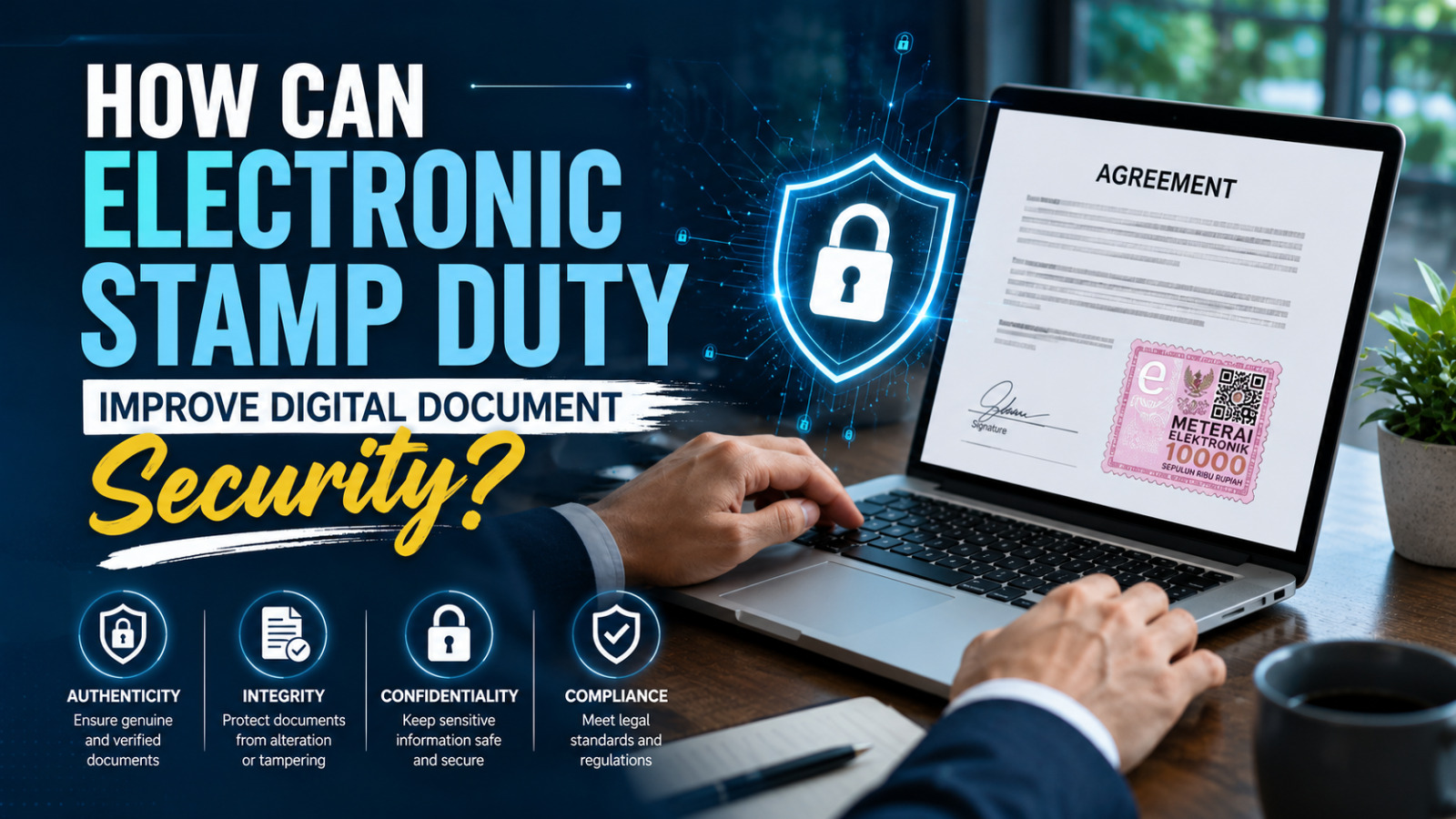
Digital transactions are becoming an essential part of modern business and administration. Contracts, agreements, applications, and other important documents can now be created, signed, and exchanged electronically. This shift makes digital document security increasingly important because sensitive information must remain authentic and protected from unauthorized changes. In Indonesia, electronic stamp duty or e-Meterai supports digital administration by providing an electronic form of stamp duty for documents subject to the tax. The Directorate General of Taxes defines stamp duty as a tax imposed on documents, including eligible electronic documents.
UNDERSTANDING ELECTRONIC STAMP DUTY
Electronic stamp duty, commonly known as e-Meterai in Indonesia, is an electronic form of stamp used as proof of payment of stamp duty on eligible electronic documents. It is applied through a designated electronic stamp system rather than being physically attached to paper. Under Indonesian regulations, an electronic stamp has a unique code and specific security features, including the Garuda Pancasila symbol, the words indicating an electronic stamp, and the applicable stamp duty value.
It is important to understand that an electronic stamp is primarily a tax instrument for documents, not a replacement for an electronic signature. The stamp duty requirement and the validity of an electronic signature serve different functions in a digital transaction. Therefore, businesses should consider both document requirements and applicable electronic transaction rules when preparing important digital agreements. The current stamp duty rate in Indonesia is Rp10,000 per document where stamp duty applies.
HOW ELECTRONIC STAMP DUTY SUPPORTS DOCUMENT AUTHENTICITY
One of the main advantages of electronic stamp duty is that it includes security characteristics designed to help identify an authentic electronic stamp. The unique code can be read using an appropriate verification application, allowing information associated with the stamp to be checked. This provides an additional layer of confidence when organizations handle documents digitally. PERURI explains that its electronic stamps contain security features intended to reduce the risk of forgery.
However, businesses should not assume that an e-Meterai alone guarantees that every part of a document is authentic. Document security requires several controls, including reliable systems, access management, appropriate electronic signatures, and proper document handling. Companies should also obtain electronic stamps through official distribution channels to reduce the risk of counterfeit or improperly issued stamps. Using trusted channels is especially important when documents contain contracts, financial information, or other sensitive business data.
REDUCING PAPER BASED SECURITY RISKS
Electronic stamp duty can help organizations reduce their dependence on printed documents. Traditional paper administration requires documents to be printed, physically stored, transported, and sometimes scanned again for digital use. Each additional handling stage can create opportunities for documents to be misplaced, damaged, copied, or accessed by unauthorized people. A digital process can reduce some of these physical risks by allowing documents to remain in electronic form throughout the workflow.
A paperless approach can also make document processing more efficient. Businesses can distribute documents electronically without waiting for physical delivery or requiring employees to visit an office simply to attach a physical stamp. PERURI identifies paper reduction, practical use, and improved efficiency among the advantages of electronic stamps. Nevertheless, digital documents still require proper storage, access controls, backups, and cybersecurity practices to protect confidential information.
IMPROVING SECURITY IN BUSINESS DOCUMENT MANAGEMENT
For businesses, electronic stamp duty can become part of a broader digital document management process. Organizations can integrate electronic stamping into workflows involving contracts, declarations, agreements, recruitment documents, and other documents that are subject to stamp duty. This helps reduce manual administrative steps and makes it easier to maintain a consistent digital process. When combined with appropriate authentication and access controls, electronic document workflows can provide stronger administrative control.
Businesses should also establish clear internal procedures for determining which documents require stamp duty and who is responsible for applying it. Employees should verify document details before applying an electronic stamp because incorrect placement or incorrect processing can create administrative problems. Important documents should be stored securely after completion, with access limited to authorized personnel. These practices help ensure that the convenience of digital stamping does not come at the expense of document confidentiality and integrity.
BEST PRACTICES FOR SECURE ELECTRONIC STAMP USE
Organizations should begin by checking whether a document is actually subject to stamp duty under the applicable regulations. Not every electronic file automatically requires an electronic stamp, so businesses should understand the relevant document categories and tax requirements. The Directorate General of Taxes states that stamp duty applies to specified documents, including documents concerning civil-law acts and certain documents used as evidence in court.
Next, businesses should obtain e-Meterai through official channels and follow the applicable electronic stamping procedure. The document should be reviewed carefully before stamping, and the electronic stamp should be placed in an appropriate location without obscuring important information. After stamping, the completed file should be stored in a secure document management system and shared only with authorized parties. Combining electronic stamping with strong passwords, controlled access, secure storage, and appropriate electronic signatures can provide a more comprehensive approach to digital document security.
CONCLUSION
Electronic stamp duty can improve digital document security by providing identifiable security features and supporting the proper payment of stamp duty on eligible electronic documents. Its digital format also helps businesses reduce paper handling and streamline administrative workflows. However, electronic stamp duty should not be treated as the only security measure for digital documents. Secure systems, authorized access, reliable storage, electronic signatures, and careful document management remain important for protecting business information. By using official electronic stamps correctly and combining them with broader cybersecurity practices, organizations can build a more efficient and trustworthy paperless document process.
About the Author
Gusti Ayu Tita P
Author — STEKOM University
An active author focused on academic issues, educational technology, and human resource development in the campus environment.















