How Can Governments Improve Public Facilities?
Gusti Ayu Tita P
18 September 2026
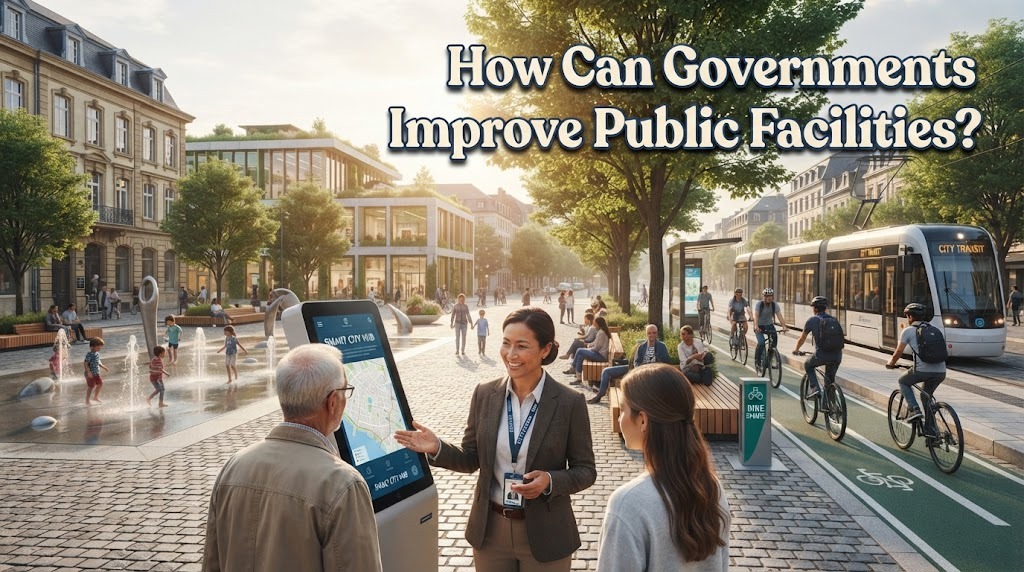
Public facilities are important because they support transportation, education, healthcare, sanitation, recreation, and many other daily activities. Governments have an important role in providing, improving, and maintaining these facilities so they remain safe and useful. Good public facilities should respond to the needs of different community members, including people with disabilities, children, and older adults. Current public service policies in Indonesia also emphasize services that are more responsive to people's needs and experiences.
IMPROVING FACILITY QUALITY
Governments can improve public facilities by building and maintaining infrastructure according to community needs. Roads, sidewalks, parks, schools, healthcare facilities, and public transportation need suitable designs and regular maintenance. Construction quality is also important because poorly built facilities may require frequent repairs. Regular inspections can help identify damaged or unsafe parts before they create bigger problems. Good planning can make public facilities more durable, safe, and useful.
PROVIDING REGULAR MAINTENANCE
Building new facilities is not enough if existing facilities are not properly maintained. Governments can create regular inspection and maintenance schedules for roads, public toilets, parks, transportation facilities, and other shared spaces. Small problems should be identified and repaired before they become more serious. Maintenance can also include cleaning, replacing damaged equipment, improving lighting, and checking safety features. Regular maintenance helps public facilities remain functional for a longer period.
MAKING FACILITIES ACCESSIBLE
Public facilities should be designed so they can be used by different groups of people. Ramps, accessible toilets, elevators, tactile paths, suitable parking spaces, and clear signs can help people with disabilities use public spaces more independently. Accessibility should also be considered when governments build or renovate transportation facilities and public buildings. Public service standards can include facilities such as disability access and accessible toilets as part of service infrastructure.
USING TECHNOLOGY EFFECTIVELY
Technology can help governments manage public facilities more efficiently. Digital information systems, online services, sensors, electronic payment systems, and reporting platforms can improve how facilities are operated and monitored. For example, digital systems can provide information about public transportation or allow residents to report damaged facilities. Technology can also support better data collection and service evaluation. However, digital services should remain accessible to people who may have limited access to technology.
LISTENING TO COMMUNITY NEEDS
Governments can improve facilities by actively listening to the people who use them. Public feedback, surveys, consultation forums, and complaint systems can help identify problems that may not be visible through routine inspections. Kementerian PANRB has emphasized that public participation should contribute to identifying people's needs, barriers, and real experiences with services. This information can help governments decide which improvements are needed and how services can be made more useful.
IMPROVING SAFETY AND CLEANLINESS
Safety and cleanliness should be important parts of public facility management. Governments can improve lighting, pathways, sanitation, waste management, signs, and emergency features in public spaces. Public toilets, parks, transportation areas, and sidewalks need regular cleaning and inspection. Unsafe or dirty facilities can reduce comfort and create unnecessary risks for users. Maintaining these basic conditions can improve the overall quality of public spaces.
STRENGTHENING MONITORING AND EVALUATION
Governments need to evaluate public facilities regularly to understand whether they are meeting community needs. Monitoring and evaluation can identify weaknesses in infrastructure, service systems, information, complaints management, and other areas. Kementerian PANRB's PEKPPP 2026 includes areas such as facilities and infrastructure, public service information systems, consultation and complaints, human resources, and service innovation. Evaluation results can then be used as a basis for continuous improvement rather than simply becoming administrative reports.
PROVIDING TRANSPARENT INFORMATION
People need clear information about public services and facilities. Governments can provide information about service procedures, schedules, costs, facilities, maintenance activities, and complaint channels through websites, information boards, and digital platforms. Kementerian PANRB has highlighted the importance of transparent and integrated publication of public service information. Clear information helps people understand available services and makes it easier to report problems when facilities do not work properly.
WORKING WITH THE COMMUNITY
Improving public facilities is more effective when governments and communities work together. Governments can provide infrastructure and management, while residents can help by using facilities responsibly, reporting damage, keeping spaces clean, and providing feedback. Community involvement can also help governments understand local conditions more accurately. Cooperation can encourage a stronger sense of responsibility toward shared spaces. This approach can support long-term facility maintenance and better public services.
CONCLUSION
Governments can improve public facilities through better planning, regular maintenance, accessible design, technology, community participation, and continuous evaluation. Facilities should be developed based on real needs and maintained so they remain safe, clean, and functional. Public feedback can help governments identify barriers and improve services based on user experience. Official public service policies in Indonesia currently emphasize continuous improvement and services that are more responsive to community needs. By combining good management with community participation, public facilities can better support everyday life.
About the Author
Gusti Ayu Tita P
Author — STEKOM University
An active author focused on academic issues, educational technology, and human resource development in the campus environment.