
How Can Historic Tombs Become Valuable Sources for Learning History?
Gusti Ayu Tita P
4 September 2026
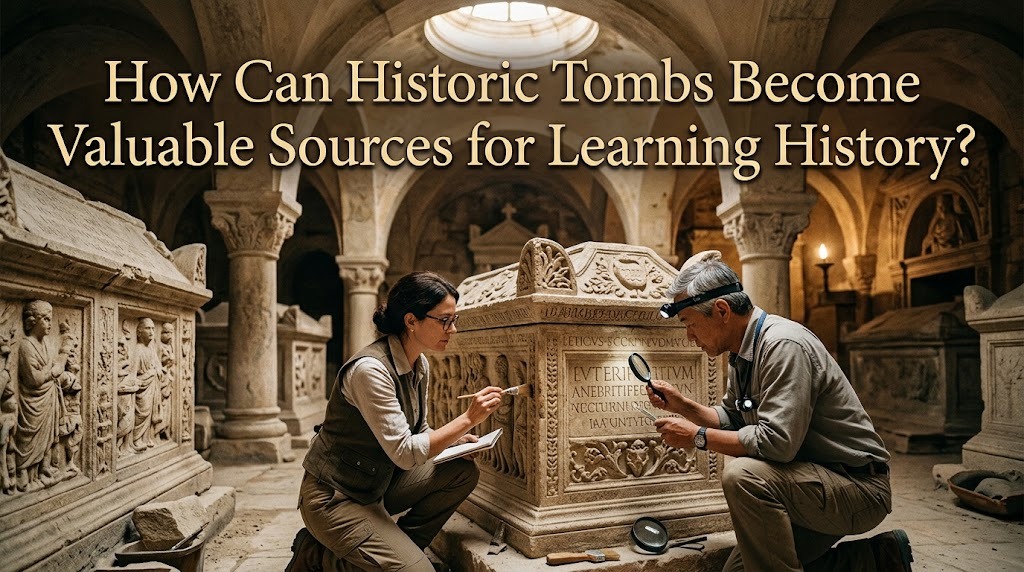
Historic tombs can become valuable sources for learning history because they preserve physical evidence connected to people and communities from the past. Their inscriptions, architecture, locations, and surrounding features can provide information that may not appear in ordinary historical texts. When studied carefully, these sites can help students and researchers understand how societies developed over time. Historic tombs can therefore support both formal education and independent historical exploration.
HISTORIC TOMBS AS PHYSICAL HISTORICAL EVIDENCE
Historic tombs provide physical evidence that can help explain the lives and traditions of earlier societies. Names, dates, inscriptions, construction materials, and decorative elements may provide clues about particular individuals and historical periods. Researchers can compare this evidence with written records to develop a more complete understanding of the past.
Physical evidence can make history easier to understand because learners can observe something connected directly to a historical period. Authentic heritage sites can help students recognize that historical knowledge is based on evidence rather than only memorized information. This approach can encourage curiosity and more active learning.
INSCRIPTIONS AND SYMBOLS AS LEARNING MATERIALS
Inscriptions on tombs can contain valuable information about names, dates, titles, languages, beliefs, and social traditions. Students can study these elements to understand how people communicated and recorded important information in earlier periods. The language and writing style may also provide clues about cultural influences and historical changes.
Symbols and decorative features can provide additional educational material. Their meanings should be studied within the appropriate historical and cultural context rather than interpreted according to modern assumptions. Through careful analysis, learners can develop historical thinking and source evaluation skills.
TOMB ARCHITECTURE AND CULTURAL INFORMATION
The physical design of a historic tomb can reveal information about architecture, technology, religion, and social organization. Construction methods and materials may demonstrate the skills available to a particular community. Decorative features can also reflect artistic traditions and cultural values.
Architecture can be especially useful in classroom activities. Students can compare tomb designs from different periods or regions and identify similarities and differences. Such comparisons can help explain cultural diversity and historical development without requiring students to rely entirely on written descriptions.
CONNECTING TOMBS WITH HISTORICAL FIGURES AND EVENTS
Some historic tombs are associated with important historical figures or significant events. Studying the person connected to a tomb can introduce students to their achievements, relationships, social environment, and historical influence. The tomb can become a starting point for broader research rather than the only source of information.
Historical connections should be verified through multiple reliable sources. Books, archives, academic research, inscriptions, museum collections, and oral traditions can provide different types of evidence. Comparing these sources teaches learners how historians develop conclusions and identify information that may require further investigation.
USING TECHNOLOGY TO SUPPORT HISTORY LEARNING
Technology can make historic tombs more accessible to students and the public. Digital photography, virtual tours, 3D models, interactive maps, and online archives can provide learning opportunities for people who cannot visit a site directly. These resources can also preserve detailed records of heritage sites for future research.
Teachers can use digital materials to create engaging assignments and discussions. Students might analyze photographs, study digital maps, compare architectural features, or research inscriptions using trusted sources. Digital history education can therefore connect traditional historical research with modern learning methods.
PRESERVING TOMBS FOR FUTURE LEARNING
Historic tombs can only remain useful educational resources if they are properly protected. Weather, pollution, vegetation, vandalism, uncontrolled tourism, and inappropriate development can threaten fragile heritage sites. Heritage conservation is therefore closely connected to education because damaged or lost sites can reduce opportunities for future research.
Students and visitors can contribute by following site regulations and respecting local customs. They should avoid touching fragile structures, removing materials, disturbing burial areas, or behaving disrespectfully. Responsible participation helps ensure that historic tombs remain valuable learning resources for future generations.
CONCLUSION
Historic tombs can become valuable sources for learning history through their inscriptions, architecture, symbols, locations, historical associations, and cultural traditions. They provide opportunities to study authentic evidence and develop critical thinking skills. Technology can further expand access through digital archives, virtual tours, and three-dimensional documentation. By combining education with responsible preservation, historic tombs can continue helping people understand the past for generations to come.
About the Author
Gusti Ayu Tita P
Author — STEKOM University
An active author focused on academic issues, educational technology, and human resource development in the campus environment.