How Can Student Demonstrations Help Develop Critical Thinking and Communication Skills?
Gusti Ayu Tita P
28 September 2026
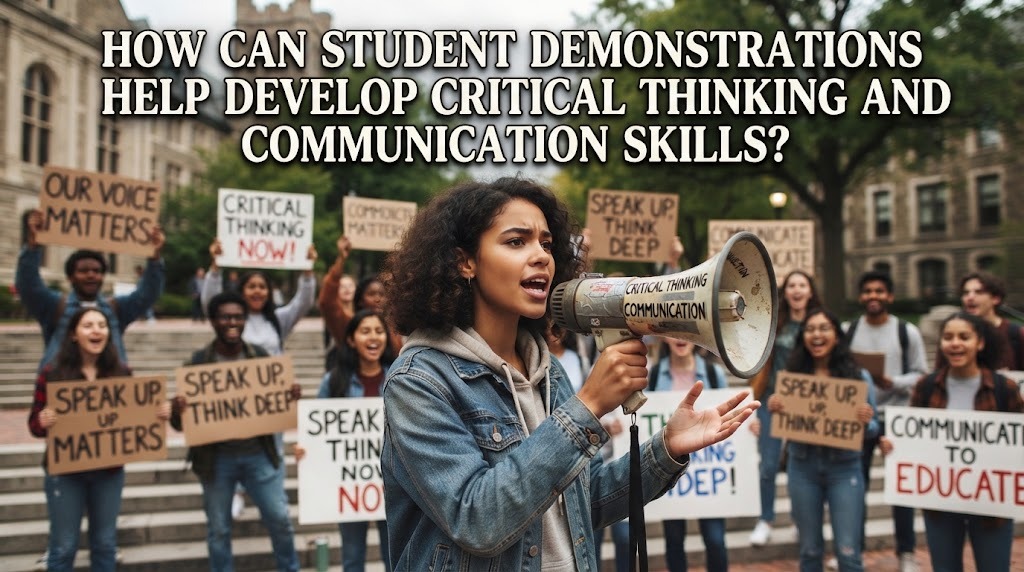
Student demonstrations can become a learning experience that helps students develop critical thinking and communication skills. When participating in a demonstration, students may need to understand an issue, discuss different opinions, and communicate their aspirations clearly. These activities can encourage students to become more aware of social and academic issues around them. However, participation should be carried out responsibly and peacefully. With proper preparation, demonstrations can provide practical experiences that complement classroom learning.
UNDERSTANDING ISSUES THROUGH CRITICAL THINKING
Student demonstrations require participants to understand the issues they want to communicate. Students can develop Critical Thinking by reading reliable information, comparing different perspectives, and identifying the main points of an issue. This process helps students avoid accepting information without checking its accuracy. Students can also learn to distinguish between facts, opinions, and assumptions. As a result, they may become more careful when forming conclusions.
Critical thinking is also useful when students discuss an issue with people who have different perspectives. Students can listen to arguments, ask relevant questions, and consider evidence before responding. This experience can strengthen their ability to analyze problems from several viewpoints. Issue Analysis therefore becomes an important part of responsible participation. The ability to think carefully can also be applied to academic tasks and everyday decisions.
DEVELOPING CLEAR COMMUNICATION SKILLS
Demonstrations can provide opportunities for students to practice expressing ideas in front of other people. Students may communicate through speeches, discussions, written messages, or other peaceful forms of expression. These activities can help improve Communication Skills because participants need to explain their ideas in a way that others can understand. Clear communication requires appropriate words, logical arguments, and a respectful tone. Students can gradually become more confident when expressing their opinions.
Effective communication also involves listening to other people. Students need to understand different responses before deciding how to continue a discussion. Public Speaking can improve when students regularly practice organizing their thoughts and presenting them clearly. Good communication should focus on the issue rather than attacking individuals or groups. This approach can help create a more constructive environment for exchanging ideas.
LEARNING TO WORK WITH OTHERS
Student demonstrations may involve many participants with different backgrounds and opinions. Working together requires students to coordinate tasks, share information, and respect different perspectives. Through this experience, students can develop Teamwork Skills that are useful in both education and future employment. Cooperation also teaches students that achieving a shared goal requires communication and mutual responsibility. These lessons can strengthen their ability to participate in group activities.
Students may also learn how to divide responsibilities according to the needs of an activity. Some participants may focus on communication, while others may help with coordination or documentation. Collaborative Learning can occur when students exchange knowledge and experiences with one another. Respecting different opinions can reduce unnecessary conflict during discussions. These teamwork experiences can later be applied to organizational activities and professional environments.
BUILDING RESPONSIBLE EXPRESSION
Expressing aspirations should be accompanied by responsibility. Students can learn that freedom of expression also requires respect for other people, public spaces, and applicable rules. Responsible participation means avoiding violence, intimidation, vandalism, and actions that could harm others. Students should also verify information before sharing it with other participants. Responsible Expression helps ensure that an aspiration is communicated without creating unnecessary harm.
Students can prepare their arguments before expressing their opinions publicly. They can identify the main concern, collect supporting information, and consider possible solutions. This preparation can make their message more focused and easier for others to understand. Demonstrations should remain peaceful and respect the rights of people who are not participating. In this way, students can practice expressing concerns while maintaining Social Responsibility.
CONNECTING EXPERIENCE WITH ACADEMIC LEARNING
Experiences gained from student demonstrations can complement knowledge learned in the classroom. Students can connect theories about communication, society, leadership, and problem-solving with situations they encounter in real life. This connection can encourage students to reflect on how social issues affect their communities. They can also evaluate whether their communication methods were effective. Such reflection can turn an experience into a meaningful learning opportunity.
After participating in an activity, students can review what they learned and identify areas that need improvement. They may consider whether they understood the issue correctly, communicated their ideas clearly, and respected different perspectives. Reflective Learning can help students improve their future communication and decision-making. These skills are valuable not only in campus activities but also in professional environments. Therefore, responsible student participation can support both personal and academic development.
CONCLUSION
Student demonstrations can help develop Critical Thinking and Communication Skills when they are approached responsibly. Students can learn to analyze issues, communicate ideas, work with others, and respect different perspectives. They can also strengthen Public Speaking, Teamwork Skills, and Responsible Expression through meaningful participation. The experience becomes more valuable when students connect it with reflection and academic learning. With peaceful and responsible participation, students can use these experiences to support their personal development and future careers.
About the Author
Gusti Ayu Tita P
Author — STEKOM University
An active author focused on academic issues, educational technology, and human resource development in the campus environment.