
How Can Students Contribute to Maintaining an Adiwiyata School?
Gusti Ayu Tita P
15 September 2026
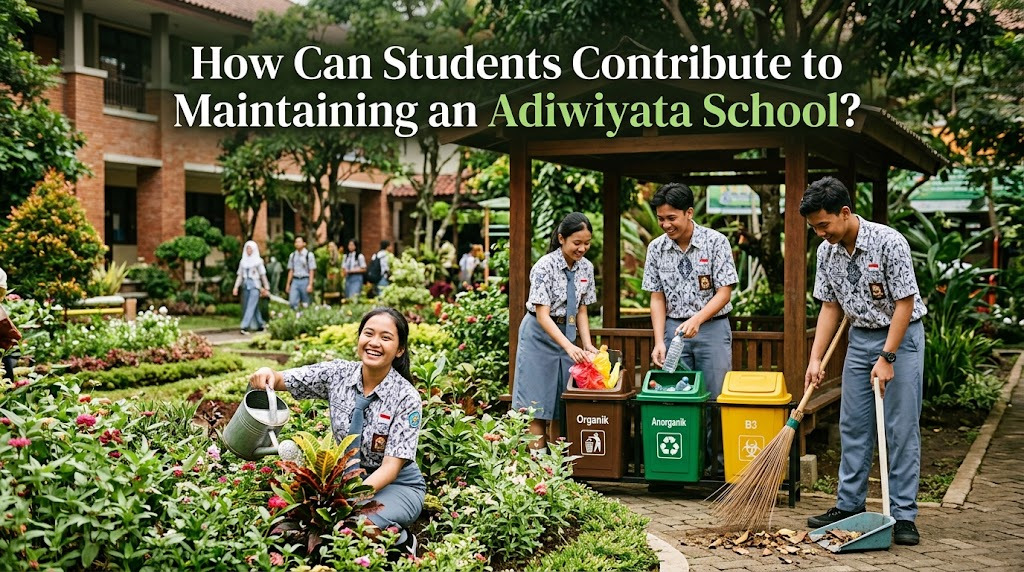
Students are an important part of the Adiwiyata School Program because their daily behavior can directly affect the school environment. A clean and environmentally friendly school cannot be created only through school policies or teacher instructions. Students need to participate actively by developing responsible habits and taking care of their surroundings. Simple actions such as disposing of waste properly, saving water, and caring for plants can make a meaningful contribution. Through consistent participation, students can help build a strong environmental culture at school.
WHY ARE STUDENTS IMPORTANT IN THE ADIWIYATA PROGRAM?
Students spend a large amount of time at school, so their behavior has an important influence on the condition of the school environment. When students understand the purpose of the Adiwiyata School, they can become active participants rather than simply following environmental rules. Their involvement can make environmental activities more effective and sustainable. Students can also encourage their friends to develop similar habits. Therefore, student participation is an important part of successful environmental education.
Students can contribute through both individual actions and group activities. Individual actions include keeping personal spaces clean and using school facilities responsibly. Group activities may include cleaning programs, gardening, waste management, and environmental campaigns. These activities can teach students that environmental protection is a shared responsibility. When many students consistently practice responsible behavior, the impact can become greater across the entire school.
HOW CAN STUDENTS MANAGE WASTE PROPERLY?
One of the easiest ways students can support an environmentally friendly school is by managing waste responsibly. Students should put waste into the appropriate containers instead of throwing it anywhere. They can also reduce the use of disposable products by bringing reusable bottles, lunch containers, or other reusable items when possible. Recyclable materials should be separated according to the waste management system used by the school. These simple habits can help reduce unnecessary waste and keep school areas cleaner.
Students can also participate in creative waste management activities. For example, they may join recycling projects or environmental campaigns organized by the school. They can learn to identify which materials can be reused, recycled, or disposed of properly. However, students should follow the school's waste management procedures rather than handling potentially hazardous materials themselves. Through proper waste management, students can understand how their everyday choices affect the environment.
HOW CAN STUDENTS HELP KEEP THE SCHOOL CLEAN?
Maintaining cleanliness is another important responsibility for students. They can keep classrooms, school yards, corridors, and other shared spaces free from litter. Students should also take care of school facilities and avoid actions that could damage the environment. Participating in scheduled cleaning activities can help develop discipline and responsibility. A clean environment can also make school activities more comfortable for everyone.
Cleanliness should not only be maintained when teachers or school staff are present. Students can develop the habit of cleaning up after themselves and reminding friends politely when necessary. They can also report environmental problems, such as damaged waste containers or leaking water facilities, to the appropriate school staff. This allows problems to be addressed before they become more serious. Consistent daily habits are essential for maintaining a clean and healthy school environment.
HOW CAN STUDENTS SAVE WATER AND ENERGY?
Students can support water conservation by using water only when necessary. They should close taps properly after washing their hands and avoid wasting water during cleaning activities. If they notice a leaking tap or pipe, they can report it to teachers or school staff. Students can also help save electricity by turning off lights, fans, or other equipment when they are no longer needed, according to school rules. These actions can reduce unnecessary resource consumption.
Resource conservation is also a way to develop responsible habits for the future. Students can learn that water and energy are valuable resources that should not be wasted. Teachers can explain the environmental reasons behind conservation so that students understand the purpose rather than simply following instructions. Students can then apply these habits at home and in other places. In this way, energy conservation and water conservation can become part of a sustainable lifestyle.
HOW CAN STUDENTS CARE FOR GREEN SPACES?
Students can help maintain green school spaces by taking care of plants and avoiding activities that damage vegetation. They can participate in planting trees, watering plants when needed, removing weeds appropriately, and maintaining school gardens. Gardening activities can also provide practical opportunities to learn about plants and ecosystems. Students should follow guidance from teachers or school staff when carrying out gardening activities. Regular care can help green areas remain healthy and useful.
Green spaces can make school surroundings more attractive and provide opportunities for environmental learning. Students can help identify areas that need more vegetation or better maintenance. They can also create simple campaigns encouraging classmates not to damage plants or litter in garden areas. Such activities encourage students to develop a sense of care for nature. When students take ownership of their school gardens, environmental responsibility can become a meaningful daily experience.
HOW CAN STUDENTS ENCOURAGE THEIR FRIENDS?
Students can influence their friends through positive examples. Instead of simply telling others what to do, they can demonstrate responsible habits such as separating waste, keeping classrooms clean, and saving electricity. Students can also invite friends to participate in environmental activities and share useful information about environmental protection. Small peer-led campaigns can make environmental messages more relatable to other students. Cooperation can create stronger participation across different classes and groups.
Students should also encourage others in a respectful and constructive way. Mistakes can happen, so students can remind their friends politely instead of blaming or embarrassing them. They can propose practical solutions when environmental problems occur. When students support one another, environmental responsibility can become a shared habit. This helps create a school culture that values environmental care.
CONCLUSION
Students can contribute to maintaining an Adiwiyata School through simple but consistent actions. Proper waste management, maintaining cleanliness, conserving water and energy, caring for green spaces, and encouraging friends are practical ways to participate. Students can also develop important character values such as discipline, responsibility, cooperation, and concern for nature. Their active involvement can make environmental programs more effective because students directly experience and practice the values they learn. Ultimately, students are not only participants in the Adiwiyata Program but also important contributors to creating a clean, healthy, and environmentally responsible school.
About the Author
Gusti Ayu Tita P
Author — STEKOM University
An active author focused on academic issues, educational technology, and human resource development in the campus environment.















