How Can Students Express Their Aspirations Through Demonstrations Wisely?
Gusti Ayu Tita P
28 September 2026
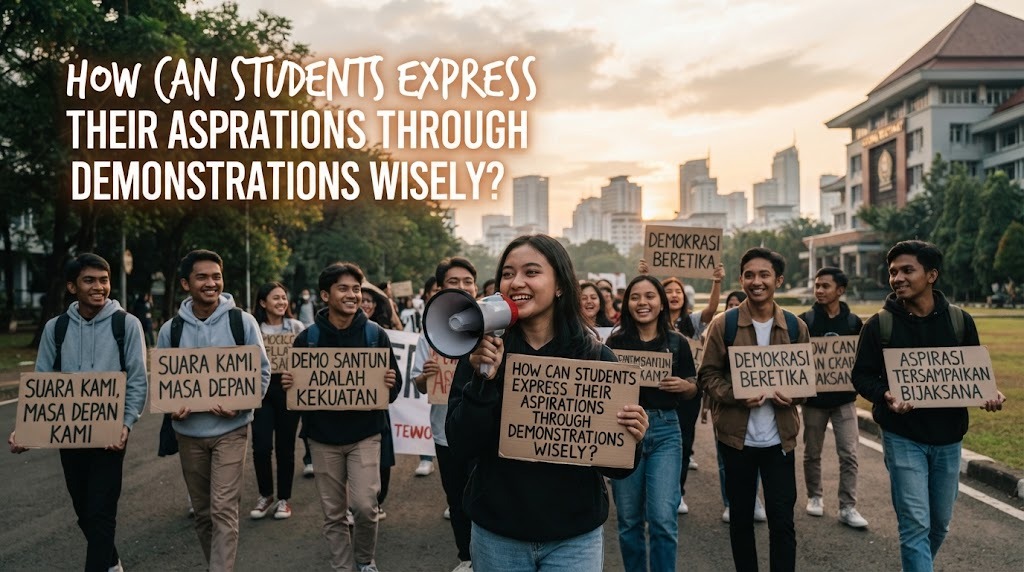
Students can use demonstrations as one way to communicate public aspirations about issues that affect their education or community. However, expressing an opinion publicly requires preparation, clear communication, and responsibility. Students need to understand the issue before presenting their views to others. They should also respect different opinions and avoid actions that could create conflict. With a thoughtful approach, demonstrations can become an opportunity to practice responsible participation.
UNDERSTANDING THE ISSUE BEFORE SPEAKING
Before joining a demonstration, students should understand the issue they want to discuss. They can read information from Reliable Sources and compare different perspectives to develop a more complete understanding. This preparation helps students avoid spreading inaccurate information. Students should identify the main problem, supporting facts, and possible solutions. A clear understanding can make their arguments more focused.
Students can also discuss the issue with classmates or organizational members before participating. These discussions may reveal different viewpoints that were not considered previously. By reviewing several perspectives, students can develop Critical Thinking and make more informed arguments. They should separate facts from personal opinions when preparing their messages. This approach can help make their aspirations easier for others to understand.
COMMUNICATING ASPIRATIONS CLEARLY
Clear communication is important when students want their aspirations to receive attention. Students should use simple and respectful language when explaining their concerns. They can organize their messages around the problem, supporting reasons, and desired improvements. Clear Communication makes an aspiration easier to understand and reduces the possibility of misunderstanding. Students should focus on the issue instead of personally attacking individuals.
Students can also practice speaking before participating in a public activity. Preparing key points can help them communicate more confidently without making unnecessary statements. Public Speaking skills can improve through practice, discussion, and experience. Students should also listen when other people present different views. Good communication involves both expressing ideas and understanding responses.
RESPECTING DIFFERENT OPINIONS
A demonstration may bring together students with different opinions and priorities. Therefore, participants should understand that not everyone will agree with their position. Respecting differences can help maintain a constructive atmosphere during discussions. Students should avoid insults, threats, or language intended to provoke others. Respectful Dialogue allows different perspectives to be discussed without unnecessary hostility.
Listening to opposing opinions can also provide an opportunity to evaluate one's own arguments. Students may discover additional information or alternative solutions through discussion. They can respond to disagreements using evidence rather than personal attacks. Open Discussion can encourage students to consider problems from multiple perspectives. This habit is useful in academic discussions, organizations, and future workplaces.
FOLLOWING RULES AND MAINTAINING ORDER
Responsible participation also requires students to understand and follow applicable rules. Students should learn about the regulations governing public activities and follow instructions from authorized parties. They should avoid damaging property, blocking essential access, or disturbing people who are not involved. Maintaining order helps protect participants and the surrounding community. Peaceful Demonstrations can provide a safer environment for everyone.
Students should also prepare practical needs before participating, such as identification, communication tools, and sufficient water. They can stay with trusted groups and maintain communication if circumstances change. If a situation becomes unsafe, participants should prioritize personal safety and follow appropriate instructions. Responsible behavior shows that expressing an aspiration does not require harming others. Public Responsibility should remain part of every peaceful form of expression.
FOCUSING ON CONSTRUCTIVE SOLUTIONS
Expressing an aspiration can be more meaningful when students also communicate possible solutions. Instead of only describing a problem, students can explain what changes they hope to see. A constructive message can help decision-makers and other members of the community understand the concerns more clearly. Students can support their proposals with relevant information and reasonable arguments. Constructive Solutions can make public discussions more productive.
After a demonstration, students can evaluate the results of their communication and consider what could be improved. They can discuss whether their main message was understood and whether the activity remained peaceful. Reflection can help students improve their future participation in organizational or community activities. It can also strengthen their understanding of civic responsibility. In this way, demonstrations can become a learning experience for developing Responsible Citizenship.
CONCLUSION
Students can express their aspirations wisely through demonstrations by understanding the issue, communicating clearly, respecting different opinions, and following applicable rules. Critical Thinking, Clear Communication, and Public Responsibility can help students deliver their messages in a responsible manner. Peaceful participation also requires attention to safety, order, and the rights of others. Adding constructive solutions can make aspirations more focused and meaningful. Through responsible participation, students can develop communication, teamwork, and civic skills that are useful beyond campus activities.
About the Author
Gusti Ayu Tita P
Author — STEKOM University
An active author focused on academic issues, educational technology, and human resource development in the campus environment.