
How Can Students Make College More Meaningful Beyond Earning A Degree?
Gusti Ayu Tita P
21 Agustus 2026
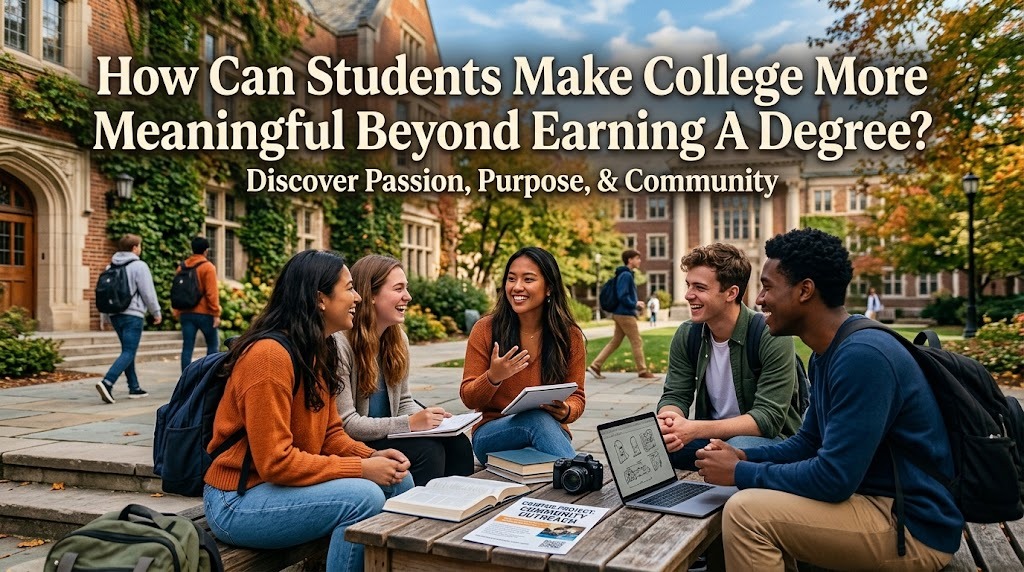
College is often seen as a path to earning a degree and preparing for a career. However, the college experience can offer much more than a qualification. Students can use this period to develop skills, build relationships, explore interests, and create meaningful contributions. By making the most of their time on campus, students can graduate with not only a degree but also valuable experiences and personal growth.
SET CLEAR PERSONAL GOALS
Having clear goals can make the college journey more purposeful. Students can identify what they want to achieve in academic performance, personal development, career preparation, or social contribution. These goals do not need to remain exactly the same throughout college because interests can change with experience. What matters is having a direction that helps students decide which activities deserve their time. Clear goals can turn college from a routine into a meaningful learning journey.
BUILD A STRONG PORTFOLIO
A degree shows that a student has completed an educational program, while a portfolio can demonstrate what the student is capable of doing. Students can collect their best projects, achievements, relevant experiences, certifications, and other examples of their abilities. The portfolio should be organized and updated as new work is completed. Students should focus on quality and relevance rather than simply collecting as many items as possible. A strong portfolio can provide concrete evidence of skills when applying for internships or jobs.
GAIN REAL WORLD EXPERIENCE
College becomes more meaningful when students connect academic learning with real situations. Internships, freelance projects, volunteering, part time work, and community programs can provide practical experience and professional exposure. These experiences can teach students about workplace expectations, responsibility, communication, and problem solving. They can also help students discover which career paths match their interests. Real world experience can bridge the gap between classroom knowledge and professional life.
BUILD MEANINGFUL RELATIONSHIPS
Relationships are another valuable part of the college experience. Students can build connections with classmates, lecturers, alumni, professionals, and members of different communities. Meaningful relationships can provide opportunities for discussion, collaboration, mentorship, and learning. Students should build these connections naturally through mutual respect rather than focusing only on personal benefits. A supportive network can continue to provide knowledge and opportunities even after graduation.
CONTRIBUTE TO THE COMMUNITY
Students can make their college years more meaningful by using their time and abilities to help others. They can participate in volunteer activities, community service, educational programs, environmental projects, or social initiatives. These activities can help students understand real problems outside the campus environment. They can also develop empathy, responsibility, and teamwork. Contribution gives students an opportunity to make their education useful to other people.
DEVELOP A HABIT OF LIFELONG LEARNING
Graduation does not mean learning has to stop. Knowledge and technology continue to change, so students should develop the habit of learning independently and staying curious. They can read books, attend courses, explore new subjects, follow reliable educational resources, or learn from experienced people. Learning should not be limited to subjects required for examinations. A lifelong learning mindset can help students remain adaptable throughout their careers and personal lives.
USE TECHNOLOGY WISELY
Technology can make college learning and personal development more effective when used properly. Students can use digital tools for research, collaboration, productivity, learning, communication, and creative projects. They should also learn to evaluate information carefully because not every online source is reliable. Responsible technology use includes protecting personal information and respecting digital ethics. Technology becomes more valuable when it supports learning and meaningful creation rather than only entertainment.
LEARN FROM FAILURE AND FEEDBACK
A meaningful college experience does not require everything to go perfectly. Students will sometimes receive low grades, experience unsuccessful projects, or make mistakes in organizations and other activities. These experiences can become opportunities to develop resilience, self evaluation, and problem solving. Students should learn to accept constructive feedback and use it to improve future performance. Failure can become valuable when it leads to reflection and meaningful improvement.
BALANCE ACHIEVEMENT WITH WELL BEING
Making college meaningful does not mean filling every moment with activities. Students need enough time for rest, health, relationships, reflection, and personal interests. Taking on too many responsibilities can reduce focus and make the college experience unnecessarily stressful. A balanced schedule allows students to remain productive without ignoring their well being. Sustainable progress is more valuable than constant activity without enough recovery.
CONCLUSION
College can be much more meaningful when students look beyond the goal of earning a degree. They can use the experience to develop practical skills, create projects, build relationships, gain real world experience, contribute to society, and develop lifelong learning habits. Academic achievement remains important, but it becomes more valuable when combined with personal growth and meaningful experiences. Students do not need to participate in everything; they simply need to choose activities that support their goals and values. A meaningful college journey is ultimately about becoming a more capable, responsible, and adaptable person, not simply becoming a degree holder.
About the Author
Gusti Ayu Tita P
Author — STEKOM University
An active author focused on academic issues, educational technology, and human resource development in the campus environment.















