How Can Students Prepare For Digital Transformation In The Next Five Years?
Gusti Ayu Tita P
28 Agustus 2026
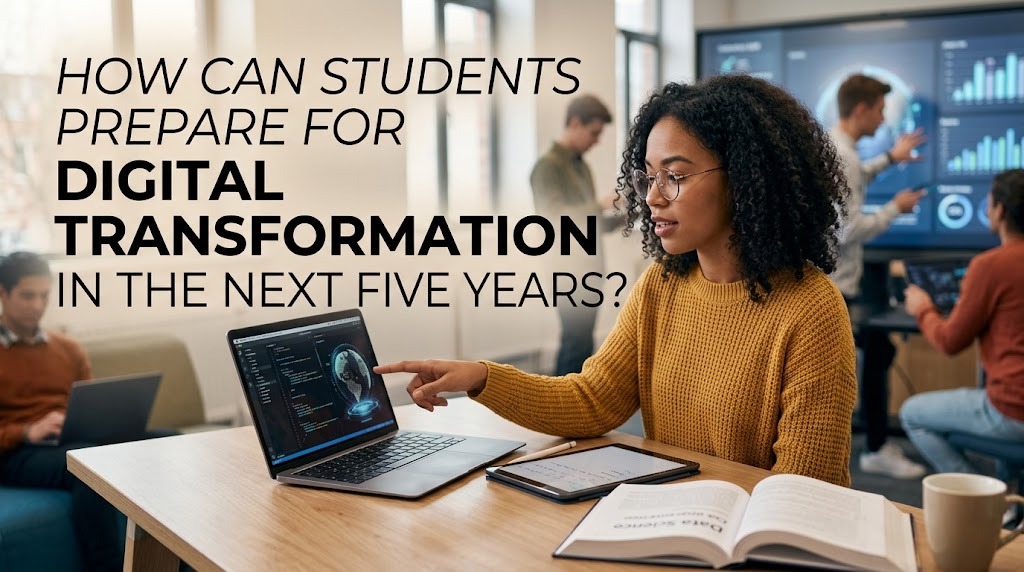
Digital transformation is changing how people study, work, communicate, and build careers. Over the next five years, students are likely to encounter workplaces that use more artificial intelligence, automation, cloud computing, data analytics, and digital collaboration tools. These changes can create new opportunities, but they can also change the skills required for many jobs. Students therefore need to prepare themselves before entering a workforce that may look very different from today. Building relevant skills, developing adaptability, and gaining practical experience can help students remain competitive.
UNDERSTANDING DIGITAL TRANSFORMATION
Digital transformation refers to the use of digital technologies to change how organizations operate, deliver services, and create value. It is broader than simply replacing paper with digital documents or using new software. Organizations may redesign workflows, automate repetitive tasks, analyze data, and introduce new digital products. This transformation can affect almost every industry, including education, healthcare, finance, manufacturing, retail, and creative services. Students should understand these changes so they can identify how technology may influence their future careers.
Digital transformation also creates new expectations for employees. Workers may need to collaborate through digital platforms, work with data, and learn unfamiliar technologies. Therefore, students should develop both technical and human skills instead of focusing on only one area. A combination of digital competence, communication, creativity, and adaptability can provide a stronger foundation for the future.
LEARNING TO USE ARTIFICIAL INTELLIGENCE RESPONSIBLY
Artificial intelligence is becoming increasingly common in education and professional environments. Students should learn how AI tools can support tasks such as research, brainstorming, writing, coding, data analysis, and productivity. However, students should not depend on AI without checking its results. AI systems can produce inaccurate, incomplete, or misleading information. Learning how to verify information is therefore just as important as learning how to use the technology.
Responsible AI use also requires awareness of privacy, bias, security, and academic integrity. Students should avoid sharing confidential personal or organizational information with tools that are not approved for such use. They should also understand the rules surrounding AI in their schools, universities, and future workplaces. Responsible use will become increasingly important as AI becomes more integrated into everyday activities.
DEVELOPING DATA LITERACY
Data plays an important role in modern decision making. Businesses and organizations use data to understand customers, measure performance, identify problems, and plan strategies. Students can prepare by developing data literacy, which includes understanding basic data concepts and interpreting information correctly. They should learn how to recognize trends, compare information, and question unusual results. These abilities can be useful even for students who do not plan to become data professionals.
Students can start with spreadsheet applications and gradually explore data visualization or analytics tools. Learning to present data clearly is also important because professionals often need to explain findings to people without technical backgrounds. Data literacy combined with communication skills can make information more useful in real workplace situations.
STRENGTHENING CYBERSECURITY AWARENESS
As digital activities increase, cybersecurity becomes an important responsibility for students and future employees. Students should understand basic practices such as using strong passwords, multi factor authentication, secure networks, and software updates. They should also learn how to recognize phishing attempts and suspicious links. These habits can reduce the risk of personal and organizational information being compromised. Cybersecurity awareness is useful regardless of a person's chosen career.
Students should also understand the importance of protecting personal and professional data. Information should only be shared through appropriate channels and with authorized people. Developing digital safety habits early can make students more responsible technology users when they enter professional environments.
IMPROVING DIGITAL COMMUNICATION
Future workplaces will continue to depend on digital communication. Students may need to communicate through email, video meetings, messaging platforms, shared documents, and project management systems. They should practice writing clear, concise, and professional digital messages. Good digital communication can reduce misunderstandings and make teamwork more efficient. It also helps students build a professional image before they enter the workforce.
Digital communication is not only about writing. Students should also learn to listen during online meetings, provide constructive feedback, and choose suitable communication channels. Professional digital etiquette can become an important advantage when working with colleagues, clients, and international teams.
FOLLOWING INDUSTRY TRENDS
Students do not need to follow every technology trend, but they should understand developments that affect their chosen field. Reading reliable industry publications, attending webinars, joining professional communities, and following experts can provide useful information. Students can ask how technologies such as AI, automation, cloud computing, or data analytics may influence specific careers. This can help them make better decisions about which skills to develop. Career awareness can prevent students from learning skills without a clear purpose.
Students should also compare industry trends with actual job requirements. Looking at current job descriptions can reveal which skills employers frequently request. This information can help students create a more focused learning plan.
CREATING A FIVE YEAR LEARNING PLAN
Preparing for digital transformation becomes easier when students have a clear plan. They can begin by identifying their desired career direction and assessing their current abilities. Next, they can choose several priority skills and set realistic learning goals. The plan can include courses, projects, internships, certifications, and portfolio development. Progress should be reviewed regularly because career interests and technology can change.
A five-year plan does not need to predict every detail of the future. Instead, it should provide a flexible direction while allowing room for new opportunities. Students who regularly review and update their plans can respond more effectively when new technologies or career paths emerge.
CONCLUSION
Students can prepare for digital transformation over the next five years by developing digital skills, AI literacy, data literacy, cybersecurity awareness, digital communication, and adaptability. Practical experience through internships, projects, organizations, and other activities can turn knowledge into useful workplace capabilities. Students should also strengthen human skills such as communication, creativity, teamwork, critical thinking, and problem solving. Rather than trying to predict every future technology, they should focus on becoming flexible lifelong learners who can adjust as technology changes. With consistent learning and practical experience, students can enter the future workforce with greater confidence and readiness.
About the Author
Gusti Ayu Tita P
Author — STEKOM University
An active author focused on academic issues, educational technology, and human resource development in the campus environment.