
How Can Study Tours Support Learning At School?
Gusti Ayu Tita P
17 September 2026
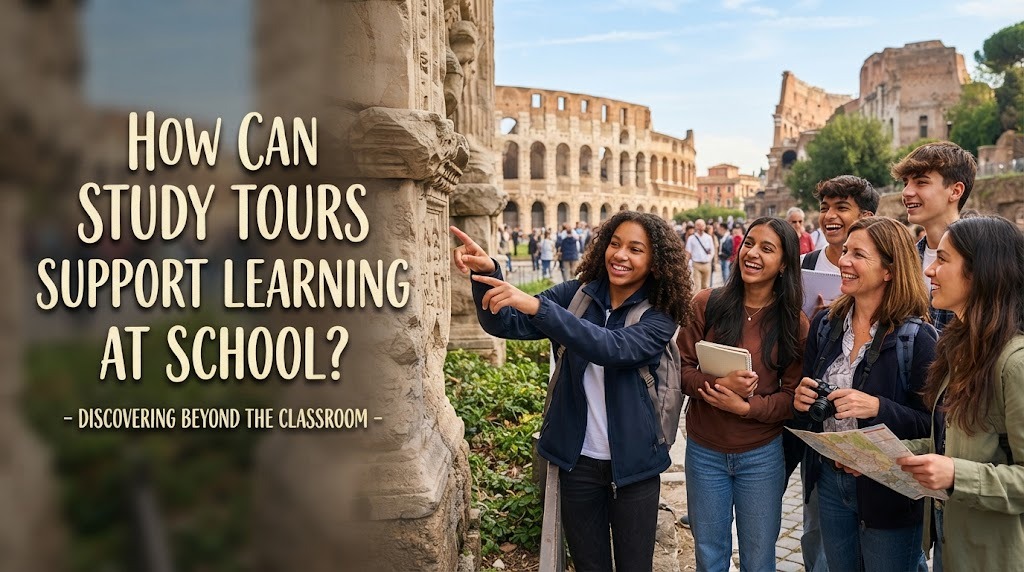
Study tours are educational activities that allow students to learn outside the classroom. Instead of only reading books or listening to explanations, students can see and experience real situations directly. These activities can support school learning by connecting classroom lessons with the real world. When planned properly, a study tour can make learning more interesting, practical, and meaningful.
CONNECTING CLASSROOM LESSONS WITH REAL LIFE
Study tours help students understand how school subjects are connected to everyday life. For example, students studying history can visit historical sites and observe important objects or buildings directly. Students learning science can visit museums, laboratories, farms, or other places related to scientific processes. Seeing real examples can make information easier to understand than learning only from written materials.
This experience also helps students remember important concepts because they can connect them with something they have actually seen. Teachers can explain the relationship between the destination and lessons before, during, and after the trip. In this way, the study tour becomes a continuation of classroom learning rather than simply a recreational activity.
ENCOURAGING ACTIVE STUDENT PARTICIPATION
A study tour gives students opportunities to become active learners. They can observe their surroundings, ask questions, take notes, discuss information, and complete simple learning activities. These actions encourage students to participate instead of only receiving information from a teacher. Active participation can also help students develop better observation and communication skills.
Teachers can prepare worksheets, discussion questions, or small assignments for students to complete during the visit. For example, students may be asked to identify important objects, record interesting facts, or interview a guide. Such activities give students a clear learning purpose while allowing them to explore the destination.
INCREASING CURIOSITY AND MOTIVATION
New environments can encourage student curiosity because students encounter things they may not see in their normal classroom. They may become interested in how a company operates, how historical objects were created, or how a natural process occurs. These experiences can encourage students to ask more questions and seek additional information. As a result, learning can continue even after the study tour ends.
Study tours can also increase learning motivation when students see the practical value of what they study. A lesson may seem difficult or less interesting when it is presented only through textbooks. However, seeing a real example can help students understand why the subject is useful. This connection can encourage students to pay more attention to related lessons at school.
DEVELOPING SOCIAL AND TEAMWORK SKILLS
Study tours also support learning by giving students opportunities to work with their classmates. Students may need to complete group assignments, discuss observations, or solve simple problems together. Through these activities, they can practice communication, cooperation, and responsibility. These social skills are useful not only during the trip but also in classroom activities.
Students also learn how to follow schedules, respect rules, and stay responsible for their belongings and tasks. Working in groups can teach them to listen to different opinions and contribute to shared goals. Therefore, a study tour can support both academic learning and personal development.
MAKING LEARNING MORE MEMORABLE
Direct experiences can make lessons easier for students to remember. When students see, hear, and sometimes interact with real objects or environments, they can create stronger connections with the information they learn. For example, visiting a museum after studying history can help students connect historical facts with actual artifacts. This can make the learning experience more meaningful.
Teachers can strengthen this effect by asking students to reflect on what they learned after returning to school. Students can write reports, create presentations, discuss their experiences, or complete related projects. These follow-up activities help transform the study tour experience into long-term learning.
SUPPORTING TEACHERS AND CLASSROOM ACTIVITIES
Study tours can provide teachers with additional material for classroom lessons. Information and observations collected during the trip can become examples for future discussions or assignments. Teachers can use students' experiences to introduce new topics, review previous lessons, or create project-based activities. This makes the connection between the trip and the curriculum clearer.
Good planning is important so that the study tour remains educational. The destination should be relevant to the learning objectives, and students should receive clear instructions about what they need to observe or complete. After the trip, teachers should evaluate what students learned and connect the experience with classroom topics. With proper preparation, a study tour can become a valuable extension of school learning.
CONCLUSION
Study tours support learning at school by connecting lessons with real-life experiences. They can encourage active participation, curiosity, motivation, teamwork, and better understanding of academic subjects. The experience becomes more effective when teachers prepare meaningful activities before, during, and after the trip. Therefore, a well-planned study tour can complement classroom education and provide students with a practical and memorable way to learn.
About the Author
Gusti Ayu Tita P
Author — STEKOM University
An active author focused on academic issues, educational technology, and human resource development in the campus environment.















