How Can Technological Adaptability Improve Your Career In The Modern Workplace?
Gusti Ayu Tita P
28 Agustus 2026
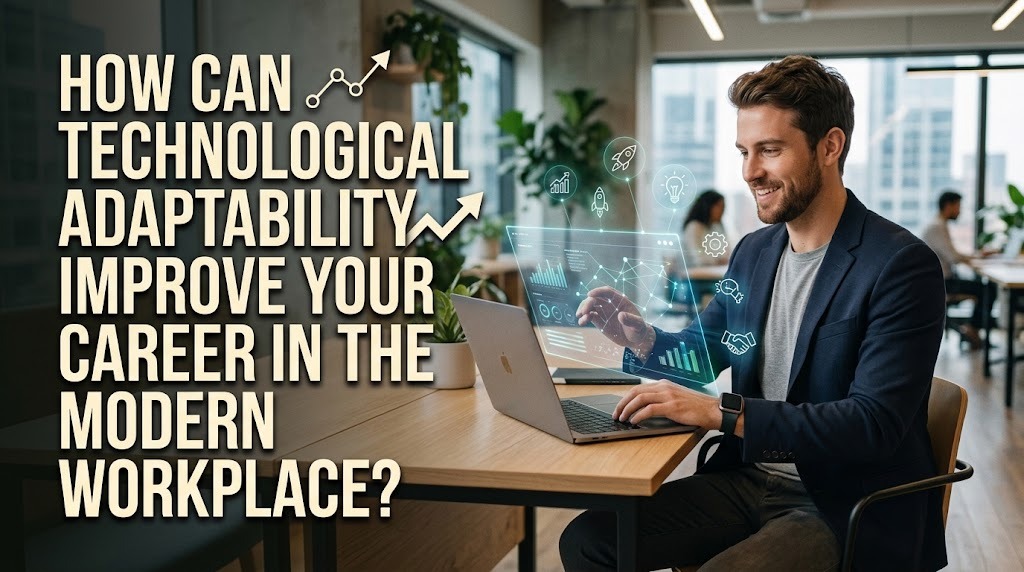
Technology continues to change how people communicate, work, solve problems, and serve customers. From cloud platforms and digital collaboration tools to artificial intelligence, employees are expected to work comfortably with new technologies. This makes technological adaptability an increasingly important career skill. It does not mean knowing every new tool, but being willing and able to learn, evaluate, and use technology effectively. Employees who develop this ability can respond to workplace changes with greater confidence and flexibility.
WHAT IS TECHNOLOGICAL ADAPTABILITY?
Technological adaptability is the ability to learn and adjust to new technologies, digital tools, and changing work systems. It involves more than simply knowing how to operate software. Employees also need to understand when a technology is useful and how it can improve their work. This ability allows workers to remain productive when companies introduce new platforms or processes. It is especially valuable in industries where technology changes quickly.
Technological adaptability also requires a positive attitude toward learning. Employees may not understand a new system immediately, but they can improve through practice, training, and experimentation. Being comfortable with learning reduces resistance to workplace changes and encourages continuous professional development.
WHY TECHNOLOGICAL ADAPTABILITY MATTERS IN THE MODERN WORKPLACE
Many organizations now depend on digital systems to manage daily operations. Employees may use project management platforms, communication applications, cloud storage, data tools, or specialized software. As a result, companies value people who can adapt to digital changes without requiring constant assistance. Technological adaptability can help employees maintain productivity when work processes change. It can also make collaboration easier across teams and locations.
Technology can also change the skills required for particular jobs. Some repetitive tasks may become automated, while new responsibilities may emerge around data, digital systems, and artificial intelligence. Employees who continue learning are better positioned to respond to these changes and identify new opportunities.
MAKING REMOTE AND HYBRID WORK EASIER
Remote and hybrid work depend heavily on digital communication and collaboration. Employees may need to use video conferencing, shared documents, project management systems, and online communication platforms. Technological adaptability helps workers move between these tools without disrupting collaboration. It also makes it easier to work with colleagues who are located in different places. Strong digital habits can improve communication and organization.
Remote work also requires employees to become more independent and digitally organized. Workers need to manage files, deadlines, meetings, and communication without relying on constant face-to-face supervision. Learning to use digital systems effectively can therefore support both technical and organizational skills.
STRENGTHENING CAREER FLEXIBILITY
Career paths are becoming less predictable as industries and technologies evolve. Employees may need to change responsibilities, learn new tools, or move into emerging roles. Technological adaptability can provide career flexibility because workers are more prepared to learn skills outside their current routine. This can make transitions between roles easier. It also encourages employees to explore new career opportunities.
Flexibility does not mean changing careers whenever technology changes. Instead, it means having enough transferable skills and learning ability to respond when circumstances require adjustment. This can help professionals build careers that remain sustainable over time.
HOW TO DEVELOP TECHNOLOGICAL ADAPTABILITY
Developing technological adaptability starts with identifying the technologies that are relevant to your career goals. Choose a few important tools rather than trying to learn everything at once. Practice through real projects so that you understand how the technology works in practical situations. Ask for feedback from colleagues, mentors, or experienced users. Regular practice can gradually make new technologies feel more familiar.
It is also useful to follow industry trends without blindly following every trend. Read reliable sources, participate in professional communities, and observe how technology is being applied in your field. When learning a new tool, focus on understanding the problem it solves and the value it can provide.
USING AI RESPONSIBLY IN CAREER DEVELOPMENT
Artificial intelligence is becoming increasingly relevant across many types of work. Learning how to use AI tools responsibly can help employees improve research, brainstorming, drafting, analysis, and other suitable tasks. However, AI-generated information should not automatically be treated as accurate. Employees need to verify important information and protect confidential or sensitive workplace data. Human judgment remains essential when making professional decisions.
AI adaptability is therefore not simply about learning prompts or specific applications. It also involves understanding limitations, privacy, accuracy, bias, and appropriate use. Professionals who combine AI skills with critical thinking can gain more value from the technology while reducing potential risks.
CONCLUSION
Technological adaptability can improve your career by helping you remain productive, flexible, and prepared for workplace changes. It supports continuous learning, employability, productivity, problem solving, innovation, and career flexibility. Employees do not need to master every emerging technology, but they should develop the ability to learn and evaluate tools that are relevant to their work. Building this skill requires regular practice, curiosity, critical thinking, and a willingness to adjust. In a modern workplace where technology continues to evolve, technological adaptability can become a valuable foundation for sustainable career growth.
About the Author
Gusti Ayu Tita P
Author — STEKOM University
An active author focused on academic issues, educational technology, and human resource development in the campus environment.