How Can The Blue Economy Create New Career Opportunities For Coastal Communities?
Gusti Ayu Tita P
11 Agustus 2026
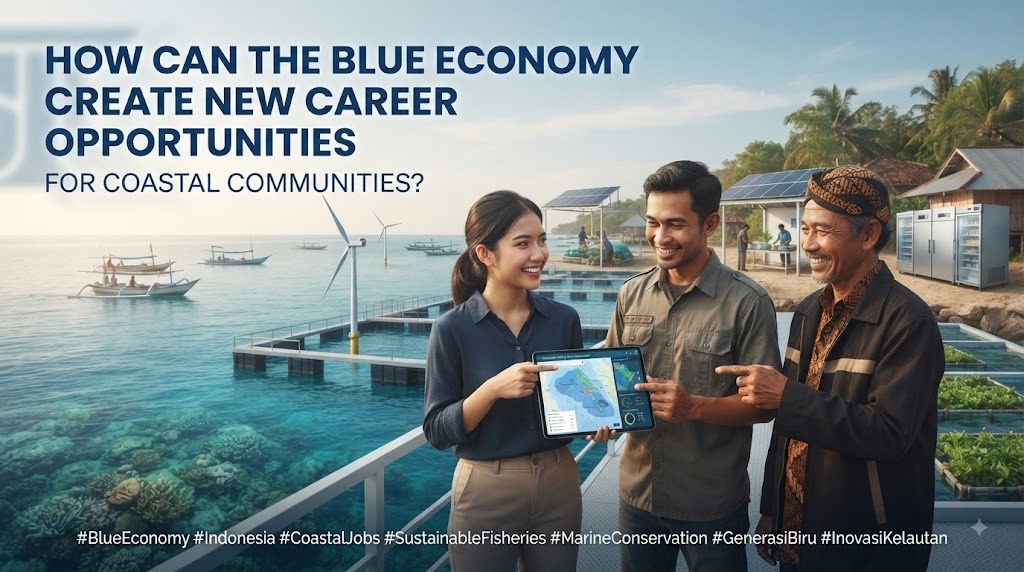
The blue economy is becoming increasingly important as countries look for ways to use marine and coastal resources while protecting ocean ecosystems. Coastal communities often depend on fishing, tourism, aquaculture, transportation, and other activities connected to the sea. However, environmental changes, overfishing, pollution, and economic uncertainty can affect traditional sources of income. A sustainable blue economy can create new opportunities while helping communities protect the natural resources they depend on.
The development of the blue economy involves more than simply increasing economic activity in coastal areas. It focuses on balancing economic growth, social benefits, and environmental sustainability. New technologies, sustainable businesses, marine conservation, and skills development can create different types of employment. With appropriate policies and community participation, coastal residents can become important participants in this transition.
UNDERSTANDING THE BLUE ECONOMY
The blue economy refers to economic activities related to oceans, seas, and coastal areas that aim to generate economic and social benefits while maintaining healthy marine ecosystems. Activities can include sustainable fisheries, aquaculture, marine tourism, shipping, renewable ocean energy, and marine biotechnology. The exact definition can vary between institutions and countries, but environmental sustainability is generally an important principle. Responsible use of marine resources is essential for maintaining long-term economic opportunities.
For coastal communities, the blue economy can provide alternatives to activities that place excessive pressure on natural resources. It can encourage businesses to use marine resources more efficiently and responsibly. This approach can also support innovation and investment in coastal areas. As marine industries develop, they can generate demand for workers with both traditional knowledge and modern technical skills.
SUSTAINABLE FISHERIES AS A SOURCE OF EMPLOYMENT
Fisheries remain an important source of income and food for many coastal communities. Sustainable fisheries management can help maintain fish populations while allowing fishers to continue earning a living. Sustainable fishing can create opportunities not only for fishers but also for workers involved in processing, packaging, transportation, marketing, and seafood distribution.
Improving the value of seafood products can create additional employment. Local businesses can develop better processing methods, quality control, cold storage, and direct marketing systems. Training can help fishers and small businesses meet quality and sustainability standards. These improvements can increase the economic value of fisheries without requiring unlimited increases in fishing activity.
DEVELOPING SUSTAINABLE AQUACULTURE
Aquaculture is another sector with potential to create employment in coastal communities. Fish, shellfish, seaweed, and other aquatic organisms can be cultivated under controlled conditions. Sustainable aquaculture can help diversify food production and provide income when wild fish stocks are under pressure. However, aquaculture must be carefully managed to minimize environmental impacts.
Modern aquaculture requires workers with different skills, including animal health management, water quality monitoring, farm operations, equipment maintenance, and product marketing. Small-scale producers can also benefit from improved technology and training. When production systems are designed responsibly, aquaculture can support local economies. It can also create opportunities for young people who want to work in modern marine industries.
EXPANDING MARINE AND COASTAL TOURISM
Tourism can provide significant employment opportunities in coastal areas when it is managed sustainably. Activities such as diving, snorkeling, boating, wildlife observation, cultural tourism, and coastal recreation can generate income for local communities. Marine tourism can create jobs for guides, boat operators, hospitality workers, food vendors, photographers, and tourism managers.
Sustainable tourism should protect the natural and cultural assets that attract visitors. Communities can participate directly by developing locally owned tourism businesses and services. Training in hospitality, safety, foreign languages, environmental awareness, and digital marketing can improve employment opportunities. A well-managed tourism sector can therefore support both local income and marine conservation.
CREATING JOBS THROUGH MARINE CONSERVATION
Marine conservation can also create economic opportunities. Protecting mangroves, coral reefs, seagrass ecosystems, and coastal wetlands requires activities such as restoration, monitoring, education, and environmental management. Conservation jobs can involve community members in protecting the ecosystems that support fisheries and tourism.
Local residents can receive training to become conservation workers, environmental guides, restoration technicians, or community educators. Conservation programs can also create indirect economic benefits by improving fish habitats and strengthening tourism attractions. This shows that environmental protection does not necessarily have to conflict with economic development. In a well-designed blue economy, healthy ecosystems can become a foundation for sustainable employment.
DEVELOPING MARINE RENEWABLE ENERGY
The ocean has significant potential for renewable energy development. Depending on local conditions, marine renewable energy can include offshore wind, tidal energy, wave energy, and other technologies. These industries require workers with skills in engineering, construction, maintenance, environmental assessment, and project management. Marine renewable energy could therefore create specialized career opportunities in coastal regions.
However, marine energy projects need careful planning because they can interact with fisheries, shipping, wildlife, and coastal communities. Local participation and environmental assessment are important before projects are developed. Training programs can help residents gain the skills required for new employment opportunities. This can allow coastal communities to participate more actively in emerging marine industries.
GROWING THE MARINE BIOTECHNOLOGY SECTOR
Marine organisms contain biological resources that can support research and the development of products in areas such as food, medicine, cosmetics, and biotechnology. Marine biotechnology can create opportunities for researchers, laboratory technicians, entrepreneurs, and specialized workers. Marine biotechnology is a knowledge-intensive sector that can connect coastal resources with scientific innovation.
The development of this sector requires strong education, research facilities, responsible resource management, and appropriate regulations. Coastal communities can benefit when research and business development involve local institutions and workers. Sustainable collection and responsible use of marine biological resources are also important. This can create new economic value while maintaining ecosystem protection.
SUPPORTING THE MARITIME AND LOGISTICS INDUSTRY
Coastal communities are often located near ports and important maritime transportation routes. Shipping, port operations, logistics, vessel maintenance, and maritime services can provide a wide range of employment opportunities. Maritime careers include roles in navigation, engineering, cargo handling, safety, administration, and logistics.
As global trade changes, maritime industries increasingly need workers with digital and technical skills. Training in logistics systems, maritime safety, equipment operation, and information technology can improve employment prospects. Local education institutions can work with industry to develop relevant training programs. This can help young people access skilled employment without leaving coastal regions permanently.
BUILDING DIGITAL SKILLS FOR BLUE ECONOMY JOBS
Digital technology is changing many marine industries. Fishers can use digital tools for navigation, weather information, market access, and catch management. Tourism businesses can use online platforms to promote services and communicate with customers. Digital skills can therefore improve the ability of coastal workers and businesses to participate in modern markets.
Young people can play an important role in this transformation. Skills in digital marketing, data analysis, online business, geographic information systems, and communication can open new career paths. Digital education can also help traditional marine businesses reach customers beyond their local communities. Combining local marine knowledge with digital skills can create innovative employment opportunities.
SUPPORTING WOMEN AND YOUNG PEOPLE
The blue economy can provide opportunities for groups that may have traditionally had limited access to formal employment. Women often contribute significantly to seafood processing, trading, tourism, and community activities. Providing equal access to training, finance, technology, and markets can strengthen their participation in marine industries.
Young people can also become important drivers of innovation in coastal communities. Entrepreneurship programs, vocational education, internships, and marine technology training can help young people develop relevant skills. Supporting youth participation can reduce dependence on traditional occupations alone. It can also encourage new businesses based on sustainability and technology.
DEVELOPING COASTAL ENTREPRENEURSHIP
The blue economy can encourage local entrepreneurship by creating demand for new products and services. Small businesses can operate in areas such as seafood processing, eco-tourism, sustainable aquaculture, marine transportation, environmental services, and digital marketing. Coastal entrepreneurship can allow communities to capture more economic value from local resources.
Successful businesses need access to finance, training, infrastructure, markets, and reliable information. Governments and other organizations can support entrepreneurs through business development programs and technical assistance. Partnerships between local businesses, educational institutions, and larger companies can also create new opportunities. Strong local enterprises can help ensure that more benefits remain within coastal communities.
BUILDING SKILLS FOR FUTURE BLUE ECONOMY CAREERS
Education and training are essential for turning blue economy potential into real employment. Traditional knowledge about fishing and marine ecosystems remains valuable, but workers may also need new technical and digital skills. Training programs can focus on areas such as sustainable fisheries, aquaculture, tourism, marine safety, conservation, renewable energy, and business management. Skills development helps workers adapt to changing economic and environmental conditions.
Educational institutions can strengthen their programs by working with marine industries and local communities. Practical training, apprenticeships, certification programs, and internships can provide valuable experience. Lifelong learning is also important because marine industries continue to change. A skilled workforce can make coastal communities more competitive and resilient.
CHALLENGES IN CREATING BLUE ECONOMY CAREERS
Although the blue economy offers many opportunities, coastal communities may face significant barriers. Limited infrastructure, lack of financing, insufficient training, environmental degradation, and unequal access to markets can restrict economic development. Some new industries may also require technical skills that are not yet widely available. Inclusive development is therefore necessary to ensure that opportunities reach local communities.
Environmental risks must also be carefully considered. Economic activities that damage marine ecosystems can reduce future employment opportunities and undermine the purpose of a sustainable blue economy. Effective regulations, environmental monitoring, community participation, and responsible investment are essential. Development should strengthen both local economies and the health of marine ecosystems.
CONCLUSION
The blue economy can create new career opportunities for coastal communities by developing sustainable fisheries, aquaculture, marine tourism, conservation, renewable energy, biotechnology, maritime services, and digital businesses. These sectors can diversify local economies and reduce dependence on a limited number of traditional activities. They can also create opportunities for young people, women, entrepreneurs, and workers seeking new skills.
However, long-term success depends on balancing economic development with environmental protection. Education, skills development, sustainable resource management, technology, infrastructure, and community participation are essential for building an inclusive blue economy. When coastal communities are actively involved, marine resources can support both healthy ecosystems and better livelihoods for future generations.
About the Author
Gusti Ayu Tita P
Author — STEKOM University
An active author focused on academic issues, educational technology, and human resource development in the campus environment.