How Can The Ministry Of Culture Preserve Cultural Heritage In The Digital Era?
Gusti Ayu Tita P
11 Agustus 2026
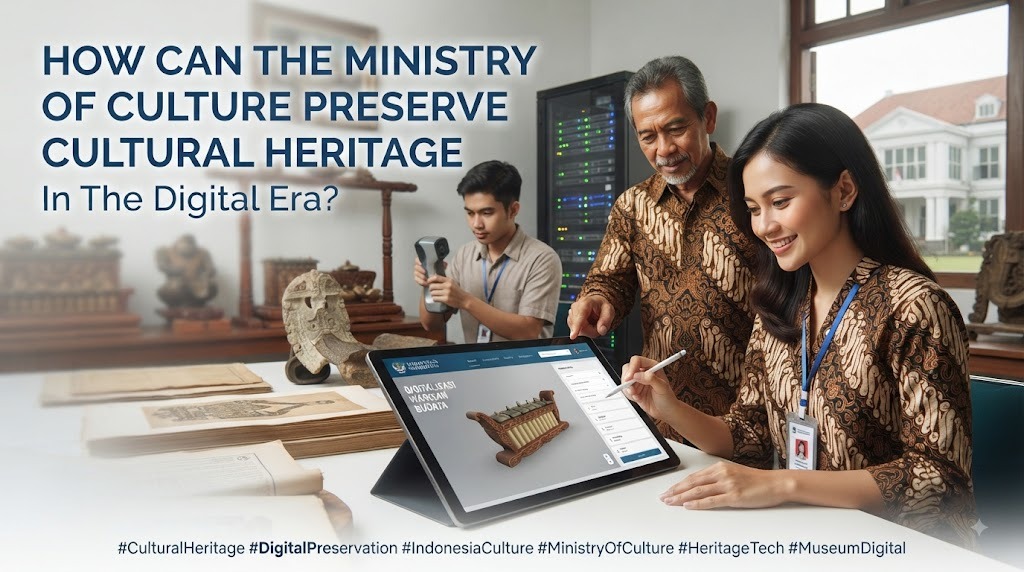
Cultural heritage is an important part of a nation's identity because it reflects history, traditions, knowledge, arts, and the values passed from one generation to another. In Indonesia, cultural heritage includes traditional dances, music, crafts, languages, rituals, architecture, manuscripts, culinary traditions, and historical sites. Rapid technological development creates new opportunities to preserve and introduce this heritage to wider audiences. The Ministry of Culture can use digital innovation to make cultural preservation more accessible, engaging, and relevant to modern society.
Digital technology can also help document cultural expressions that may be vulnerable to loss or decline. Digital archives, online exhibitions, educational platforms, and social media can bring cultural information to younger generations. However, technology should not reduce culture to simple digital content without understanding its original context. Digital cultural preservation needs to combine technology with community participation, accurate documentation, and respect for cultural values.
THE ROLE OF THE MINISTRY OF CULTURE IN CULTURAL PRESERVATION
The Ministry of Culture has an important role in developing policies and programs that support the protection, development, utilization, and promotion of Indonesia's cultural heritage. Cultural preservation involves both tangible heritage, such as buildings and artifacts, and intangible heritage, such as traditions, performing arts, knowledge, and customary practices. Government institutions can coordinate with local governments, cultural communities, researchers, museums, and educational institutions. This cooperation helps ensure that preservation efforts reflect the diversity of Indonesian culture.
The ministry can also support programs that document cultural heritage and encourage public participation. Digital technology provides additional tools for recording information and sharing cultural knowledge. Cultural preservation policies need to ensure that digital initiatives remain accurate and respect the rights and interests of cultural communities. Government support can create a stronger foundation for long-term cultural preservation.
DIGITIZING CULTURAL HERITAGE DOCUMENTATION
One of the most useful applications of technology is the digitization of cultural records. Historical documents, photographs, manuscripts, artworks, traditional music, and audiovisual materials can be converted into digital formats for preservation and wider access. Digital archives can reduce dependence on physical copies that may deteriorate over time. They also make cultural information easier to organize and search.
Digitization should be conducted carefully to maintain the accuracy and context of cultural materials. Important information such as the origin, historical background, creator, community, and cultural significance should be recorded together with the digital material. Proper metadata can make digital archives more useful for researchers and educators. Long-term storage and regular maintenance are also necessary to prevent digital files from becoming inaccessible.
DEVELOPING DIGITAL CULTURAL ARCHIVES
A well-organized digital archive can become an important resource for cultural education and research. It can contain information about traditional arts, historical objects, cultural practices, languages, manuscripts, and other forms of heritage. Digital cultural archives allow students, researchers, communities, and the general public to access information without always having to visit physical institutions. This can expand public access to cultural knowledge.
The quality of an archive depends on the accuracy and reliability of its content. Cultural institutions should work with experts and cultural communities when collecting and verifying information. Sensitive cultural materials may also require specific access rules. Responsible management ensures that digital archives support preservation without ignoring cultural ownership and community rights.
USING DIGITAL TECHNOLOGY TO PRESERVE INTANGIBLE CULTURE
Intangible cultural heritage includes traditions and practices that are transmitted through people and communities. Examples include traditional dances, songs, storytelling, ceremonies, craftsmanship, traditional knowledge, and local languages. These forms of heritage can be difficult to preserve because they depend on active participation and transmission between generations. Digital documentation can help record performances, interviews, demonstrations, and explanations for future reference.
However, recording a tradition does not automatically preserve it as a living culture. Cultural practices need to continue within the communities that maintain them. Digital materials should therefore support education and transmission rather than replace direct cultural participation. Programs involving cultural practitioners can help ensure that younger generations learn both the skills and meanings behind traditions.
PROMOTING CULTURAL HERITAGE THROUGH SOCIAL MEDIA
Social media provides a powerful way to introduce cultural heritage to younger audiences. Short videos, photographs, educational posts, interviews, and storytelling can make cultural information easier to discover. Social media promotion can also help cultural communities reach audiences beyond their local areas. When presented accurately, digital content can increase public interest in traditional culture.
However, cultural content should not be presented only for entertainment or popularity. Simplifying traditions without context can create misunderstandings or inaccurate interpretations. Cultural institutions and content creators should provide reliable information and respect cultural sensitivities. Responsible digital communication can make social media a useful tool for cultural education.
CREATING VIRTUAL MUSEUMS AND DIGITAL EXHIBITIONS
Virtual museums can provide new ways for people to explore cultural collections. Digital exhibitions can display photographs, artifacts, historical information, videos, and interactive materials through online platforms. Virtual museums can be particularly useful for people who cannot easily visit museums or cultural sites in person. They can also provide educational materials for students and teachers.
Digital exhibitions can complement physical museums rather than completely replace them. Physical collections provide experiences that cannot always be reproduced digitally. Virtual platforms can instead extend the reach of museums and encourage people to learn more about cultural heritage. Combining physical and digital experiences can make cultural education more flexible.
USING TECHNOLOGY TO DOCUMENT HISTORICAL SITES
Digital technology can also support the preservation of historical buildings and archaeological sites. Photography, geographic information systems, 3D scanning, mapping, and other digital tools can create detailed records of cultural sites. Digital heritage mapping can help institutions understand the condition and location of important heritage assets. Such information can support research, conservation planning, and emergency documentation.
Digital records can be particularly valuable when heritage sites face natural disasters, environmental changes, or physical deterioration. Accurate documentation can provide references for conservation and restoration work. However, digital documentation should be accompanied by physical conservation measures where necessary. Technology is most effective when it supports broader heritage management.
INVOLVING COMMUNITIES IN DIGITAL PRESERVATION
Cultural communities should play an active role in determining how their heritage is documented and presented. Local communities often possess knowledge that cannot be fully captured through written records alone. Community participation can improve the accuracy and cultural relevance of digital preservation projects. It can also strengthen local ownership of cultural heritage.
Government programs can provide training and digital tools that allow communities to document their own traditions. Young community members can be involved in photography, video production, digital archiving, and storytelling. This creates opportunities for cultural transmission while developing new digital skills. Community-led approaches can make preservation more sustainable in the long term.
USING DIGITAL EDUCATION TO ENGAGE YOUNGER GENERATIONS
Young people are important to the future of cultural heritage preservation. Digital learning platforms can introduce students to local traditions, historical events, traditional arts, and cultural knowledge. Digital cultural education can use videos, interactive materials, online courses, games, and virtual exhibitions to make learning more engaging. These tools can connect traditional knowledge with the technologies familiar to younger generations.
Schools and cultural institutions can collaborate to develop educational content based on reliable cultural sources. Students can also participate in projects such as documenting local traditions or interviewing cultural practitioners. Such activities encourage active learning rather than simply memorizing cultural information. This can strengthen young people's connection with their cultural heritage.
PROTECTING CULTURAL RIGHTS AND DIGITAL OWNERSHIP
Digital preservation creates important questions about ownership, consent, and the use of cultural materials. Not every cultural practice or traditional knowledge should automatically be available for unrestricted online distribution. Cultural rights need to be respected when materials are digitized and shared. Communities and creators should have a voice in determining how their cultural expressions are used.
Digital platforms should also provide appropriate attribution and protection against unauthorized commercial use. Cultural institutions can establish guidelines for access, licensing, and responsible reuse. Clear policies can reduce the risk of cultural exploitation or misrepresentation. Digital preservation should therefore be based not only on technology but also on ethics and respect.
USING ARTIFICIAL INTELLIGENCE AND MODERN TECHNOLOGY
Artificial intelligence can provide additional tools for cultural preservation. AI can help organize large collections, identify patterns in digital archives, improve search functions, and assist with transcription or translation. AI for culture may also support the analysis of historical materials when used carefully. Human experts remain important because automated systems can produce errors or misunderstand cultural contexts.
Other technologies, including 3D modeling, virtual reality, augmented reality, and high-resolution imaging, can create new ways to experience heritage. These tools can help users explore historical environments or learn about cultural objects interactively. However, technology should remain a supporting tool rather than the main purpose of preservation. Cultural accuracy and community involvement must remain priorities.
CHALLENGES OF DIGITAL CULTURAL PRESERVATION
Digital preservation has several challenges that need to be addressed. Limited funding, unequal access to technology, lack of digital skills, and inadequate infrastructure can restrict participation. Some cultural materials may also be difficult to digitize because of their physical condition or cultural sensitivity. Digital preservation challenges require long-term planning and cooperation.
Another concern is the durability of digital information. File formats, storage systems, and software can become outdated over time. Cultural institutions need backup systems, regular maintenance, and migration strategies to keep digital records accessible. Cybersecurity and data protection are also important when managing valuable cultural information.
BUILDING INTERNATIONAL AND LOCAL CULTURAL COOPERATION
Cultural preservation can benefit from cooperation between government institutions, universities, museums, cultural organizations, communities, and international partners. Collaboration can provide access to expertise, technology, funding, and research networks. Cultural cooperation can also help promote Indonesian heritage internationally while strengthening local preservation efforts.
International visibility can create opportunities for cultural exchange and responsible cultural tourism. However, international promotion should accurately represent the communities and traditions involved. Cultural diplomacy should be based on respect and collaboration rather than simply promoting cultural products. Strong partnerships can help ensure that digital preservation produces both local and global benefits.
CONCLUSION
The Ministry of Culture can use digital innovation to strengthen cultural heritage preservation in the digital era. Digitized archives, virtual museums, social media, digital education, heritage mapping, and modern technologies can make cultural information easier to preserve and access. These tools can also help younger generations discover and appreciate the cultural diversity around them.
Technology alone, however, cannot guarantee the survival of cultural heritage. Community participation, cultural rights, accurate documentation, education, cybersecurity, and long-term preservation strategies must work together. By combining digital innovation with the knowledge and participation of cultural communities, Indonesia can preserve its heritage while making it relevant and accessible for future generations.
About the Author
Gusti Ayu Tita P
Author — STEKOM University
An active author focused on academic issues, educational technology, and human resource development in the campus environment.