How Can The Ministry Of Culture Preserve Traditional Heritage In The Modern Era?
Gusti Ayu Tita P
11 Agustus 2026
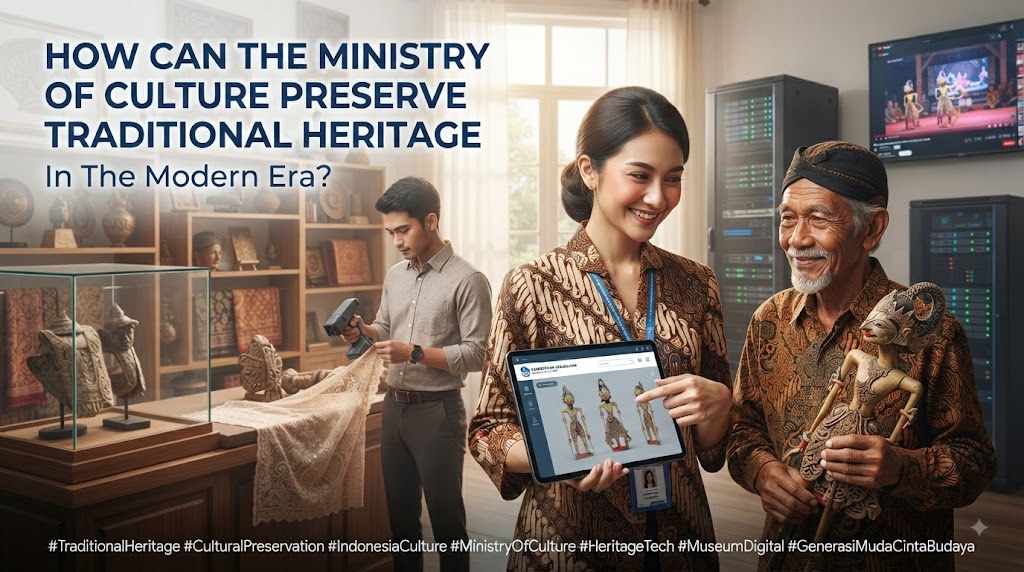
Traditional heritage is an important part of a nation's identity because it contains history, knowledge, values, skills, and traditions passed from one generation to another. In Indonesia, traditional heritage includes traditional dances, music, crafts, clothing, local languages, ceremonies, culinary traditions, traditional knowledge, and historical practices. Modernization and rapid technological development can change how people interact with these traditions. The Ministry of Culture therefore has an important role in ensuring that traditional heritage remains protected, practiced, and appreciated in modern society.
Preserving traditional heritage does not mean preventing cultural change. Instead, preservation should help communities maintain the essential values and knowledge of their traditions while allowing appropriate forms of innovation. Digital technology, education, community participation, cultural documentation, and creative industries can provide new ways to keep traditional heritage relevant. A balanced strategy can connect cultural preservation with the needs and interests of younger generations.
THE ROLE OF THE MINISTRY OF CULTURE
The Ministry of Culture has an important role in developing policies and programs related to cultural preservation and development. Its work can involve coordination with local governments, cultural communities, researchers, educational institutions, museums, and cultural practitioners. Cultural policies can provide direction for protecting both tangible and intangible heritage.
The ministry can also encourage communities to actively participate in preserving their own cultural traditions. Local communities often have detailed knowledge about the history and meaning of cultural practices. Government support can strengthen community efforts through education, documentation, training, and cultural programs. Cooperation between institutions and communities can make preservation more sustainable.
DOCUMENTING TRADITIONAL HERITAGE
Documentation is one of the basic steps in preserving traditional heritage. Traditions can be recorded through written materials, photographs, audio recordings, videos, interviews, and digital archives. Cultural documentation helps preserve information about traditional practices that may become less common over time.
Documentation should not only record what a tradition looks like but also explain its cultural meaning. Information about the community, historical background, techniques, language, and social function can provide important context. Cultural practitioners should be involved in the documentation process to improve accuracy. Proper documentation can become a valuable resource for education, research, and future preservation.
USING DIGITAL TECHNOLOGY FOR CULTURAL PRESERVATION
Digital technology provides new opportunities to protect and promote traditional heritage. Websites, digital archives, social media, online exhibitions, and video platforms can make cultural information available to wider audiences. Digital cultural preservation can help younger people discover traditions through platforms they already use.
Technology can also support virtual museums, interactive educational materials, digital mapping, and audiovisual archives. These tools can make traditional heritage more accessible without replacing direct cultural experiences. Digital content should remain accurate and respectful of cultural communities. Responsible use of technology can help connect traditional heritage with modern communication.
INVOLVING YOUNGER GENERATIONS
Young people are essential to the future of traditional heritage. If younger generations do not learn or practice cultural traditions, some forms of heritage may become increasingly difficult to maintain. Youth cultural participation can help ensure that traditions continue to be transmitted.
Schools, cultural organizations, and communities can organize workshops, competitions, performances, and creative projects for young people. Traditional arts can also be introduced through modern formats such as digital storytelling, video production, and creative design. Young people should be encouraged to learn directly from cultural practitioners. This approach can help them understand both the skills and values behind traditional heritage.
STRENGTHENING CULTURAL EDUCATION
Education can help people understand why traditional heritage is important. Cultural subjects can introduce students to local history, traditional arts, languages, customs, crafts, and community knowledge. Cultural education can develop appreciation for Indonesia's diversity while strengthening cultural identity.
Learning should involve more than memorizing facts. Students can visit museums, meet cultural practitioners, observe traditional performances, or participate in cultural workshops. Practical activities can make cultural learning more meaningful. Education can also encourage students to become active participants in preservation.
SUPPORTING CULTURAL PRACTITIONERS
Traditional heritage depends heavily on the people who maintain and practice it. Dancers, musicians, artisans, storytellers, traditional leaders, craftspeople, and other practitioners play an important role in transferring knowledge. Cultural practitioners should therefore be included in preservation programs.
Support can take the form of training, performance opportunities, documentation projects, cultural facilities, research partnerships, and access to wider markets. Programs can also encourage practitioners to teach younger generations. Supporting practitioners helps ensure that traditions remain living practices rather than becoming only historical records. Their knowledge provides an important link between past and future.
DEVELOPING TRADITIONAL CRAFTS AND CREATIVE INDUSTRIES
Traditional crafts can contribute to both cultural preservation and economic development. Textiles, pottery, wood carving, jewelry, traditional clothing, and other crafts often contain unique cultural knowledge. Traditional crafts can remain relevant when artisans are supported in improving quality, marketing, and access to markets.
Innovation can help traditional products reach modern consumers without removing their cultural identity. Designers and artisans can collaborate to create products that combine traditional techniques with contemporary needs. Fair business practices are important so that cultural communities benefit from commercialization. A strong creative industry can provide economic incentives for continuing traditional skills.
ORGANIZING CULTURAL EVENTS
Cultural events allow communities and the wider public to experience traditional heritage directly. Festivals, exhibitions, performances, workshops, and cultural demonstrations can introduce traditions to people of different ages. Cultural festivals can also provide opportunities for practitioners to share their knowledge and skills.
Events can be held at local, regional, national, and international levels. They can encourage cultural exchange while increasing public interest in traditional heritage. Organizers should ensure that cultural presentations remain accurate and respectful. Community involvement is important so that traditions are represented according to their cultural context.
PRESERVING TRADITIONAL LANGUAGES
Language is an important part of intangible cultural heritage. Local and traditional languages contain knowledge, stories, expressions, and ways of understanding the world. Language preservation is therefore an important part of maintaining cultural identity.
Documentation, educational programs, digital dictionaries, recordings, and community-based language activities can support language preservation. Younger generations can be encouraged to learn and use local languages in appropriate contexts. Digital platforms can also provide new opportunities for language learning. Preserving language helps maintain cultural knowledge that may not have direct equivalents in other languages.
PROTECTING CULTURAL KNOWLEDGE AND COMMUNITY RIGHTS
Traditional knowledge can have cultural, social, and economic value. Communities should have an important role in deciding how their cultural expressions and knowledge are documented, shared, or commercialized. Cultural rights should be considered when developing preservation programs.
Digital distribution can make cultural materials widely accessible, but it can also create risks of unauthorized use or misrepresentation. Clear guidelines, appropriate attribution, and community consent can help reduce these risks. Preservation should respect the rights of communities that maintain the heritage. Responsible cultural management can build trust between institutions and communities.
USING MUSEUMS AND CULTURAL CENTERS
Museums and cultural centers can provide important spaces for preserving and presenting traditional heritage. They can display artifacts, clothing, tools, artworks, manuscripts, and other cultural materials. Cultural museums can also provide educational programs for schools and communities.
Modern museums can combine physical collections with digital technology. Interactive displays, audiovisual materials, virtual tours, and digital archives can make exhibitions more engaging. Museums can also organize workshops and discussions with cultural practitioners. These activities can transform museums into active learning spaces rather than simply places for viewing objects.
PROMOTING RESPONSIBLE CULTURAL TOURISM
Traditional heritage can attract visitors interested in history, arts, crafts, food, and local traditions. Cultural tourism can create income for communities while increasing public interest in heritage. Tourism can support local guides, artisans, performers, food producers, and small businesses.
However, cultural tourism must be managed responsibly. Excessive commercialization or inappropriate tourist behavior can damage cultural values and community life. Local communities should participate in tourism planning and receive fair economic benefits. Responsible tourism can create a positive relationship between cultural preservation and economic development.
USING SOCIAL MEDIA TO PROMOTE TRADITIONS
Social media can reach large audiences quickly and introduce traditional heritage to people who may not encounter it through conventional cultural programs. Videos, photographs, interviews, educational posts, and storytelling can make cultural information more accessible. Social media culture promotion can be especially effective for engaging younger audiences.
Creators should provide reliable information and avoid presenting traditions inaccurately simply to gain attention. Cultural communities and experts can help verify information before it is widely distributed. Responsible digital storytelling can encourage curiosity and appreciation. Social media can therefore become a useful supporting tool for cultural preservation.
BUILDING COLLABORATION WITH LOCAL COMMUNITIES
Traditional heritage is closely connected to the communities that practice and maintain it. Government programs should therefore involve local communities in planning, implementation, and evaluation. Community-based preservation can combine government resources with local knowledge and experience.
Community involvement can improve the accuracy and sustainability of preservation programs. Local residents can identify important traditions, recommend cultural practitioners, and help determine appropriate ways to present cultural materials. Participation can also create a stronger sense of ownership. When communities are actively involved, cultural preservation becomes a shared responsibility.
ADDRESSING MODERN CULTURAL CHALLENGES
Traditional heritage faces challenges from globalization, changing lifestyles, limited transmission between generations, commercialization, and declining interest in some traditional practices. Cultural preservation challenges require long-term and flexible solutions. Government institutions need to understand how social and technological changes affect cultural practices.
Preservation programs should not simply attempt to freeze traditions in their original form. Some traditions naturally adapt as communities respond to changing circumstances. The important goal is to maintain cultural identity, knowledge, values, and community participation. A balance between continuity and appropriate innovation can help traditional heritage remain meaningful.
CONCLUSION
The Ministry of Culture can preserve traditional heritage in the modern era through documentation, digital technology, cultural education, community participation, support for practitioners, museums, cultural events, creative industries, and responsible tourism. These approaches can make traditional heritage easier to understand while supporting the communities that maintain it.
Preservation is most effective when culture remains a living part of society rather than only a historical record. Young people, cultural practitioners, local communities, educational institutions, government agencies, and creative industries can work together to ensure that traditions continue to be practiced and developed responsibly. By combining modern innovation with respect for cultural values, Indonesia can protect its traditional heritage while keeping it relevant for future generations.
About the Author
Gusti Ayu Tita P
Author — STEKOM University
An active author focused on academic issues, educational technology, and human resource development in the campus environment.